

Written and Reviewed by
Dr. Iswarya
BNYS (Bachelor of Naturopathy & Yogic Sciences), MD (Doctor in Medicine). Founder & Chief Naturopathy Consultant at Dr. Iswarya’s Nature Cure Centre, Chennai.
Medical registration ID – 0308/A
View credentials →Knee pain has a way of taking over the day. It decides whether you take the stairs, sit on the floor for a family function, or stand long enough to cook a meal. Many people start with painkillers, and some are eventually told that surgery is the next step. Naturopathy treatment for knee pain offers a different route: it combines diet correction, water and heat therapies, massage, and guided movement to ease pain and build strength around the joint over time.
Interest in naturopathy for knee pain has grown because people want options that go beyond short-term symptom control. It is worth being clear from the start, though. Naturopathy works best as a supportive approach, and it is not suitable for every knee problem. This guide from Dr. Iswarya’s Nature Cure Center explains what causes knee pain, how naturopathic therapies are used, what a first visit looks like, and when you should see an orthopaedic doctor before anything else.
Knee Pain at a Glance
| Question | Short answer |
| Who gets knee pain? | Adults of all ages, most commonly those over 40 |
| Most common cause | Osteoarthritis (gradual wear of cartilage and meniscus) |
| What naturopathy focuses on | Diet, weight, circulation, muscle strength, posture and stress |
| Evidence strongest for | Regular exercise and weight management |
| Not suitable as a first step for | Fractures, infections, complete ligament tears |
| Naturopathy Best used | Alongside medical assessment, not instead of it |
What Causes Knee Pain?
Knee pain rarely has a single cause. Understanding yours helps decide which therapies make sense.
Common causes of knee pain
| Cause | What happens | Typical signs |
| Osteoarthritis | Cartilage thins with age and use | Morning stiffness, pain on stairs, creaking |
| Ligament or meniscus injury | Tear or sprain after a twist or fall | Swelling, instability, locking |
| Excess body weight | Extra load on the joint with every step | Pain that worsens through the day |
| Muscle weakness | Poor support after long inactivity | Knee feels unstable or tires quickly |
| Repetitive strain | Job or sport stresses the joint | Ache after kneeling, squatting, or running |
| Inflammatory conditions | Rheumatoid arthritis or gout | Warmth, redness, swelling, night pain |
| Footwear and posture | Uneven stress through the leg | Pain on one side of the knee |
Signs you should see a doctor first
Naturopathic care should never delay a proper diagnosis. Get medical attention promptly if you notice any of the following:
- Sudden, severe swelling
- Inability to put weight on the leg
- A visibly deformed joint
- Fever along with joint pain
- A knee that repeatedly gives way or locks
These can point to a fracture, infection, or ligament rupture that needs clinical evaluation before any other therapy begins.
How Naturopathy Treatment for Knee Pain Works
Naturopathy looks at the whole person: weight, diet, posture, muscle strength, daily routine, and stress, alongside the joint itself. The aim is to reduce pain and stiffness and make the knee more stable over time. It helps to be realistic about the evidence. Exercise and weight management have the strongest research support for knee osteoarthritis, while heat and cold, massage, yoga, and acupuncture have more modest evidence and results that vary between people.
Calming inflammation
Persistent inflammation can aggravate arthritic knees. An anti-inflammatory eating pattern, gentle movement, and adequate rest all help keep it in check. Certain herbs are also used, with the cautions listed later in this article.
Improving circulation around the joint
Hot and cold applications, contrast baths, and warm oil massage stimulate blood flow around the knee. Better circulation can ease stiffness and help the surrounding tissues recover after activity.
Strengthening the muscles that protect the knee
The quadriceps, hamstrings, calves, and glutes share the load the knee carries. Supervised yoga and low-impact exercise strengthen these muscles gradually, which often reduces pain during daily activity.
Restoring flexibility and range of motion
Gentle stretching, guided joint mobilisation, and warm therapies reduce stiffness and help you bend and straighten the knee more comfortably.
Supporting long-term habits
Personalised meal guidance, stress management, and sleep advice help patients keep improvements going after formal sessions end.
Naturopathic Therapies Used for Knee Pain
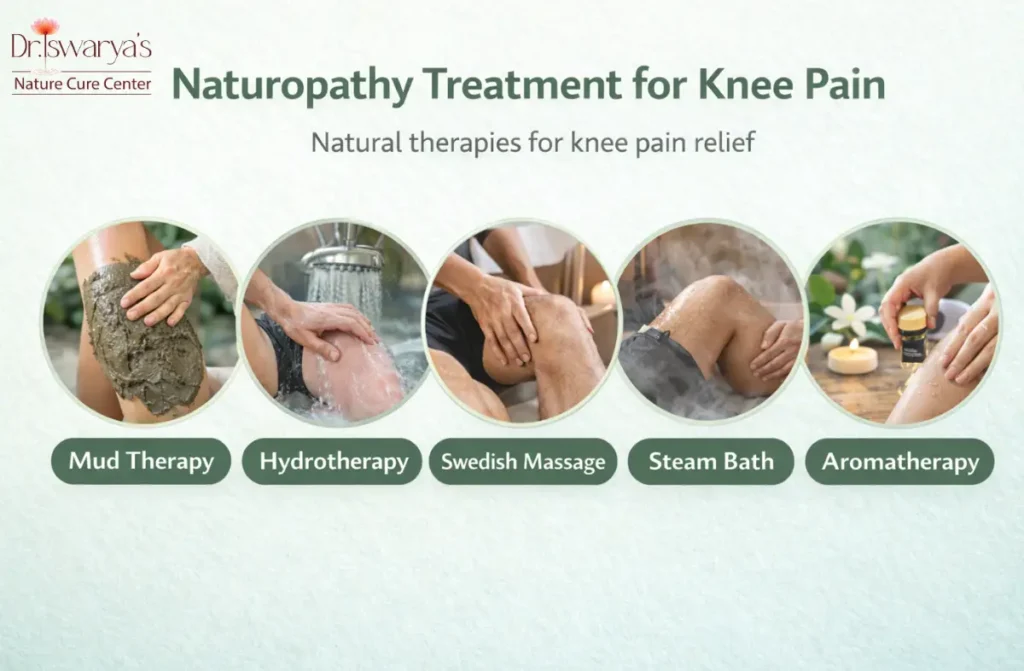
Naturopathic treatment for knee pain is normally a combination of therapies chosen after an assessment, not a single fixed protocol. The table below summarises the ones most commonly used.
| Therapy | How it is used | What it may help with |
| Hydrotherapy | Warm or cold compresses, contrast baths, water-based exercise | Swelling, stiffness, circulation |
| Mud therapy | Cool mud pack applied over the knee | Soothing sore, warm joints |
| Massage therapy | Warm oil massage around the knee and thigh | Muscle tension, stiffness |
| Acupuncture and acupressure | Points on the leg and around the knee | Chronic pain relief for some patients |
| Yoga therapy | Gentle, supervised postures and breathing | Strength, balance, flexibility, stress |
| Physiotherapy-based exercise | Progressive strengthening and stretching | Stability and function |
| Joint mobilisation | Gentle guided movements | Range of motion, mechanical strain |
| Hot fomentation and infrared | Heat applied to stiff joints | Stiffness, muscle relaxation |
Knee pain treatment through naturopathy is usually built around two or three of these therapies together rather than everything at once.
Diet for Knee Pain Relief
What you eat affects body weight and inflammation, and both influence how your knees feel.
| Include more of | Why it helps | Limit or avoid |
| Leafy greens, berries | Antioxidants and fibre | Sugary drinks |
| Walnuts, flaxseeds | Plant omega-3 fats | Packaged, ultra-processed snacks |
| Whole grains, millets | Steady energy, healthy weight | Deep-fried foods |
| Pulses and lentils | Protein for muscle support | Excess refined flour |
| Dairy or fortified alternatives | Calcium and vitamin D | Excess alcohol |
| Water, herbal teas | Hydration | Very salty, packaged foods |
Why body weight matters
Every step places several times your body weight across the knee. Even modest weight loss can noticeably reduce pain for many people. Our naturopathy for weight loss programme can help if this applies to you.
Herbs and supplements: what to know
| Herb/supplement | Commonly used for | Caution |
| Turmeric (curcumin) | Joint discomfort | May interact with blood thinners |
| Ginger | General inflammation, warmth | Large amounts may upset the stomach |
| Boswellia | Osteoarthritis symptoms | Check with your doctor if on other medication |
| Ashwagandha | Stress and joint support | May not suit thyroid or autoimmune conditions or pregnancy |
| Collagen, MSM | Cartilage and tissue support | Evidence is limited and varies |
Always tell your doctor about any supplement you take, and never stop prescribed medicines without medical advice.

Natural Remedies for Knee Pain and Inflammation You Can Try at Home
Natural remedies for knee pain and inflammation can ease everyday discomfort, but they are not a substitute for assessment if pain persists or worsens.
| Remedy | How to use it | Safety note |
| Warm compress | 10 to 15 minutes on a stiff knee | Avoid on a freshly swollen or hot joint |
| Cold pack | Wrapped in cloth, 10 to 15 minutes on recent swelling | Never place ice directly on skin |
| Warm oil massage | Sesame, mustard, or castor oil, gentle circular strokes | Patch-test first |
| Mud pack | Cool pack for 20 to 30 minutes | Skip on open wounds or rashes |
| Turmeric milk or ginger tea | As part of the daily diet | Not a treatment on its own |
| Capsaicin cream | Thin layer on intact skin | Wash hands after using, avoid on eyes and broken skin |
| Wall squats | Slide only partway down, hold to wall | Stop if pain increases |
Safe and Unsafe Exercises for Sore Knees
| Generally safe (start gently) | Often aggravating |
| Walking on soft, even ground | Running on hard surfaces |
| Swimming and water walking | Jumping and skipping |
| Stationary cycling | Deep, unsupported squats |
| Chair yoga and gentle stretching | Long periods of kneeling or cross-legged sitting |
| Straight-leg raises, wall squats | Sudden twisting movements |
Begin with short sessions and increase slowly. A little muscle ache is normal, but sharp joint pain is a signal to stop.
Knee Pain in Older Adults
Cartilage thins and muscle mass declines with age, so routines for older adults should be gentler and better supervised. Naturopathy treatment for knee pain in senior patients usually places more emphasis on safety, balance, and steady progress.
- Movement: Chair yoga, gentle stretching, and short supervised walks keep the joint mobile without overloading it.
- Nutrition: Calcium, vitamin D, and enough protein support bones and muscles.
- Heat and cold: Warm compresses often suit stiff joints better. Cold is more useful for a recent, swollen flare-up.
- Balance and fall prevention: Stronger thigh and calf muscles improve stability and reduce the risk of falls.
- Supervised care: Our geriatric care and home care programmes deliver therapies safely at a pace that suits older patients.
How Naturopathy May Support Different Knee Conditions
| Condition | How naturopathy may help | Important note |
| Osteoarthritis | Weight management, exercise, heat therapy, diet | Cartilage does not regrow; goal is pain and function |
| Mild ligament strain (after diagnosis) | Gentle mobility work, strengthening, massage | Rule out a full tear first |
| Post-injury stiffness | Warm therapies, guided stretching | Begin only after medical clearance |
| Rheumatoid arthritis | Supportive diet, stress management | Must continue prescribed medical treatment |
| Gout | Diet and hydration guidance | Needs medical management of uric acid |
| Weight-related knee strain | Diet planning, low-impact activity | Consistency matters most |
What to Expect at Dr. Iswarya’s Nature Cure Center
A first visit typically begins with your medical history, past injuries, daily routine, and diet. This is followed by a physical check of posture, joint movement, and muscle strength. From there, a personalised plan is built around therapies such as hydrotherapy, massage, dietary correction, and targeted exercise. A typical naturopathy treatment for knee pain plan is reviewed at regular intervals and adjusted as you progress. If travelling is difficult, an online consultation can be a good starting point.
| Stage | What happens |
| Assessment | Medical history, posture, joint and muscle evaluation |
| Planning | Therapy schedule, diet guidance, home exercise plan |
| Sessions | Many patients attend sessions weekly |
| Review | Progress check and plan adjustment every few weeks |
| Maintenane | Home routine, diet habits, follow-up visits |
How Long Does It Take to See Results?
Timelines vary with the cause, severity, age, and how consistently you follow the plan. Some people feel less stiff within a few weeks of regular therapy, while long-standing conditions usually need longer. Be cautious of any provider who promises a guaranteed or permanent result.
Daily Habits That Protect Your Knees
- Aim for a weight that feels manageable for your frame.
- Stretch or do gentle yoga for at least 10 minutes a day.
- Wear supportive, well-fitting footwear.
- Avoid squatting deeply or sitting cross-legged for long periods if it hurts.
- Limit processed food and added sugar.
- Stay hydrated through the day.
- Keep prescribed medicines going unless your doctor advises otherwise.
Common Myths About Natural Knee Pain Relief
| Myth | Fact |
| “Natural means no side effects.” | Herbs and oils can cause reactions or interact with medicines. |
| “Rest is always best for knee pain.” | Prolonged rest weakens muscles; gentle movement usually helps. |
| “Worn cartilage grows back with the right diet.” | Diet supports overall joint health but cannot rebuild lost cartilage. |
| “Ice is always better than heat.” | Cold suits fresh swelling; heat suits stiffness. |
| “Surgery is the only option once arthritis starts.” | Many people manage symptoms well without it, though some cases do need surgery. |
When Should You Consult a Naturopath for Knee Pain?
Consider a consultation if knee pain has lasted more than a few weeks, keeps returning, or limits stairs, walking, or sleep. If you have any of the warning signs listed earlier, see an orthopaedic doctor first. Naturopathic care can then run alongside medical treatment.
Take the Next Step Toward Healthier Knees
If knee pain is limiting your day, a structured plan can make a real difference. Naturopathy treatment for knee pain at Dr. Iswarya’s Nature Cure Center starts with a proper assessment, a clear explanation of your options, and a plan you can realistically follow. Dr. Iswarya, BNYS., MD (Acupuncture and Energy Medicine), will guide you through it. Book a consultation or call 044-46187679.
Conclusion
Knee pain can wear down your routine, your confidence, and your willingness to stay active, but it doesn’t have to be managed with painkillers alone. Naturopathy treatment for knee pain brings together diet changes, hydrotherapy, massage, gentle yoga, and steady lifestyle habits to ease stiffness, improve circulation, and strengthen the muscles that protect the joint. It works best when it starts with a proper assessment and runs alongside medical care whenever your symptoms call for it.
No natural approach can promise a permanent result for every knee, but a well-planned program can reduce pain, improve movement, and give you practical tools to look after your joints for the long term. At Dr. Iswarya’s Nature Cure Center, every plan begins with listening to your history and examining how your knees move, so your care fits you rather than a template. If knee pain is holding you back, book a consultation and take the first step toward moving more comfortably.
Read also: Tips to Manage Stress Eating.