

Written and Reviewed by
Dr. Iswarya
BNYS (Bachelor of Naturopathy & Yogic Sciences), MD (Doctor in Medicine). Founder & Chief Naturopathy Consultant at Dr. Iswarya’s Nature Cure Centre, Chennai.
Medical registration ID – 0308/A
View credentials →If you’ve tried calorie counting, crash diets, or fat-loss supplements and still find the weight creeping back, the problem may not be willpower — it may be that the underlying cause was never addressed. Digestive sluggishness, hormonal imbalance, chronic stress, and poor sleep can all quietly work against fat loss, no matter how disciplined a diet is.
This is where a naturopathy for weight loss takes a different path. Rather than isolating “calories in vs. calories out,” it looks at the body as a connected system and asks why weight is being retained in the first place. Personalized diet plans, herbal support, hydrotherapy, and stress-regulation practices are combined to correct these imbalances gradually, so the results are more likely to last.
This guide walks through how the approach works, what causes weight gain from a naturopathic perspective, the diet and lifestyle changes typically recommended, the herbs and therapies used, and who this approach is — and isn’t — best suited for.
What is Naturopathy for Weight Loss?
Naturopathy for weight loss looks beyond calorie counting and short-term diets. It treats excess weight as a symptom of deeper imbalances — sluggish digestion, hormonal disruption, poor sleep, and chronic stress — rather than a standalone problem to be solved with restriction alone.
Instead of one-size-fits-all plans, a qualified naturopath builds a personalized protocol using whole foods, herbal support, hydrotherapy, and structured lifestyle changes. The goal isn’t a quick drop on the scale; it’s a gradual, sustainable shift that also improves energy, digestion, and emotional wellbeing.
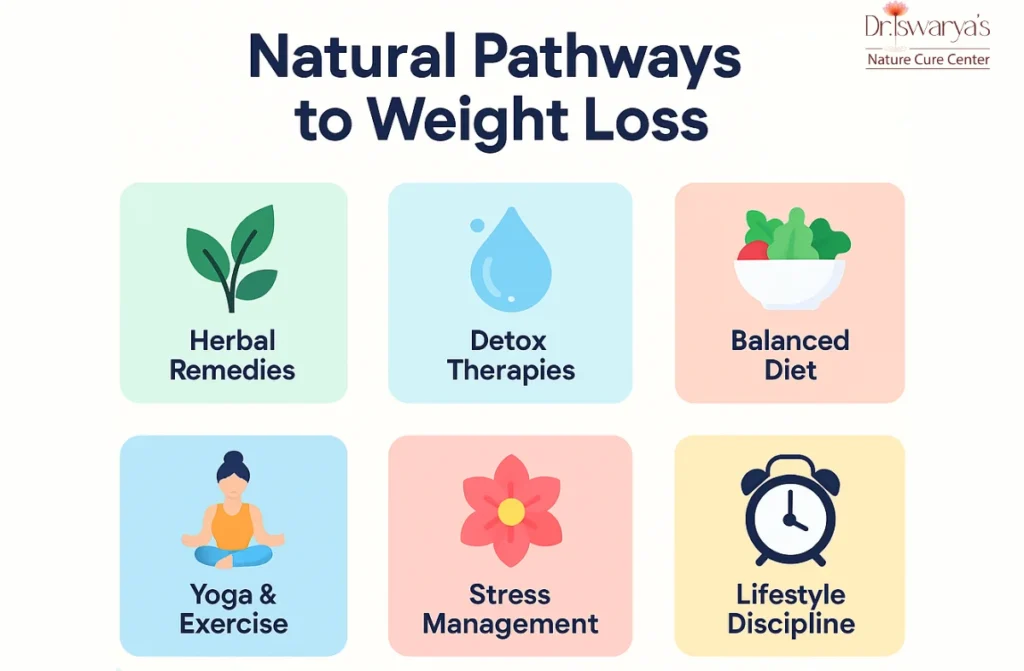
How Naturopathy Helps in Weight Loss
Naturopathy treats the causes of weight gain rather than only the symptoms, using natural therapies, food-based healing, and mind-body practices.
Customized Treatment Plans
Every individual has a different metabolism, stress load, and health history. A naturopath maps these factors before recommending a course of action, so the plan supports safe and gradual fat reduction rather than a generic template.
Dietary Guidance and Detoxification
Personalized nutrition built around whole, unprocessed foods, paired with detox protocols like herbal cleanses and short supervised fasting, helps remove accumulated waste and supports metabolic function.
Hydrotherapy and Physical Therapies
Warm and cold water treatments, therapeutic baths, and hydro-massage stimulate circulation, ease water retention, and support the body’s natural elimination processes.
Stress and Hormone Regulation
Cortisol, insulin, and thyroid imbalances are common — and often overlooked — drivers of weight gain. Yoga, breathwork, and structured rest routines are used to bring these back into balance.
Herbal and Plant-Based Support
Traditional herbal formulations are used to support digestion, curb cravings, and gently boost metabolism, always adapted to the individual rather than applied uniformly.
Recognizing the Root Causes of Weight Gain
Before starting naturopathy treatment for weight loss, it helps to understand what’s actually driving the weight gain:
- Poor digestive health and toxin build-up — A sluggish gut leads to poor nutrient absorption and metabolic waste accumulation. Naturopathy addresses this through fiber-rich foods, hydration, and herbal gut support.
- Nutritional deficiencies and processed foods — Diets high in refined sugar and low in micronutrients drive fat storage and cravings. Whole, seasonal foods replace these over time.
- Hormonal imbalances and chronic stress — Cortisol spikes, thyroid dysfunction, and insulin resistance are frequent, evidence-linked contributors to stubborn weight gain, which stress-reduction techniques like yoga and meditation help address.
- Disrupted sleep and circadian rhythm — Poor sleep alters leptin and ghrelin, the hormones that regulate hunger, often leading to overeating the next day.
Naturopathy Weight Loss Diet Plan
Food is treated as medicine in naturopathy. A structured naturopathy weight loss diet plan is designed to correct imbalances and support fat metabolism without extreme restriction or synthetic supplements.
- Whole, plant-based foods as the foundation — Seasonal fruits, vegetables, whole grains, seeds, and legumes rich in fiber and antioxidants improve satiety and support liver function.
- Elimination of acid-forming, inflammatory foods — Refined sugar, fried foods, and processed meats are gradually replaced with alkaline options such as leafy greens, sprouts, and herbal teas.
- Timed, mindful eating — Early dinners, adequate spacing between meals, and distraction-free eating help regulate appetite and prevent emotional overeating.
- Iron-rich foods for metabolic support — Lentils, spinach, pumpkin seeds, and beetroot support oxygen transport and cellular energy production during weight loss.
Lifestyle Modifications for Sustainable Results
Long-term success with naturopathy for weight loss depends as much on daily habits as on diet.
- Consistency over intensity — Sticking with plant-based, seasonal eating and avoiding stimulants like excess caffeine reinforces the body’s natural healing rhythm.
- Daily movement rooted in nature — Practices like walking barefoot on grass, sun salutations, and gentle yoga support lymphatic flow and hormonal balance without the strain of intense workouts.
- Quality sleep and rest cycles — Naturopathy emphasizes early sleep, daytime natural light exposure, and wind-down routines to restore circadian rhythm and reduce cortisol-driven fat storage.
- Hydration and gentle detox rituals — Warm water infused with cumin, coriander, or fennel supports digestion, while structured detox therapy supports liver and kidney function.
Natural Foods and Herbal Support
Natural foods and commonly used herbs can be included as part of a balanced naturopathy approach to weight management. Rather than relying on concentrated herbal formulations, naturopathy generally focuses on simple, natural ingredients that can support digestion, hydration, metabolism, and healthy eating habits.
- Ginger for digestion — Ginger is traditionally used to support digestion and may help reduce occasional bloating and digestive discomfort. It can be consumed as fresh ginger, added to meals, or prepared as a mild herbal drink.
- Garlic for metabolic wellness — Garlic is a nutrient-rich food that can be incorporated into a balanced diet. Its naturally occurring compounds have been studied for their potential role in supporting cardiovascular and metabolic health.
- Turmeric for overall wellness — Turmeric contains curcumin, a naturally occurring compound with antioxidant and anti-inflammatory properties. Adding turmeric to regular meals can be a simple way to include it as part of a healthy diet.
- Cumin and fennel for digestion — Cumin and fennel are commonly used in traditional food practices and may support digestion while helping reduce occasional bloating. They can be incorporated into meals or consumed as a mild infusion.
- Fenugreek for balanced eating — Fenugreek seeds contain dietary fibre and are traditionally included in meals to support digestion and healthy dietary habits. They can be used in cooking as part of a balanced nutrition plan.
These natural ingredients should complement a nutritious diet, regular physical activity, adequate sleep, and other personalised naturopathy practices rather than being considered standalone weight-loss treatments. Individuals with existing health conditions or those taking medications should consult a qualified healthcare professional before making significant dietary or herbal changes.
Healing Therapies Used in Naturopathy Treatment for Weight Loss
- Water and heat therapies — Warm baths, mud packs, and steam applications are used to stimulate circulation and support the body’s elimination processes.
- Yoga and relaxation techniques — Gentle stretches paired with controlled breathing support flexibility, stress reduction, and calorie expenditure, and are easy to practice consistently at home.
- Body therapies — Therapeutic massage and reflexology ease muscle tension, support circulation, and help reduce stress-driven eating patterns.
- Colon hydrotherapy and steam therapy — Used selectively, under professional supervision, to support digestive efficiency.

Benefits of Naturopathy for Weight Loss
- Holistic fat reduction — Combines diet, physical therapy, and detoxification rather than relying on any single method.
- Improved metabolism and digestion — Natural remedies and hydrotherapy are used to support more efficient calorie processing.
- Hormonal and stress regulation — Yoga, meditation, and lifestyle changes help address cortisol and other hormones linked to weight gain.
- Fewer side effects — Because the approach avoids synthetic stimulants and crash diets, it’s generally considered gentler on the body when supervised properly.
- Whole-person wellness — Beyond weight, many people report better sleep, digestion, and mental clarity.
Is It Right for You?
Naturopathy can be a strong fit for people looking for a gradual, whole-body approach to weight management, particularly where stress, poor digestion, or lifestyle habits are contributing factors.
It is not a substitute for medical care in cases involving diagnosed obesity-related conditions, uncontrolled thyroid disorders, diabetes, or other conditions requiring monitored treatment. It works best as a complementary approach alongside — not instead of — appropriate medical guidance.
Conclusion
Naturopathy for weight loss offers a safe, personalized path that treats the root causes of weight gain — poor digestion, hormonal imbalance, and lifestyle habits — rather than chasing quick fixes. With professional guidance, consistency, and realistic expectations, it can support not just fat loss but overall energy, digestion, and emotional balance.
Ready to start? Book a consultation with Dr. Iswarya’s Nature Cure Centre, or explore our Customized Health Packages and Yoga & Meditation programs to get started.
Read Also: Healthy Diet for Hair Growth.