
“Your body speaks before it screams.”
The tightness in your shoulders after a long workday, the aching back that makes simple movements uncomfortable, the stress that keeps you awake at night—these are often your body’s way of asking for care. In a world where stress, sedentary lifestyles, and physical strain have become common, understanding the benefits of massage therapy can help you find a natural and effective way to restore balance.
Massage therapy is more than a relaxing spa treatment. It is a therapeutic practice that involves manipulating muscles, tendons, ligaments, and other soft tissues to promote healing, reduce pain, improve circulation, and enhance overall well-being. The many benefits of massage therapy include pain relief, reduced muscle tension, improved flexibility, better circulation, and lower stress levels. Used for thousands of years across different cultures, massage therapy is now recognized as a valuable complementary treatment for both physical and mental health.
Whether you’re an athlete recovering from intense training, an office worker dealing with neck pain, or someone seeking relief from daily stress, exploring the benefits of massage therapy can help you improve your physical health, support emotional well-being, and enjoy a better quality of life.
Massage for Treatment of Some Disorders
Massage therapy is increasingly used alongside conventional medical treatments to help manage symptoms and improve quality of life. While it is not a cure for medical conditions, it can play an important supportive role in recovery and symptom management.
| Condition | How Massage Therapy Helps |
|---|---|
| Chronic Back Pain | Relaxes tight muscles, reduces discomfort, and improves mobility. |
| Neck and Shoulder Tension | Releases muscle knots and reduces stiffness. |
| Sports Injuries | Promotes circulation and supports tissue recovery. |
| Arthritis | Helps improve flexibility and decrease joint discomfort. |
| Fibromyalgia | May reduce pain sensitivity and improve sleep. |
| Headaches and Migraines | Relieves muscle tension that can trigger headaches. |
| Stress and Anxiety | Activates relaxation responses in the body. |
| Insomnia | Encourages deeper relaxation and better sleep quality. |
| Sciatica | May reduce pressure and muscle tightness around affected nerves. |
| Postural Problems | Helps loosen overworked muscles caused by poor posture. |
Many healthcare providers recommend massage therapy as part of a broader wellness or rehabilitation plan because it can complement physical therapy, exercise programs, and medical treatments.
Benefits of Massage Therapy
One of the reasons massage therapy remains popular worldwide is because its benefits affect nearly every system in the body.
Physical Benefits
- Relieves muscle tension and tightness
- Improves blood circulation, helping oxygen and nutrients reach tissues more efficiently
- Reduces soreness after exercise or physical activity
- Increases flexibility and joint mobility
- Supports faster recovery from minor injuries
- Helps improve posture by relaxing overworked muscles
- Encourages lymphatic drainage, which helps remove waste products from tissues
- Reduces stiffness associated with prolonged sitting or repetitive movements
- May decrease chronic pain caused by muscular tension
- Promotes overall physical relaxation
Mental and Emotional Benefits
Massage therapy does not only benefit muscles—it can also have a profound impact on the mind.
- Reduces levels of cortisol, the body’s primary stress hormone
- Encourages the release of serotonin and dopamine, often called “feel-good” chemicals
- Promotes a sense of calm and emotional balance
- Helps reduce symptoms of stress and anxiety
- Improves concentration and mental clarity
- Supports emotional well-being
- Creates opportunities for mindfulness and relaxation
- Helps reduce feelings of fatigue and burnout
Sleep-Related Benefits
- Encourages deeper, more restorative sleep
- Helps individuals who struggle with insomnia
- Reduces nighttime muscle discomfort
- Supports relaxation before bedtime
Lifestyle Benefits
- Enhances overall quality of life
- Helps maintain an active lifestyle
- Supports workplace productivity
- Improves comfort during everyday activities
- Encourages long-term self-care habits
The Science Behind Massage Therapy
Research suggests that massage therapy influences the nervous system in several beneficial ways.
When pressure is applied to muscles and soft tissues:
- Blood circulation increases.
- Muscle tension decreases.
- Stress hormones may decline.
- Relaxation responses become more active.
- Endorphins, the body’s natural pain-relieving chemicals, may increase.
- The parasympathetic nervous system (the body’s “rest and recover” mode) becomes more active.
This combination of effects helps explain why people often feel physically lighter, mentally calmer, and emotionally refreshed after a massage session.
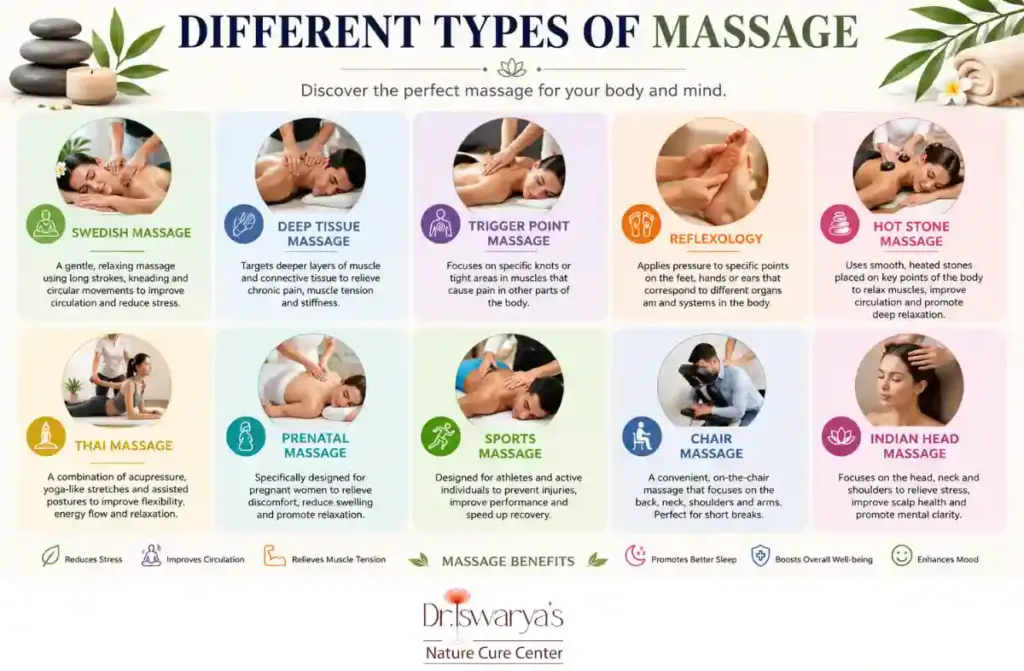
Different Types of Massage
Not all massages are the same. Different techniques are designed to address different goals and conditions.
| Type of Massage | Purpose | Best For |
|---|---|---|
| Swedish Massage | Gentle relaxation massage | Beginners, stress relief |
| Deep Tissue Massage | Targets deeper muscle layers | Chronic tension and pain |
| Sports Massage | Supports athletic performance and recovery | Athletes, workers |
| Hot Stone Massage | Uses heated stones to relax muscles | Deep relaxation |
| Trigger Point Massage | Focuses on painful muscle knots | Localized muscle pain |
| Thai Massage | Combines stretching and pressure techniques | Flexibility and mobility |
| Prenatal Massage | Modified massage during pregnancy | Expecting mothers |
| Aromatherapy Massage | Incorporates essential oils | Stress management |
| Reflexology | Pressure applied to specific points on the feet and hands | Relaxation |
| Lymphatic Drainage Massage | Encourages lymph flow | Swelling reduction and recovery support |
Choosing the right massage depends on your health goals, medical history, and personal preferences.
Massage Techniques
Professional massage therapists use a variety of techniques to achieve specific therapeutic outcomes.
Effleurage (Gliding Strokes)
- Long, smooth strokes are applied across the skin and muscles.
- Helps warm up tissues.
- Promotes relaxation and circulation.
Petrissage (Kneading)
- Muscles are lifted, squeezed, and rolled.
- Helps release tension.
- Improves blood flow.
Friction
- Small circular movements are applied to deeper tissues.
- Targets scar tissue and stubborn knots.
- Improves tissue mobility.
Tapotement
- Rhythmic tapping and percussion movements are used.
- Stimulates muscles and nerves.
- Often used in sports massage.
Vibration
- Rapid shaking or vibrating motions are applied.
- Encourages muscle relaxation.
- May help reduce discomfort.
Stretching Techniques
- Gentle stretching improves flexibility.
- Enhances range of motion.
- Reduces stiffness.
Historic Facts About Massage Therapy
Massage therapy has one of the longest histories of any healing practice.
- Evidence suggests massage techniques have been used for more than 5,000 years.
- Ancient Chinese medical texts dating back to around 2700 BCE describe therapeutic massage practices.
- Ancient Egyptians incorporated massage into health and healing rituals.
- Traditional Indian Ayurveda has used massage as part of holistic wellness systems for thousands of years.
- Greek athletes regularly received massage to prepare for competitions and recover afterward.
- The Greek physician Hippocrates, often called the Father of Medicine, advocated therapeutic rubbing and massage.
- Roman bathhouses commonly included massage treatments for relaxation and recovery.
- During the 19th century, massage became increasingly recognized as a medical therapy in Europe.
- Modern massage therapy combines traditional healing methods with contemporary anatomical and physiological knowledge.
The fact that massage has survived and evolved across thousands of years and multiple civilizations speaks to its enduring value in human health and wellness.
Massage Special Considerations
Massage therapy is generally safe for most people, but certain situations require caution.
Consult a Healthcare Professional Before Massage If You Have:
- Severe osteoporosis
- Blood clotting disorders
- Recent fractures
- Open wounds
- Skin infections
- Severe cardiovascular conditions
- Recent surgery
- Certain cancers or ongoing cancer treatment
Pregnancy Considerations
- Seek therapists trained in prenatal massage.
- Certain techniques and positions may require modification.
- Always discuss treatment with your healthcare provider first.
Communication Is Important
Before your session:
- Discuss any health conditions.
- Explain your goals and expectations.
- Mention areas of pain or sensitivity.
- Inform the therapist if pressure feels uncomfortable.
Aftercare Tips
- Drink plenty of water.
- Avoid strenuous activity immediately after treatment.
- Stretch gently if recommended.
- Pay attention to how your body feels over the next 24 hours.
Conclusion
The benefits of massage therapy extend far beyond temporary relaxation. From easing pain and reducing stress to improving sleep, circulation, flexibility, and emotional well-being, massage therapy supports the body and mind in ways few wellness practices can match.
In a world that constantly demands more from us, taking time to care for your body is not a luxury—it is a necessity. Whether you seek relief from pain, recovery from physical strain, or simply a moment of peace amid life’s chaos, massage therapy can help restore the balance your body deserves.
“In the end, massage therapy is not just about relaxation—it’s about reclaiming the quality of your life. Every session is an opportunity to reduce pain, release stress, restore balance, and reconnect with your well-being. Because when your body feels its best, life becomes easier to enjoy, easier to embrace, and easier to live to the fullest.”
Read Also: Shirodhara Therapy.