

Written and Reviewed by
Dr. Iswarya
BNYS (Bachelor of Naturopathy & Yogic Sciences), MD (Doctor in Medicine). Founder & Chief Naturopathy Consultant at Dr. Iswarya’s Nature Cure Centre, Chennai.
Medical registration ID – 0308/A
View credentials →Lower back pain is one of the most common health complaints worldwide, affecting people across every age group and lifestyle. Long working hours, poor posture, lack of physical activity, stress, and muscle strain can all contribute to ongoing discomfort in the lower back. For many people, this pain interferes with daily tasks, disturbs sleep, and lowers overall productivity. As more people look for natural, non-invasive ways to manage this pain, interest in acupressure points for lower back pain has grown steadily.
Acupressure is a traditional healing practice that involves applying focused pressure to specific points on the body to support energy flow, ease muscle tension, and reduce discomfort. Unlike surgery or invasive procedures, it offers a gentle, drug-free way to manage pain.
At Dr. Iswarya’s Nature Cure Centre, holistic wellness therapies are designed to support the body’s natural healing process through naturopathy, lifestyle guidance, and drug-free pain management techniques. Understanding how these pressure points work can help you find natural, practical support for lower back discomfort.
What is Acupressure?
Acupressure is a therapeutic technique rooted in Traditional Chinese Medicine (TCM). Practitioners believe the body contains energy pathways, or meridians, and that stimulating specific points along these pathways helps restore balance and encourage the body’s own healing response. Pressure is typically applied with the fingers, thumbs, palms, or specialised tools.
People often compare acupressure with acupuncture points for back pain, since both approaches target similar locations on the body. The key difference is technique: acupuncture uses thin, sterile needles inserted into the skin, while acupressure relies entirely on manual pressure and requires no needles at all. Because it’s non-invasive, acupressure is often the first therapy people try before considering acupuncture treatment for back pain.
Today, more people are turning to this natural pressure-point therapy as a safe, accessible option they can practise at home, alongside professional care.
How Acupressure Helps Lower Back Pain
Lower back pain typically develops from muscle tension, poor posture, prolonged sitting, or spinal strain. Acupressure is thought to work by stimulating specific points that improve local blood circulation, ease muscle tightness, and calm the nervous system’s stress response.
Applying steady pressure to the right points may help:
- Relax stiff, overworked muscles
- Improve flexibility and range of motion
- Support healthier blood circulation
- Reduce stress-related muscle tension
- Encourage general relaxation and better sleep
Some people also explore acupuncture for lower back pain alongside acupressure as part of a broader natural wellness plan, since the two therapies often target overlapping points. Results vary from person to person, but consistent practice combined with healthy lifestyle habits tends to offer the most noticeable, lasting support.
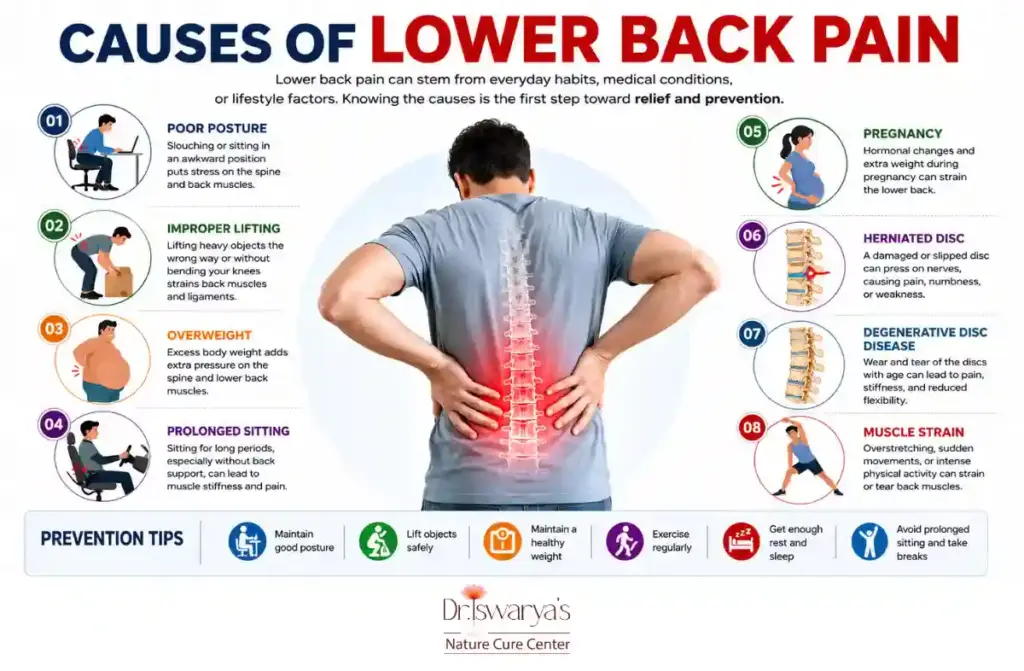
Common Causes of Lower Back Pain
Before starting any therapy, it helps to understand what’s driving the pain in the first place.
- Poor Posture: Sitting for long stretches with rounded shoulders or a slouched spine puts constant strain on the lower back.
- Muscle Strain: Heavy lifting, sudden twisting movements, or repetitive overuse can strain muscles and trigger inflammation.
- Sedentary Lifestyle: Long periods without movement weaken the core and back muscles that normally support the spine.
- Stress and Tension: Emotional stress often shows up physically as tightness in the neck, shoulders, and lower back.
- Age-Related Changes: Natural wear on spinal discs and joints can lead to chronic lower back discomfort over time.
Combining this therapy with posture correction and regular movement often gives the best long-term results.
6 Effective Acupressure Points for Lower Back Pain
Here are six pressure points commonly used to ease lower back discomfort. For each one, apply firm but gentle pressure using your thumb or fingertip, hold for 30 seconds to 3 minutes, and breathe slowly throughout.
1. BL23 – Shenshu (Kidney Shu Point)
Location: On the lower back, about two finger-widths on either side of the spine, level with the waistline (roughly in line with the belly button on the front of the body). How it helps: This is one of the most widely used points for general lower back pain and fatigue. Pressing here may help ease stiffness and support kidney-related energy balance in TCM theory.
2. BL47 – Zhishi
Location: Slightly below and outward from BL23, near the lower ribs on either side of the spine. How it helps: Often used alongside BL23 for deeper lower back tension, particularly when pain is felt on one side more than the other. This point is also relevant for people searching for acupressure points for lower back pain right side, since it can be worked individually on the more affected side while still applying balanced pressure on both sides for overall support.
3. GB30 – Huantiao
Location: In the buttock, roughly at the midpoint between the top of the hip bone and the tailbone, in the muscle mass of the glute. How it helps: This point is commonly used for hip, buttock, and radiating leg pain, making it especially relevant for anyone researching acupressure points for lower back pain and sciatica. Firm pressure here may help release tightness that pulls on the lower back and travels down the leg.
4. LV3 – Taichong
Location: On the top of the foot, in the groove between the big toe and second toe, about two finger-widths up from the web of the toes. How it helps: Known in TCM as a Liver meridian point, LV3 is often used to relieve stress-related muscle tension and support overall relaxation, which can indirectly ease lower back tightness.
5. KD3 – Taixi
Location: On the inner ankle, in the depression between the ankle bone (medial malleolus) and the Achilles tendon. How it helps: This Kidney meridian point is traditionally associated with lower back and spinal support, and is often combined with BL23 for a more complete session.
6. LI4 – Hegu
Location: On the back of the hand, in the webbing between the thumb and index finger. How it helps: LI4 is one of the most recognised acupressure points for lower back pain in hand, valued because it’s easy to reach almost anywhere — at a desk, while commuting, or before bed. It’s traditionally used for general pain relief and muscle relaxation throughout the body.
Working through these pressure points in sequence, two to three times a day, tends to give more consistent results than pressing a single point occasionally.
How to Use Acupressure Correctly
Before you begin, sit or lie down in a comfortable position. A relaxed body responds better to pressure-point stimulation than a tense one.
Correct Technique
- Use your fingers or thumbs to apply firm, gentle pressure
- Hold each point for 1–3 minutes
- Breathe slowly and steadily throughout
- Avoid using excessive force, especially on bony or sensitive areas
- Work both sides of the body, even if pain is concentrated on one side
If your discomfort is concentrated on one side, focus a little longer on the points on that side, but always finish with both sides to keep the muscles balanced.
Benefits of Acupressure
Acupressure is valued for being natural, drug-free, and easy to practise. Commonly reported benefits include:
- Muscle relaxation
- Reduced stress and tension
- Better flexibility
- Improved circulation
- Support for mobility
- A non-invasive alternative to medication
Many people who explore acupuncture treatment for back pain also try acupressure, since both approaches work with the same underlying energy pathways and holistic healing principles. Acupressure points for lower back pain can also complement naturopathy, stretching, and physiotherapy and lifestyle changes.
Other Natural Remedies for Lower Back Pain
Acupressure tends to work best as part of a broader, consistent wellness routine.
- Stretching and Exercise: Gentle stretches improve flexibility and reduce stiffness over time.
- Proper Posture: Correct sitting and standing posture takes ongoing pressure off the spine.
- Heat Therapy: A warm compress can relax tight muscles and ease discomfort.
- Yoga and Relaxation: Yoga and breathing practices support flexibility and reduce stress.
- Healthy Diet: Anti-inflammatory foods and good hydration support muscle and joint health.
- Acupuncture for Lower Back Pain: For people who want a more clinical approach, acupuncture performed by a trained practitioner can complement at-home acupressure.
At Dr. Iswarya’s Nature Cure Centre, holistic therapies focus on supporting long-term health rather than just masking symptoms.
Who Should Avoid Acupressure?
Acupressure is generally considered safe, but some people should check with a doctor before trying it.
Use caution if you are:
- Pregnant
- Living with a fracture or severe spinal injury
- Dealing with a skin infection or open wound near the pressure point
- Diagnosed with severe osteoporosis
- Managing a blood clotting disorder
If you experience numbness, loss of bladder control, or sudden weakness, seek immediate medical attention rather than relying on acupressure alone.

How Long Does Acupressure Take to Relieve Back Pain?
Results vary from person to person. Some people feel noticeably more relaxed right after a single session, while others need several sessions before they notice a real difference.
Results tend to depend on:
- How severe the pain is
- How consistently you practise
- Your overall activity level
- Daily stress levels
- Whether you combine acupressure with other therapies
People who pair acupressure with acupuncture treatment for back pain, stretching, and posture correction as part of one holistic plan often report better, more consistent support than using acupressure alone.
When to See a Doctor
Natural therapies can offer real support, but they aren’t a substitute for medical care when symptoms are serious.
See a healthcare professional if:
- Pain lasts for more than a few weeks
- Pain becomes severe or worsens suddenly
- You notice numbness or weakness in your legs
- Pain radiates down one or both legs
- Fever accompanies your back pain
- Walking becomes difficult
- The pain follows a fall, accident, or injury
Combining professional medical advice with natural, holistic care creates the most balanced path to recovery.
Conclusion
Lower back pain can affect your comfort, mobility, and overall quality of life. Natural approaches such as acupressure points for lower back pain are gaining popularity because they offer a gentle, non-invasive way to support the body. By stimulating points like BL23, BL47, GB30, LV3, KD3, and LI4, this therapy may help relax tight muscles, improve circulation, and support your body’s own healing process.
When practised correctly and consistently, acupressure can complement other healthy habits like stretching, posture correction, yoga, and naturopathy therapies. Many people also combine it with acupuncture for lower back pain for broader, longer-lasting support.
At Dr. Iswarya’s Nature Cure Centre, our approach to holistic care focuses on long-term wellness — helping you build balance, relaxation, and healthier daily habits, not just temporary relief.
Read Also: Top Holistic Healing in Chennai.