
Seeing more hair on the pillow, in the comb or in the shower drain can be worrying. Many people first reach for a hair oil or a supplement bottle. But hair health often starts much deeper, with what reaches the hair roots through food and blood.
Hair is one of the fastest growing tissues in the body. To keep growing, the hair roots need a steady supply of protein, vitamins and minerals. When some of these are low, hair may become thin, dry or start to fall more than usual. This guide explains the vitamins for healthy hair, the minerals that support the scalp, Indian food sources for each, and when hair fall needs a doctor’s check.
Please note: This article is for general awareness. It does not replace advice from your doctor. Please do not start any supplement without speaking to a qualified doctor, especially if you are pregnant, breastfeeding or take regular medicines.
How Hair Grows
Each hair grows from a small root under the skin called a follicle. Hair goes through a cycle:
- Growth phase: The hair grows actively. This phase lasts several years.
- Resting phase: The hair stops growing and rests for a few months.
- Shedding phase: The old hair falls out, and a new one starts to grow in its place.
Losing around 50 to 100 hairs a day is normal. Hair fall becomes a concern when you notice clumps of hair falling, a widening parting, thinning patches or a smaller ponytail.
Types of Hair Fall
Not all hair fall is the same. Knowing the type helps find the right approach.
- Telogen effluvium: Sudden, widespread shedding that often starts two to three months after an illness, high fever, surgery, childbirth, crash dieting or severe stress. It usually settles once the trigger is removed.
- Pattern hair loss: Slow thinning that runs in families. In men it often starts at the temples or crown. In women it usually shows as a widening parting.
- Alopecia areata: Round, smooth bald patches caused by the immune system. This needs care from a dermatologist.
- Traction hair loss: Thinning along the hairline from tight braids, buns or ponytails worn for a long time.
- Hair breakage: Hair snaps along its length instead of falling from the root. This is often due to heat styling, chemical treatments or rough handling.
Nutrition plays a bigger role in some types, such as telogen effluvium, than in others.
Common Causes of Hair Fall
Hair fall usually has more than one cause. Common ones include:
- Low nutrients: Low iron, vitamin D, protein or other nutrients.
- Hormone changes: After pregnancy, during menopause, with thyroid problems or with PCOS.
- Stress: A major illness, surgery, fever or emotional stress can cause more shedding two to three months later.
- Family history: Pattern hair loss often runs in families.
- Medical conditions: Such as thyroid disease, alopecia areata or scalp infections.
- Certain medicines: Some medicines can affect hair growth. Never stop a medicine on your own.
- Crash diets: Sudden, strict dieting can lead to hair fall a few months later.
- Hair care habits: Tight hairstyles, frequent heat styling, harsh chemicals and rough combing.
Because there are so many possible causes, vitamins for healthy hair help most when the real reason for hair fall is known first.
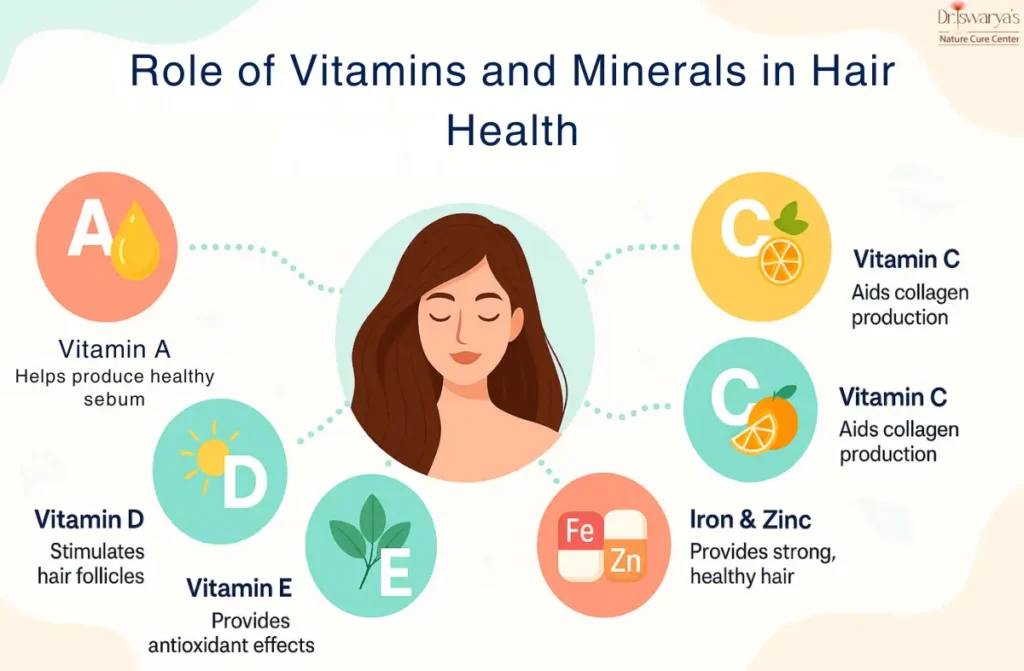
The Role of Vitamins and Minerals in Hair Health
Hair roots are very active and need nutrients to build new hair. Vitamins and minerals help in many ways:
- They help the body make keratin, the main protein in hair.
- They support blood flow and oxygen supply to the scalp.
- They help keep the scalp skin healthy.
- They protect cells from damage.
A shortage of a nutrient may show up as hair fall, dull hair or slow growth. But taking extra of a nutrient you are not short of usually does not make hair grow faster. In some cases, too much can even cause harm.
Vitamins for Healthy Hair
1. Vitamin A
Vitamin A helps skin cells grow, including the cells of the scalp. It also helps the scalp make sebum, the natural oil that keeps hair from becoming too dry.
Food sources: Carrot, pumpkin, sweet potato, spinach, drumstick leaves, papaya, mango, milk, curd and eggs.
Important: Too much vitamin A from supplements can actually cause hair fall. Getting it from food is the safer choice.
2. Biotin (Vitamin B7)
Biotin is part of the B vitamin group and helps the body use protein to build keratin. It is one of the most talked about vitamins for healthy hair, and it is found in many hair supplements.
Food sources: Eggs (cooked), groundnuts, almonds, sunflower seeds, sweet potato, mushrooms and whole grains.
Important: True biotin deficiency is uncommon in people who eat a balanced diet. Biotin supplements may help people who are actually low in it, but there is little proof that they help hair in people with normal levels. High doses of biotin can also give wrong results in some blood tests, including thyroid and heart tests. Always tell your doctor if you take biotin before any blood test.
3. Other B Vitamins
Vitamin B12 and folate help make red blood cells, which carry oxygen to the hair roots. Low B12 is more common in people who eat a fully vegetarian diet.
Food sources: Milk, curd, paneer, eggs, fish and meat for B12. Leafy greens, dals and citrus fruits for folate.
4. Vitamin C
Vitamin C helps the body make collagen, a protein that supports the skin and hair. It also helps the body absorb iron from plant foods, which matters for hair.
Food sources: Amla, guava, orange, sweet lime, lemon, tomato and capsicum.
Tip: Squeezing lemon on dal or eating a guava after a meal can help the body take in more iron.
5. Vitamin D
Low vitamin D levels are often seen in people with hair fall. Vitamin D plays a part in the hair growth cycle. Many people in India have low vitamin D, even in sunny cities like Chennai, because they spend most of the day indoors.
Sources: Safe morning sunlight on the arms and legs for a short time, egg yolk, fatty fish and fortified milk.
Important: Vitamin D supplements should be taken only after a blood test and as advised by a doctor, because very high levels can be harmful.
6. Vitamin E
Vitamin E is an antioxidant, which means it helps protect cells from damage. It supports a healthy scalp.
Food sources: Almonds, sunflower seeds, groundnuts, spinach and vegetable oils.
Minerals That Support Healthy Hair
1. Iron
Iron helps red blood cells carry oxygen to the hair roots. Low iron is one of the common reasons for hair fall, especially in women with heavy periods, pregnant women and people who eat little iron rich food.
Food sources: Drumstick leaves, spinach, other greens, ragi, dates, jaggery in small amounts, rajma, chana, sesame seeds, eggs, fish and meat.
Important: Iron supplements should be taken only if a blood test shows low iron. Too much iron can be harmful. You can read more about foods to improve your iron level.
2. Zinc
Zinc helps with tissue growth and repair, including the hair roots. Low zinc may be linked with hair fall.
Food sources: Pumpkin seeds, sesame seeds, cashews, chana, dals, whole grains, eggs and seafood.
Important: Too much zinc from supplements can lower copper levels in the body and cause other problems.
3. Magnesium
Magnesium is needed for hundreds of processes in the body, including making protein.
Food sources: Leafy greens, nuts, seeds, bananas, whole grains and dals.
4. Selenium
Selenium is a mineral the body needs in very small amounts. It helps protect cells.
Food sources: Brazil nuts, sunflower seeds, eggs, fish, mushrooms and whole grains.
Important: Too much selenium can cause hair fall and brittle nails. Supplements should be avoided unless a doctor advises them.
Other Nutrients for Healthy Hair
Protein
Hair is made mostly of protein. Eating too little protein, which is common with strict diets, can lead to hair thinning.
Food sources: Dals, sundal, rajma, chana, curd, paneer, milk, eggs, fish, chicken, nuts and seeds.
Omega 3 Fatty Acids
These healthy fats support the skin and scalp.
Food sources: Flax seeds, walnuts, chia seeds and fish such as sardines and mackerel.
Water
Drinking enough water through the day helps keep the body and skin hydrated.
Quick Guide: Nutrients, Their Role and Food Sources
| Nutrient | Main Role for Hair | Common Indian Food Sources |
| Protein | Building block of hair | Dals, curd, paneer, eggs, fish, chicken |
| Iron | Carries oxygen to hair roots | Drumstick leaves, greens, ragi, rajma, chana |
| Vitamin D | Supports the hair growth cycle | Morning sunlight, egg yolk, fatty fish |
| Vitamin B12 | Helps make red blood cells | Milk, curd, paneer, eggs, fish |
| Biotin | Helps build keratin | Eggs, groundnuts, almonds, sweet potato |
| Vitamin C | Helps iron absorption and collagen | Amla, guava, orange, lemon |
| Vitamin E | Protects scalp cells | Almonds, sunflower seeds, groundnuts |
| Vitamin A | Supports scalp oil and skin cells | Carrot, pumpkin, papaya, greens |
| Zinc | Tissue growth and repair | Pumpkin seeds, sesame, chana, cashews |
| Omega 3 fats | Supports scalp skin | Flax seeds, walnuts, sardines |
Signs Your Body May Be Low in Key Nutrients
Hair fall is rarely the only sign of a deficiency. Other signs may include:
- Low iron: Tiredness, pale skin, breathlessness on climbing stairs, brittle nails and cold hands and feet.
- Low vitamin B12: Tiredness, tingling or numbness in hands and feet, mouth ulcers and poor memory.
- Low vitamin D: Body aches, bone pain, muscle weakness and frequent tiredness.
- Low protein: Weak muscles, slow healing of wounds and swelling in the feet.
- Low zinc: Slow wound healing, frequent infections and changes in taste.
These signs can also have other causes. A doctor and a blood test can confirm what is really going on.
Can Too Many Supplements Harm Your Hair?
Yes. Many people take several hair supplements at once without a test. This can cause problems:
- Too much vitamin A or selenium can cause hair fall.
- Too much iron, vitamin D or zinc can harm other parts of the body.
- High biotin can give wrong results in blood tests.
- Some supplements can interact with regular medicines.
This is why it is best to check your levels with a blood test first and take supplements only if your doctor advises them.
Hair Health at Different Stages of Life
Women
Women are more likely to have low iron because of monthly periods, pregnancy and breastfeeding. Thyroid problems and PCOS are also common causes of hair fall in women. Regular blood tests and an iron rich diet are especially helpful.
After Childbirth
Many women notice heavy hair fall two to four months after delivery. This is usually caused by hormone changes and often settles within a year. Good nutrition, rest and continuing any supplements prescribed by the doctor can support recovery during this time.
During Menopause
Falling hormone levels during menopause can make hair thinner and drier. A protein rich diet, regular activity, good sleep and stress care are helpful. Hair thinning that is sudden or heavy should be checked by a doctor.
Men
Pattern hair loss is the most common type of hair loss in men and is mainly linked to genes and hormones. Good nutrition supports overall hair health, but it cannot change pattern hair loss on its own. A dermatologist can explain the options.
Teenagers
Teenagers who skip meals, follow strict diets or eat a lot of junk food may not get enough iron, protein and other nutrients. Exam stress and poor sleep can also add to hair fall. Regular meals and a balanced diet are the first step.
Senior Citizens
Hair naturally becomes thinner with age. Older adults may also absorb less vitamin B12 and may get less sunlight. A doctor may suggest tests to check these levels.
Vegetarian and Vegan Diets
Many people in Chennai follow a vegetarian diet. A well planned vegetarian diet can support healthy hair, but a few nutrients need extra attention:
- Iron: Plant iron is harder to absorb. Eat greens, ragi, rajma and chana with a vitamin C food such as lemon, amla or guava.
- Vitamin B12: Found mainly in animal foods. Vegetarians can get some from milk, curd and paneer. Vegans may need a supplement, as advised by a doctor.
- Protein: Include dals, sundal, curd, paneer, soya, nuts and seeds every day.
- Zinc: Soaking, sprouting and fermenting grains and dals, as in idli and dosa batter, can help the body absorb zinc better.
- Omega 3 fats: Add flax seeds or walnuts to your diet.
Tips to Absorb More Iron
- Avoid drinking tea or coffee with meals. Keep a gap of at least one hour.
- Add lemon juice to dal, sambar, poriyal or salads.
- Eat a vitamin C rich fruit after an iron rich meal.
- Cooking in an iron kadai may add a small amount of iron to food.
When Supplements May Help
Supplements may help when:
- A blood test shows a clear deficiency, such as low iron, vitamin D or B12.
- Your diet is very limited, for example due to allergies or a strict vegetarian diet without dairy.
- You are pregnant or breastfeeding and your doctor advises them.
- You have a condition that affects how your body absorbs nutrients.
When choosing a supplement, follow your doctor’s advice on the type and amount, check the label, and do not take more than advised. Supplements should support a healthy diet, not replace it.
Tests That May Help Find the Cause
If you have ongoing hair fall, a doctor may suggest tests such as:
- Complete blood count (to check for anaemia)
- Iron studies, including ferritin
- Vitamin D
- Vitamin B12
- Thyroid tests
- Hormone tests, if PCOS or other hormone problems are suspected
These tests help find out which vitamins for healthy hair you may actually need, instead of guessing.
Why Food Comes First
A balanced diet gives the body many nutrients together, in the forms it can use well. A simple hair friendly plate may include:
- A source of protein such as dal, curd, eggs or fish
- Vegetables, especially leafy greens
- Whole grains such as millets or brown rice
- A fruit rich in vitamin C, such as guava or amla
- A small handful of nuts or seeds
Hair grows slowly, about 1 cm a month. So changes from a better diet usually take a few months to show. You can also read about a healthy diet for hair growth.
A Sample Day of Hair Friendly Meals
This is only an example. Your needs may differ based on your health, age and activity.
- Early morning: A glass of water and a few soaked almonds and walnuts
- Breakfast: Ragi dosa or vegetable oats with sambar, or two boiled eggs with whole wheat toast
- Mid morning: A guava, an orange or a few slices of papaya
- Lunch: Brown rice or millet, dal, a green leafy vegetable poriyal, curd and a salad with lemon
- Evening: Chana sundal or roasted groundnuts with a cup of buttermilk
- Dinner: Chapati with paneer or vegetable curry, or fish curry with a small portion of rice
- Before bed: A glass of warm milk, if it suits you
Cooking Tips to Keep Nutrients in Food
- Do not overcook vegetables. Light steaming or quick stir frying keeps more vitamins.
- Cut vegetables just before cooking, not hours earlier.
- Use the water left after boiling vegetables in soups or rasam, as some vitamins pass into the water.
- Add lemon juice after cooking, not during, as heat reduces vitamin C.
- Soak and sprout dals and grains to improve how well the body uses their nutrients.
Myths and Facts About Vitamins and Hair
- Myth: Taking more biotin will make hair grow faster. Fact: Biotin helps only if you are actually low in it, and high doses can affect blood tests.
- Myth: Hair fall always means a vitamin deficiency. Fact: Hair fall has many causes, including hormones, stress, genes and medical conditions.
- Myth: Oiling hair every day feeds the roots. Fact: Oils can soften hair and soothe the scalp, but hair roots get nutrients mainly through the blood, from the food you eat.
- Myth: Natural supplements are always safe. Fact: Natural products can still cause side effects or interact with medicines.
- Myth: Results show in a week. Fact: Hair grows slowly, and changes usually take a few months.
Lifestyle Habits for Healthy Hair
- Manage stress: Yoga, breathing practices, meditation, and good sleep can help you cope with stress.
- Sleep well: Aim for seven to eight hours each night.
- Avoid crash diets: Lose weight slowly and steadily if you need to.
- Be gentle with hair: Avoid tight hairstyles, too much heat styling, and harsh chemical treatments.
- Use a mild shampoo: Wash your scalp regularly to keep it clean.
- Comb gently: Use a wide tooth comb, especially on wet hair.
- Avoid smoking: Smoking affects blood flow to many parts of the body, including the scalp.
Scalp Care in Chennai’s Climate
Chennai’s heat and humidity bring their own hair care challenges:
- Sweat and oil: Heavy sweating can make the scalp oily and itchy. Wash your hair regularly with a mild shampoo, especially after exercise or a long day outdoors.
- Dandruff: Humidity can make dandruff worse. Keep the scalp clean and dry, and see a doctor if dandruff is heavy or does not improve.
- Hard water: Some areas have hard water, which can leave hair feeling dry and rough. A final rinse with filtered water may help.
- Sun: Strong sun can make hair dry and brittle. Cover your head with a cap, scarf or umbrella when outdoors for long.
- Swimming: Rinse your hair with clean water after swimming in chlorinated pools.
Stress and Hair Fall
Stress affects hair in more than one way. A very stressful event can push many hairs into the resting phase at once, leading to heavy shedding a few months later. Long term stress can also affect sleep, appetite and food choices, which in turn affect the nutrients reaching your hair.
Simple ways to manage stress include:
- A short daily walk outdoors
- Five to ten minutes of slow breathing or meditation
- Regular yoga practice
- Keeping a fixed sleep routine
- Talking to friends, family or a counsellor when needed
Other Hair Care Options
Some people use natural oils such as coconut oil, castor oil or rosemary oil for scalp massage. Gentle massage may help with relaxation and scalp comfort. Natural oils can still cause irritation in some people, so do a patch test first. You can also read about natural remedies for hair fall.
For pattern hair loss or hair loss due to medical conditions, a dermatologist may suggest medical treatments. These should be discussed directly with a dermatologist, who can explain the benefits and risks for your situation.
When Should You See a Doctor?
Please see a doctor or dermatologist if you notice:
- Sudden or heavy hair fall
- Round bald patches
- Hair loss with itching, pain, redness or scaling on the scalp
- Hair fall along with tiredness, weight changes, irregular periods or feeling cold often
- A widening parting or receding hairline
- Hair fall that continues for more than three months
These signs may point to a medical cause that needs proper diagnosis.
How Dr. Iswarya’s Nature Cure Centre Can Support You
At Dr. Iswarya’s Nature Cure Centre, care for hair concerns starts with understanding the person. The doctor looks at your diet, stress, sleep, digestion, hormones and recent blood reports before suggesting any changes.
Support may include:
- Diet guidance: A food plan rich in protein, iron and the vitamins for healthy hair, based on your eating habits.
- Stress care: Yoga, breathing and relaxation practices.
- Scalp care: Gentle natural therapies as part of the centre’s skin and hair care therapies.
- Lifestyle guidance: Simple changes in sleep, routine and hair care habits.
Dr. Iswarya’s Nature Cure Centre encourages people to get the right blood tests and to continue any treatment from their dermatologist or doctor.
Dr. Iswarya’s Nature Cure Centre
- Address: 44/1, Venkatakrishna Road, Jeth Nagar, Mandaveli, Chennai 600028
- Phone: 044 4618 7679
- Clinic Timings: Monday to Saturday, 9:00 AM to 7:00 PM; Sunday, 10:00 AM to 3:00 PM
Conclusion
Healthy hair depends on good nutrition, a healthy scalp and a calm, balanced lifestyle. Vitamins for healthy hair, such as vitamin D, B vitamins, vitamin C and vitamin E, along with iron, zinc and protein, all play a part. Getting these from a balanced diet is the safest way for most people.
If hair fall continues, the first step is to find the cause with the help of a doctor and a few simple blood tests. Supplements are useful when a real deficiency is found, but more is not always better. With the right diet, good habits and patience, many people see their hair health improve over time.
Read Also: Holistic Healing in Chennai