

Written and Reviewed by
Dr. Iswarya
BNYS (Bachelor of Naturopathy & Yogic Sciences), MD (Doctor in Medicine). Founder & Chief Naturopathy Consultant at Dr. Iswarya’s Nature Cure Centre, Chennai.
Medical registration ID – 0308/A
View credentials →Fatty liver disease develops when excess fat accumulates in liver cells, gradually reducing the liver’s ability to filter toxins, process nutrients, and regulate metabolism. While medications exist for related conditions like diabetes or high cholesterol, there is currently no approved drug specifically for fatty liver itself — which is why natural remedies for fatty liver have become the primary, evidence-supported path to recovery for most people.
The good news is that fatty liver is often reversible. A combination of dietary changes, herbal support, hydration, and consistent physical activity can meaningfully reduce liver fat within a few months. This guide walks through what causes fatty liver, how to recognize it early, and which natural remedies for fatty liver are actually backed by clinical research and traditional naturopathic practice.
What is Fatty Liver Disease?
A healthy liver contains a small, normal amount of fat. It’s classified as fatty liver once fat accounts for roughly 5–10% of the liver’s total weight. Left unmanaged, this can progress to inflammation (steatohepatitis) and, over years, to scarring or cirrhosis.
Doctors generally recognize two main types:
- Non-Alcoholic Fatty Liver Disease (NAFLD): Linked to obesity, insulin resistance, type 2 diabetes, and poor diet. This is the more common form today.
- Alcoholic Fatty Liver Disease (AFLD): Caused by sustained heavy alcohol use that overwhelms the liver’s fat-processing capacity.
Fatty liver is also staged by severity — mild (under roughly a third of liver cells affected), moderate, and severe. Catching it at the mild stage matters, because this is when natural remedies for fatty liver tend to work fastest and most reliably, before scarring sets in.
Common Causes of Fatty Liver
Fatty liver rarely has a single cause. It usually develops from a combination of the following:
- Unhealthy diet: Frequent fried, processed, and high-sugar foods force the liver to convert excess calories into stored fat.
- Obesity and excess weight: Extra body fat, especially around the abdomen, increases fat accumulation inside liver cells.
- Alcohol consumption: Regular or heavy drinking is the leading cause of alcoholic fatty liver disease.
- Diabetes and high cholesterol: Both conditions disrupt normal fat metabolism, raising the risk of fat buildup in the liver.
- Sedentary lifestyle: Minimal physical activity slows the body’s ability to burn stored fat, including fat in the liver.
Addressing these root causes with better nutrition, weight management, and consistent naturopathy-based care is where sustainable natural remedies for fatty liver begin to make a real difference.
Symptoms of Fatty Liver Disease
Fatty liver is often silent in its early stages, which is why routine blood work sometimes catches it before symptoms appear. As it progresses, common signs include:
- Persistent fatigue or unexplained weakness
- Discomfort or a dull ache in the upper right abdomen
- Mild swelling in the abdomen, legs, or ankles
- Loss of appetite or unexplained weight changes
- In advanced cases, yellowing of the skin or eyes (jaundice)
When to See a Doctor
If you notice any of the symptoms above — especially abdominal pain, swelling, or jaundice — see a doctor promptly rather than relying on home care alone. Fatty liver is generally diagnosed through blood tests (liver enzymes), ultrasound, or occasionally a FibroScan. Natural remedies work best as a complement to proper diagnosis and monitoring, not as a replacement for it.
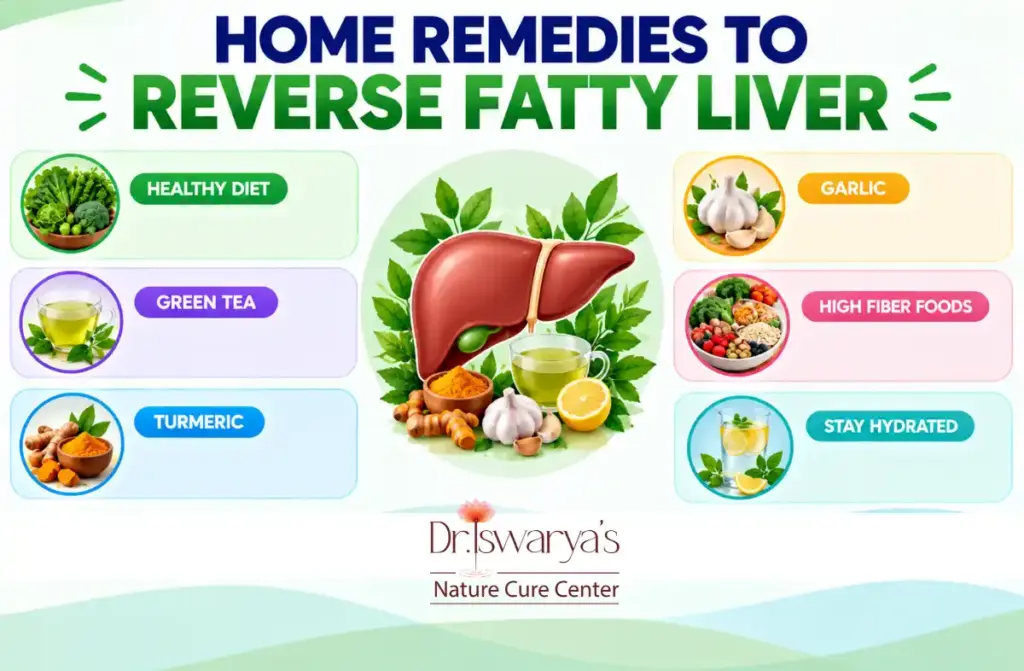
Natural Remedies for Fatty Liver: 10 Home Remedies That Work
These ten habits are among the most well-supported home-based options, drawing on both clinical nutrition research and naturopathic practice.
1. Stay Well Hydrated
Adequate water intake supports the liver’s natural detox pathways and helps transport nutrients efficiently. Aim for 8–10 glasses daily.
2. Include Omega-3 Fatty Acids
Salmon, flaxseeds, chia seeds, and walnuts are rich in omega-3s, which have been shown to lower liver fat and reduce inflammation. Include them 2–3 times a week.
3. Limit Sugar Intake
Excess sugar from sodas, desserts, and packaged snacks is converted into fat by the liver. Replace refined sugar with fresh fruit in moderation.
4. Drink Green Tea
Green tea’s catechins are antioxidants linked to improved liver enzyme levels and reduced fat buildup. Two to three unsweetened cups daily is a reasonable target.
5. Eat Fiber-Rich Foods
Whole grains, lentils, beans, and leafy greens support digestion, stabilize blood sugar, and reduce fat storage in the liver. Aim for 25–30 grams of fiber daily.
6. Try Herbal Remedies
Milk thistle, turmeric, and dandelion root are traditionally used to support liver detoxification and cell repair. Always check with a healthcare provider before starting any herbal supplement, especially if you’re on other medication.
7. Avoid Processed and Fried Foods
Packaged snacks and fast food are typically high in unhealthy fats that add to the liver’s workload. Prioritize fresh, whole-food meals instead.
8. Practice Portion Control
Overeating, even with healthy foods, still stresses liver metabolism. Smaller meals every 3–4 hours help maintain steady digestion and energy.
9. Quit Smoking
Smoking increases oxidative stress, which compounds liver cell damage. Quitting benefits liver health as well as the cardiovascular system.
10. Get Enough Sleep
The liver carries out much of its repair work during sleep. Seven to nine hours of quality rest each night supports this recovery process.
Together, these habits form a practical, sustainable foundation — and among all natural remedies for fatty liver disease, consistency across diet, hydration, and sleep tends to matter more than any single fix.
Herbal Treatment for Fatty Liver
Herbal support is one of the oldest and most studied approaches to liver recovery. Here’s how the most common options compare:
| Herb | Active Compound | Benefit |
| Milk Thistle | Silymarin | Supports liver cell repair and detoxification |
| Turmeric | Curcumin | Reduces inflammation and liver fat |
| Dandelion Root | Taraxasterol, Inulin | Promotes bile flow and digestion |
| Licorice Root | Glycyrrhizin | Lowers oxidative stress, protects liver tissue |
| Green Tea Extract | Catechins | Antioxidant support, reduces fat accumulation |
Herbal treatment for fatty liver works best when paired with dietary changes and regular activity — herbs alone rarely reverse the condition on their own. Speak with a healthcare professional before starting any supplement, particularly if you take other medications.
Diet Chart: Foods to Eat and Avoid for Fatty Liver
| Foods to Include | Foods to Limit or Avoid |
| Leafy greens, broccoli, garlic | Fried and deep-fried foods |
| Oats, brown rice, whole wheat | Refined sugar, sweets, sodas |
| Walnuts, flaxseeds, olive oil | Red and processed meats |
| Fatty fish (salmon, sardines) | Alcohol |
| Green tea, lemon water | Packaged and processed snacks |
| Berries, apples, papaya | White bread, maida-based foods |
Building meals around this list is one of the simplest, most consistent natural remedies for fatty liver you can apply daily.
How to Reduce Fatty Liver Quickly
There’s no genuine overnight cure, but if you’re wondering how to reduce fatty liver quickly, these steps produce the fastest measurable improvement:
- Cut alcohol and added sugar completely for at least two weeks.
- Replace fried foods with steamed, grilled, or lightly sautéed meals.
- Walk briskly for 30–40 minutes daily — physical activity mobilizes liver fat faster than diet changes alone.
- Drink 2–3 cups of unsweetened green tea and plenty of water throughout the day.
- Prioritize sleep and reduce stress, since cortisol spikes can worsen fat storage.
Most people notice improved energy and digestion within 2–4 weeks, though liver enzyme and fat levels typically take 3–6 months of consistent effort to shift meaningfully on scans or blood tests.
Best Natural Remedy for Fatty Liver: What Actually Works Best?
There’s no single “magic” fix, but if you’re looking for the best natural remedy for fatty liver, the strongest evidence points to a combination approach: milk thistle or turmeric for liver support, paired with a low-sugar, fiber-rich diet and daily movement. Isolated remedies — a single herb or one “detox” drink — rarely outperform this combined, sustained approach.
Treatment and Lifestyle Approach
Reversing fatty liver comes down to sustainable, gradual changes rather than drastic short-term fixes:
- Reduce or eliminate alcohol — essential for AFLD recovery.
- Aim for slow, steady weight loss — losing 7–10% of body weight over several months is enough to meaningfully improve liver fat.
- Build meals around lean protein, vegetables, and healthy fats.
- Add herbal support such as turmeric and milk thistle to complement dietary changes and aid liver repair.
If you’d like personalized guidance, our naturopathy treatment programs at Dr. Iswarya’s Nature Cure Centre combine diet planning, herbal therapy, and lifestyle coaching tailored to your liver health goals. You can also explore our full range of treatments or book a consultation to get started.
Conclusion
Fatty liver disease can sound alarming, but for most people it’s a reversible condition. Combining a nutrient-rich diet, regular movement, adequate sleep, and time-tested herbal support gives the liver what it needs to heal itself. The consistent thread across nearly all natural remedies for fatty liver is patience — small, daily habits compound into real recovery over a few months, not overnight.
Read also: Reason of Heart Attack in Young Age