

Written and Reviewed by
Dr. Iswarya
BNYS (Bachelor of Naturopathy & Yogic Sciences), MD (Doctor in Medicine). Founder & Chief Naturopathy Consultant at Dr. Iswarya’s Nature Cure Centre, Chennai.
Medical registration ID – 0308/A
View credentials →Feeling unusually tired, dizzy, or unable to focus lately? It might be more than just a busy week — your body could be low on iron. Choosing the right foods to improve your iron level is one of the simplest and safest ways to restore your energy naturally, especially for women and vegetarians who are more prone to deficiency.
In this guide, we’ll cover the 8 best food for improve iron level, the early warning signs of deficiency, the side effects of excessive iron intake, and practical foods and meal plans for iron deficiency that you can start following today.
Understanding Iron and Why It Matters
Iron is an essential mineral your body uses to make hemoglobin — the protein in red blood cells responsible for carrying oxygen from your lungs to every tissue in your body. When iron levels drop too low, your cells don’t get enough oxygen, and you start to feel it: constant fatigue, weakness, and brain fog are the most common complaints we see at our clinic. This is exactly why identifying the right foods to improve your iron level early on matters so much.
There are two types of dietary iron:
- Heme iron — found in animal foods like meat, poultry, and fish. It’s absorbed efficiently by the body.
- Non-heme iron — found in plant foods like lentils, spinach, and seeds. It’s absorbed less efficiently, but pairing it with vitamin C significantly improves uptake.
Most people benefit from a mix of both, tailored to their dietary preferences and any existing health conditions.
Recommended Daily Iron Intake
Iron needs vary by age, gender, and life stage:
| Group | Recommended Daily Iron |
|---|---|
| Adult men | 8–11 mg |
| Adult women (menstruating) | 15–18 mg |
| Pregnant women | 27 mg |
| Postmenopausal women | 8 mg |
| Children (4–8 yrs) | 10 mg |
Knowing your target intake helps you plan foods and meal plans for iron deficiency more effectively instead of guessing.
Early Signs of Iron Deficiency
Iron deficiency often develops gradually, which is why many people don’t notice it until symptoms start affecting daily life. Watch for:
- Persistent fatigue, even after adequate sleep
- Pale skin or pale inner eyelids
- Brittle nails or hair thinning
- Dizziness or lightheadedness
- Shortness of breath during light activity
- Difficulty concentrating
- Unusual cravings for ice, chalk, or starch (a condition called pica)
If several of these sound familiar, it’s worth getting a simple blood test before making major dietary changes — that way you know exactly where you stand before relying on foods to improve your iron level alone.
What Causes Iron Deficiency?
Understanding the cause helps you choose the right fix. Common causes include:
- Inadequate dietary intake — especially in vegetarian or low-protein diets
- Heavy menstrual bleeding in women
- Poor absorption due to gut conditions like celiac disease or low stomach acid
- Pregnancy, which increases iron demand significantly
- Chronic blood loss from ulcers or other internal conditions
- Frequent tea or coffee consumption with meals, which blocks iron absorption
8 Best Food for Improve Iron Level
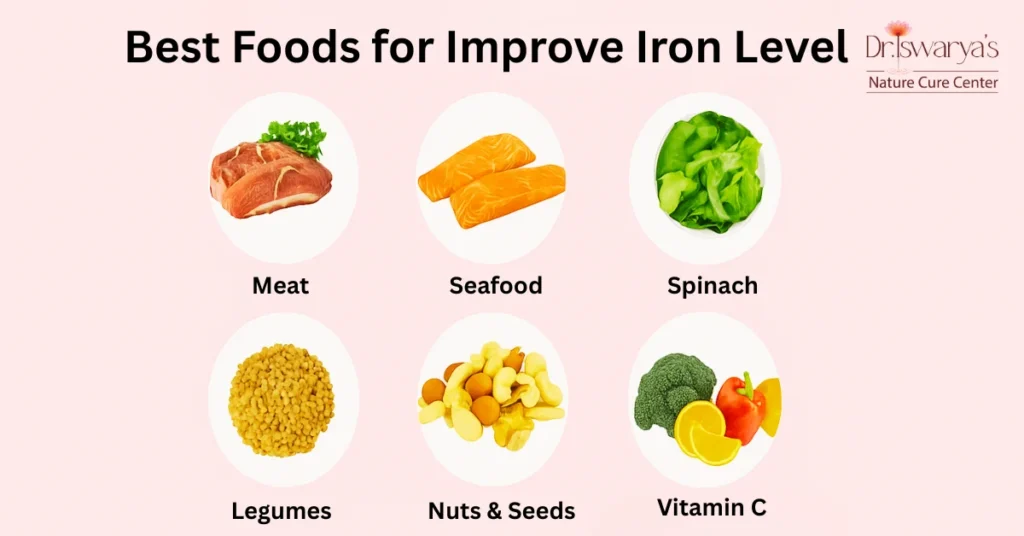
These are the 8 best food for improve iron level, chosen for their high iron content and easy availability in an Indian kitchen:
1. Spinach and Other Leafy Greens
A classic source of non-heme iron along with folate and vitamin A. Add it to sambar, soups, or a quick sauté with garlic to make it more palatable and boost absorption.
2. Jaggery (Karupatti/Vellam)
A traditional favorite in Indian households, jaggery contains a modest amount of iron along with trace minerals, and it’s often used as a natural sweetener in place of refined sugar for anemia-prone individuals.
3. Dates
Dried dates are a convenient, portable source of iron and natural sugars, making them a practical snack for anyone managing fatigue through the day.
4. Lentils and Legumes (Dal)
Red lentils, chickpeas, and rajma are iron-dense staples in most Indian diets. Combine them with lemon juice or tomatoes to significantly improve non-heme iron absorption.
5. Pumpkin Seeds
A small handful of pumpkin seeds provides a solid dose of iron along with zinc and magnesium — easy to sprinkle over salads, yogurt, or porridge.
6. Sesame Seeds (Til)
Often overlooked, sesame seeds are rich in iron and calcium. Try them roasted, in chutney podi, or as til laddoos.
7. Red Meat (for non-vegetarians)
Lean cuts of red meat are among the richest sources of heme iron, which the body absorbs far more easily than plant-based iron. Two servings a week is generally sufficient for most adults.
8. Eggs and Fish
Eggs provide a moderate, easily digestible amount of iron, while sardines and tuna add omega-3 fatty acids that support blood and heart health — both are practical additions to any of the foods and meal plans for iron deficiency described below.
Tip: Pairing any of the above with a vitamin C source — amla, citrus fruits, tomatoes, or guava — can boost non-heme iron absorption by up to threefold.
Sample Foods and Meal Plans for Iron Deficiency
Here’s a simple one-day plan combining the foods to improve your iron level discussed above:
| Meal | Suggestion |
|---|---|
| Early Morning | Soaked dates + a glass of amla juice |
| Breakfast | Ragi porridge with jaggery, or eggs on whole-grain toast |
| Mid-Morning | A handful of pumpkin and sesame seeds |
| Lunch | Spinach dal, brown rice, and a tomato-onion salad |
| Evening Snack | Sprouted chickpea chaat with lemon |
| Dinner | Grilled fish or lentil curry with sautéed greens |
Rotating meals like this consistently is far more effective long-term than relying on a single “superfood,” and it keeps your diet balanced rather than iron-heavy in one sitting.
Side Effects of Excessive Iron Intake
More isn’t always better. Among the notable side effects of excessive iron intake, especially from unsupervised supplementation, are:
- Nausea and abdominal discomfort
- Constipation
- Vomiting or stomach cramps
- In severe or prolonged cases, liver strain or organ damage
- Interference with zinc and other mineral absorption
This is why we always recommend food-first strategies and professional guidance before starting any iron supplement — particularly for individuals with hemochromatosis or other iron-storage conditions. Understanding the side effects of excessive iron intake is just as important as knowing which foods to add.
When to See a Doctor
If fatigue, dizziness, or breathlessness persist even after adjusting your diet, it’s time to consult a healthcare provider for a blood test to check your hemoglobin and ferritin levels. At our naturopathy consultation services, we design personalized foods and meal plans for iron deficiency that address the root cause rather than just masking symptoms — combining dietary correction with lifestyle and digestive-health support, since poor gut absorption is often an overlooked contributor to low iron.
Conclusion
Restoring healthy iron levels doesn’t have to mean reaching for supplements first. A thoughtful mix of leafy greens, legumes, seeds, jaggery, and — where appropriate — lean meats or fish, paired with vitamin C-rich foods, can steadily rebuild your energy. Following the right foods to improve your iron level consistently, while staying mindful of the side effects of excessive iron intake, is the safest long-term approach. As always, pair dietary changes with regular checkups so you stay in the healthy range rather than swinging toward excess.
Related reading: Tips to Help You Lose Weight Naturally | Natural Remedies for Digestion | Women’s Health & Holistic Wellness