
Written and Reviewed by
Dr. Iswarya
BNYS (Bachelor of Naturopathy & Yogic Sciences), MD (Doctor in Medicine). Founder & Chief Naturopathy Consultant at Dr. Iswarya’s Nature Cure Centre, Chennai.
Medical registration ID – 0308/A
View credentials →Hair says a lot about how well the body is functioning internally. Thick, shiny hair usually reflects good nutrition, while dullness, thinning, and excess shedding often point back to what’s missing on the plate. Add in daily stress, pollution, poor sleep, and rushed eating habits, and it’s no surprise hair fall has become one of the most common concerns we see at our clinic, across every age group.
The good news is that a healthy diet for hair growth is one of the most reliable, side-effect-free ways to improve hair quality from the inside out. Hair follicles need a steady supply of protein, vitamins, minerals, and healthy fats to keep producing strong strands. When that supply runs short, hair becomes brittle and starts falling faster than it regrows. External hair care products can help temporarily, but lasting change starts with what you eat.
At Dr. Iswaryas Nature Cure Centre, we’ve found that patients who pair internal nourishment with lifestyle correction see more consistent, longer-lasting improvement than those relying on topical treatments alone.
Understanding the Link Between Nutrition and Hair Health
Hair follicles are among the most metabolically active tissues in the body, which means they’re also among the first to suffer when nutrition falls short. Each strand is built mostly from keratin, a protein — so when protein or micronutrient intake drops, the body treats hair as expendable and diverts resources to organs it considers more essential. That’s why sudden weight loss, crash dieting, or prolonged illness so often shows up as hair shedding two to three months later.
This is also why so many people ask us whether can diet regrow hair on its own. The honest answer: when hair loss is caused by a nutritional gap, correcting that gap can genuinely restore follicle function. When it’s caused by genetics, hormonal conditions, or autoimmune issues, diet supports recovery but usually isn’t the whole solution.
Why a Healthy Diet for Hair Growth Matters
What you eat daily has a direct line to your scalp. A diet low in key nutrients weakens roots long before thinning becomes visible.
Consistent, nutrient-dense eating supports:
- Stronger, more resilient hair follicles
- Reduced daily hair fall and breakage
- Better scalp hydration and less flaking
- Thicker-looking, glossier strands over time
- Improved blood circulation to the scalp
- A more balanced hormonal environment, which itself affects shedding
Essential Nutrients Your Hair Actually Needs
Protein
Hair is roughly 90% keratin, a protein. Eggs, lentils, beans, dairy, and lean meats give the body the raw material it needs to keep producing strong strands.
Iron
Low iron is one of the most common — and most overlooked — causes of hair thinning, especially in women with heavy periods. Spinach, dates, beetroot, and legumes help restore levels naturally.
Biotin
Biotin supports keratin synthesis directly. Nuts, seeds, eggs, and sweet potatoes are reliable everyday sources.
Zinc
Zinc supports the oil glands around each follicle and helps repair tissue damage. Pumpkin seeds, whole grains, and nuts are good picks.
Omega-3 Fatty Acids
Healthy fats reduce scalp dryness and inflammation. Fatty fish, flaxseeds, walnuts, and chia seeds all help.
Vitamin C
Vitamin C boosts collagen production and helps the body absorb iron more efficiently. Citrus fruits, berries, and guava are excellent sources.
Vitamin D
Low vitamin D is consistently linked with thinning hair. Ten to fifteen minutes of sunlight most days, plus fortified foods, helps maintain healthy levels.
Rough daily targets for adults: 46–56g protein, 8–18mg iron, 8–11mg zinc, and 600 IU vitamin D — though individual needs vary, so a personalized assessment is always more reliable than a generic number.
Top Foods for Healthy Hair
These are the foods we most often recommend at the clinic, and they consistently rank among the top foods for healthy hair because each one delivers more than one hair-supporting nutrient at once:
- Eggs — protein and biotin for root strength
- Spinach — iron, folate, and scalp-nourishing vitamins
- Nuts and seeds — walnuts, almonds, flaxseeds, and sunflower seeds for healthy fats and zinc
- Fatty fish — salmon and sardines for anti-inflammatory omega-3s
- Sweet potatoes — beta-carotene for healthy scalp oil production
- Greek yogurt — protein and B5 for better scalp blood flow
- Lentils and beans — plant protein that prevents breakage
- Avocados — vitamin E and healthy fats for moisture and shine
- Berries — antioxidants and vitamin C to protect follicles
- Amla — supports collagen and strengthens roots naturally
Which Fruit is Best for Hair?
This is one of the most common questions we get, and the honest answer is that no single fruit does everything — but a few stand out consistently. If you’re asking which fruit is best for hair, look at ones that combine vitamin C, antioxidants, and hydration:
- Oranges
- Guava
- Berries
- Papaya
- Pomegranate
- Amla
Amla and berries tend to be the top picks in our clinic recommendations, since both support collagen production while protecting follicles from oxidative stress — a factor that speeds up shedding when left unchecked.
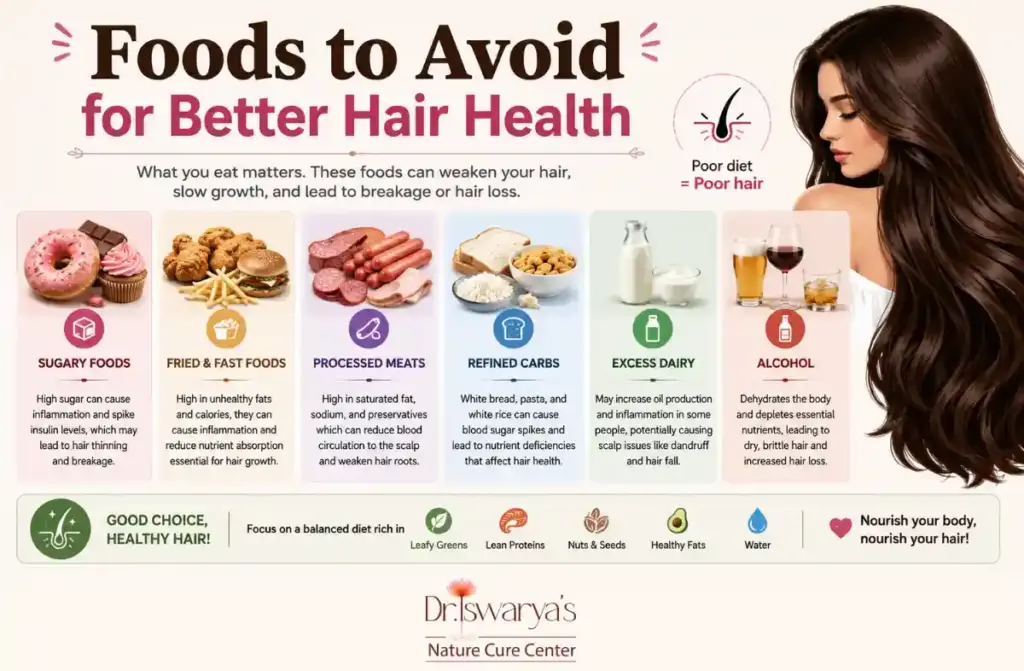
Foods to Avoid for Better Hair Health
Nutrient-dense eating only works if it isn’t undercut by the rest of the diet. We regularly see hair fall worsen in patients who eat well most days but still consume large amounts of:
- Processed and packaged foods
- Sugary snacks and desserts
- Carbonated, sugary drinks
- Deep-fried food
- Excess caffeine
- Refined carbohydrates (white bread, maida-based items)
These foods drive inflammation and hormonal imbalance, both of which quietly undo the benefits of an otherwise healthy diet for hair growth.
Can Diet Regrow Hair Naturally?
We touched on this earlier, but it deserves a closer look because it’s the question almost every patient asks first. Diet-driven hair loss — from crash dieting, anemia, poor digestion, or chronic stress — tends to respond well to sustained nutritional correction, often within three to six months. Genetic pattern hair loss, thyroid-driven shedding, or postpartum hair loss usually need diet paired with targeted treatment rather than food alone.
The realistic answer to whether can diet regrow hair is: yes, when the cause is nutritional, and partially, when other factors are involved. Either way, consistency matters more than any single “superfood.”
Food for Hair Growth and Thickness
Thickness is largely about follicle density and strand diameter, both of which respond to steady nutrient supply over months, not days. The best food for hair growth and thickness combines protein with the fats and micronutrients that support each strand’s structure:
- Eggs and lentils for protein
- Nuts and seeds for healthy fats
- Leafy greens for iron and folate
- Fatty fish for omega-3s
- Yogurt for B vitamins
- Sweet potatoes and berries for antioxidants
Consistency here matters more than quantity — small daily servings outperform occasional large ones.
Healthy Lifestyle Habits That Support Hair Growth
A healthy diet for hair growth works best alongside habits that support circulation, hormone balance, and nutrient absorption:
- Stay hydrated — water carries nutrients to the follicle and prevents scalp dryness
- Manage stress — chronic stress disrupts the hair growth cycle; yoga and meditation help regulate cortisol
- Sleep well — tissue repair, including at the follicle level, happens overnight
- Exercise regularly — improves scalp circulation along with everything else
- Limit heat styling — frequent straightening or chemical treatment weakens strands mechanically, independent of diet
Diet for Hair Growth Female: What’s Different
Women face a distinct set of triggers — monthly blood loss, pregnancy, postpartum shifts, and perimenopause all change nutrient demand. A well-planned diet for hair growth female typically leans harder into iron and protein than a generic plan would.
A practical healthy diet for hair growth female includes:
- Iron-rich foods (spinach, dates, legumes) to offset monthly losses
- Adequate protein at every meal, not just dinner
- A wide range of fruits and vegetables for antioxidant coverage
- Healthy fats to support hormone production
- Whole grains for steady energy and B vitamins
- Consistent hydration
Iron deficiency in particular is under-diagnosed in women with hair fall — it’s worth getting ferritin levels checked before assuming the cause is purely dietary.
7-Day Meal Plan for Healthier Hair
| Day | Breakfast | Lunch | Dinner |
| 1 | Oats with nuts and berries | Brown rice, spinach curry, lentils | Grilled fish and vegetables |
| 2 | Fruit smoothie with chia seeds | Millet roti with vegetable curry | Bean soup and salad |
| 3 | Eggs and whole-grain toast | Quinoa salad with avocado | Lentil soup and vegetables |
| 4 | Yogurt with fruits | Rice with leafy greens | Paneer with vegetables |
| 5 | Smoothie bowl with nuts | Chickpea salad | Vegetable soup and sprouts |
| 6 | Amla juice and oats | Brown rice and mixed vegetables | Fish curry and salad |
| 7 | Fresh fruits and seeds | Lentils and whole grains | Light vegetable stew |
This plan is a starting template — swap items freely as long as each meal keeps a protein source and at least one iron- or vitamin-C-rich food.
Common Mistakes People Make With Hair-Focused Diets
- Overloading on protein powder instead of whole foods — supplements without adequate iron, zinc, and biotin rarely move the needle alone.
- Expecting results in days — the hair growth cycle means visible change usually takes 3–6 months of consistency.
- Ignoring gut health — poor digestion can mean nutrients aren’t being absorbed even on a “good” diet.
- Cutting fat entirely — very low-fat diets often worsen scalp dryness and dullness.
Do You Need Supplements, or Is Food Enough?
For most people with mild seasonal shedding, whole foods cover nutritional needs without supplementation. Supplements (biotin, iron, vitamin D) are worth considering when blood tests confirm a deficiency, or when dietary intake is genuinely restricted — for example, in strict vegan diets or during pregnancy. Self-prescribing high-dose biotin without a confirmed deficiency rarely helps and can occasionally interfere with certain lab tests, so it’s best done under guidance.
When Hair Fall Needs More Than a Diet Change
See a doctor or specialist if you notice:
- Sudden, patchy hair loss rather than gradual thinning
- Hair fall alongside fatigue, cold intolerance, or irregular periods (possible thyroid or PCOS link)
- Visible scalp inflammation, itching, or scaling
- No improvement after 4–6 months of consistent dietary and lifestyle changes
These patterns often point to an underlying condition that diet alone won’t fully resolve.
Role of Naturopathy in Hair Wellness
Natural healing methods look at hair concerns as a symptom of a larger internal picture rather than an isolated cosmetic issue. At Dr. Iswaryas Nature Cure Centre, our approach combines nutrition correction, detoxification, stress management, and lifestyle changes to address the root cause.
We’ve seen the strongest, most sustainable results when patients pair naturopathy treatment with genuine dietary discipline — neither works as well in isolation.
Conclusion
Hair health is a mirror of overall wellness. Deficiencies, stress, poor eating patterns, and inconsistent sleep all show up eventually as weaker, thinner strands. A healthy diet for hair growth — built around protein, iron, healthy fats, and key vitamins — gives follicles what they need to function properly again.
Results take time, but they’re durable when the underlying nutrition is right. If your hair fall persists despite consistent dietary changes, it’s worth booking a consultation to rule out an underlying condition rather than continuing to guess.
Book a consultation with Dr. Iswaryas Nature Cure Centre →
Read Also: Top Holistic Healing in Chennai.