
Written and Reviewed by
Dr. Iswarya
BNYS (Bachelor of Naturopathy & Yogic Sciences), MD (Doctor in Medicine). Founder & Chief Naturopathy Consultant at Dr. Iswarya’s Nature Cure Centre, Chennai.
Medical registration ID – 0308/A
View credentials →The menopause treatment in Chennai looks at the whole woman, not just her hormone levels. Hot flashes, broken sleep, mood swings, joint pain, and weight gain rarely arrive alone, and they are shaped by your diet, stress, sleep, activity, and overall health. That is why many women now combine medical advice from a gynecologist with natural, lifestyle-based care.
Menopause is not a disease. It is a natural stage of life. But natural does not mean you must simply put up with it. If symptoms are disturbing your work, your rest, or your relationships, support is available, and small, steady changes often make a bigger difference than women expect.
In this guide you will learn what happens in the body during menopause, which symptoms are common, when you must see a doctor first, and how a naturopathy-based approach with diet, yoga, acupuncture, hydrotherapy and counseling can help you feel stronger and calmer. You will also see what a first visit looks like at Dr. Iswarya’s Nature Cure Centre in Mandaveli, Chennai.
What is Menopause?
Menopause is confirmed when you have had no period for 12 months in a row, with no other cause such as pregnancy, illness or medication. It happens because the ovaries slowly make less estrogen and progesterone, the hormones that control your cycle and also influence your bones, heart, skin, brain and mood.
It does not happen overnight. It moves through three stages:
- Perimenopause: The years leading up to your last period. Cycles turn irregular, and many symptoms begin here. This stage can last from a few months to several years.
- Menopause: The point at which you have gone 12 months without a period.
- Postmenopause: All the years after. Hot flashes often settle, but bone, heart and vaginal health need continued care.
At what age does menopause happen in Indian women?
Studies on Indian women put the average age of natural menopause at about 46 to 48 years, a little earlier than in Western countries. Perimenopause symptoms can begins in the early 40s. Menopause before the age of 40 is called premature ovarian insufficiency and always needs medical evaluation, since it affects bone and heart health over the long term.
Common Symptoms of Menopause
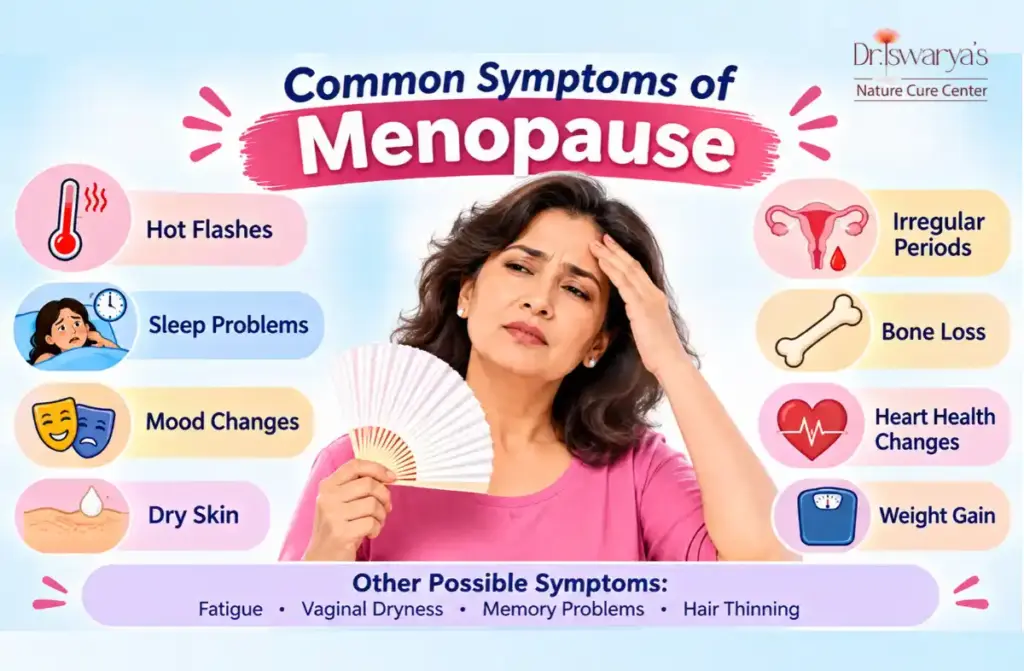
No two women have the same experience. Some sail through with mild changes, while others struggle for years. The most common symptoms are:
- Hot flashes and night sweats: Sudden heat in the face, neck and chest, often followed by sweating or chills. Chennai’s heat and humidity can make them harder to bear.
- Irregular periods: Shorter, longer, lighter or heavier cycles before they stop.
- Poor sleep: Trouble falling asleep, waking at 2 or 3 a.m. and feeling unrefreshed.
- Mood changes: Irritability, anxiety, low mood, tearfulness or a feeling of being overwhelmed.
- Brain fog: Forgetfulness, trouble focusing and mental tiredness.
- Vaginal dryness and discomfort: Dryness, burning, pain during intercourse and more frequent urinary infections.
- Joint and muscle pain: Stiff knees, aching shoulders, back pain and a heavy, tired body.
- Weight gain: Especially around the belly, even without eating more.
- Skin and hair changes: Dry skin, thinning hair and loss of glow.
- Palpitations and headaches: Some women notice a racing heart or more frequent headaches.
- Bone loss: Estrogen protects bone, so its fall raises the risk of osteopenia and osteoporosis. This change is silent and often found only after a fracture.
Why Menopause Feels So Different for Every Woman
Hormones are only part of the story. Several everyday factors can make symptoms milder or more severe:
- Stress: Long-term stress keeps the body on high alert and can worsen hot flashes, sleep and mood.
- Sleep and routine: Late nights, irregular meals and little sunlight disturb the body clock.
- Diet: Heavy refined carbohydrates, sugar, fried food and too little protein or calcium make weight, energy and bone health worse.
- Physical activity: Women who are inactive tend to feel stiffer, gain more weight and sleep worse.
- Other health conditions: Thyroid problems, anemia, diabetes, PCOS, history and vitamin D or B12 deficiency can mimic or magnify menopausal symptoms.
- Smoking and alcohol: Both are linked with earlier menopause and stronger symptoms.
The encouraging part is that most of these factors can be improved, which is exactly where natural and lifestyle-based care helps.
When Should You See a Doctor First?
Naturopathy is supportive care, not a replacement for medical evaluation. Please see a gynecologist or physician promptly if you have:
- Any bleeding after menopause. This always needs to be checked.
- Very heavy periods, bleeding between periods or periods lasting much longer than usual
- Symptoms before the age of 40 to 45
- A lump in the breast, severe pelvic pain or unexplained weight loss
- Chest pain, breathlessness or a fast, irregular heartbeat
- Severe depression, hopelessness or thoughts of self-harm
- A history of breast cancer, blood clots, stroke or heart disease, and questions about hormone therapy
A good integrative centre will ask you to complete these checks and will work together with your doctor, not around them.
How Menopause is Assessed
In most women over 45, menopause is recognised from your symptoms and period history alone. Your doctor may still advise some tests to rule out other causes and to check your long-term health:
- Thyroid profile, hemoglobin, blood sugar and lipid profile
- Vitamin D and vitamin B12 levels
- FSH and estradiol, mainly in younger women or unclear cases
- DEXA scan to measure bone density
- Pelvic ultrasound, Pap smear and mammogram, as advised for your age and risk
At a naturopathy centre, this is followed by a deeper look at what tests cannot show: your daily diet, sleep pattern, stress level, work and family load, digestion, activity and emotional health. This full picture is what allows a plan to be personal.
Medical and Natural Approaches: How They Fit Together
There is no single best treatment. Different tools suit different needs, and many women use more than one.
| Approach | Best for | Guided by |
| Hormone therapy (HRT) and prescription medicines | Moderate to severe hot flashes, vaginal symptoms, bone protection | Gynecologist |
| Diet and nutrition | Weight, energy, digestion, bone and heart health | Naturopath or dietitian |
| Yoga, pranayama and meditation | Stress, sleep, mood, flexibility | Therapeutic yoga specialist |
| Acupuncture | Hot flashes, sleep and pain in some women (research results are mixed) | Trained acupuncturist |
| Hydrotherapy and massage | Muscle tension, joint stiffness, relaxation, sleep | Naturopathy therapist |
| Counselling | Anxiety, low mood, life-stage changes | Counselor |
Hormone therapy decisions belong to your gynecologist. At Dr. Iswarya’s Nature Cure Centre, the aim is to support you with lifestyle and natural therapies, and to coordinate with your doctor when medicines are part of your plan.
Natural Menopause Treatment at Dr. Iswarya’s Nature Cure Centre, Chennai
Dr. Iswarya’s Nature Cure Centre is a doctor-led naturopathy centre in Mandaveli, Chennai. It offers personalised care that blends traditional naturopathic principles with modern wellness practice. For women in perimenopause and menopause, a plan may include the following.
1. Personalised assessment
Your first consultation is unhurried. The doctor listens to your story, reviews your reports and medications, and looks at your lifestyle in detail. The plan that follows is built around your main complaints, whether that is hot flashes, poor sleep, pain, weight or low mood, and not around a fixed package.
2. Diet and nutrition guidance
Food is one of the most powerful tools you have. A menopause-friendly diet is simple, local and affordable. See the food guide later in this article for specifics.
3. Yoga, pranayama and meditation
Therapeutic yoga helps ease stress, improve sleep and keep joints supple. The centre has therapeutic yoga specialists and offers yoga and meditation sessions in person and online.
4. Acupuncture and traditional healing
Acupuncture is used by some women for hot flashes, sleep trouble and body pain. Research results are mixed, so it is best seen as one supportive option rather than a guaranteed fix. Many women report feeling calmer and more relaxed after sessions.
5. Hydrotherapy and massage therapy
Hot and cold compresses, steam, spine sprays and massage therapies help release muscle tension, improve circulation and promote deep rest. These are especially useful for women whose main complaints are body ache, stiffness and poor sleep.
6. Physiotherapy and pain management
Back pain, knee pain and shoulder stiffness become more common after menopause. Physiotherapy and pain management with gentle strengthening can keep you moving comfortably.
7. Counseling and emotional support
Menopause often arrives along with teenage children, ageing parents and demanding careers. Counseling gives you a safe space to talk, and practical tools for stress, anxiety and sleep.
8. Online consultations
If travelling to Mandaveli is difficult, teleconsultation lets you start the process from home and follow up without missing work.
A Menopause-Friendly Diet for Indian Women
You do not need expensive supplements or imported foods. Everyday Indian foods, eaten regularly and in the right balance, cover most needs.
Foods to eat more of
- Calcium-rich foods: Ragi, curd, buttermilk, milk, sesame seeds (ellu), drumstick leaves and green leafy vegetables such as keerai.
- Protein at every meal: Dals, sprouts, chickpeas, paneer, eggs and fish if you eat them. Protein protects muscle, which falls with age.
- Whole grains and millets: Ragi, kambu, samai and brown rice instead of refined flour and polished rice, for steady energy and better blood sugar.
- Healthy fats: Nuts, flaxseed, walnuts, fish and cold-pressed oils in moderate amounts.
- Phytoestrogen foods: Flaxseed, sesame and soy foods such as tofu may help some women with hot flashes. Eat them as food in normal portions, not as high-dose supplements.
- Fruits and vegetables: Aim for a variety of colours daily, with amla, guava, papaya, pomegranate and seasonal fruit.
- Water and cooling drinks: Water, buttermilk, tender coconut water and jeera or coriander water help in Chennai’s heat.
Foods to limit
- Excess coffee and strong tea, especially in the afternoon
- Very spicy food, which triggers hot flashes in some women
- Alcohol and smoking
- Sugary drinks, sweets and bakery items
- Deep-fried snacks and heavily processed food
- Late, heavy dinners that disturb sleep
A useful habit: keep a simple diary for two weeks noting what you ate and when hot flashes came. Many women find two or three personal triggers they can easily avoid.
Yoga and Breathing Practices That Help
Gentle yoga is one of the most practical, low-cost ways to support yourself through menopause. Studies suggest yoga can help with sleep, stress and mood, though results on hot flashes vary. Common practices include:
- Sheetali and Sheetkari pranayama: Cooling breaths that many women find soothing during a hot flash.
- Nadi shodhana (alternate nostril breathing): Calms the mind and balances the nervous system.
- Bhramari (humming bee breath): Eases anxiety and helps before sleep.
- Baddha konasana and Setu bandhasana: Gentle poses for the pelvis, hips and back.
- Viparita karani (legs up the wall): Relaxing and helpful for tired legs and sleep.
- Shavasana and yoga nidra: Deep relaxation for stress and restless nights.
Learn these under a trained therapist first, especially if you have high blood pressure, heart disease, knee problems or osteoporosis, so the practice is safe for your body.
A Simple Daily Routine for Menopause
Small habits repeated daily work better than big changes made for a week. A sample day:
- Morning: Wake at a regular time, drink a glass of water and spend 10 to 15 minutes in morning sunlight, which supports vitamin D and sleep rhythm.
- Movement: Do 30 to 45 minutes of brisk walking, yoga or light strength exercise. Aim for about 150 minutes a week overall, with strength work twice a week.
- Meals: Eat three balanced meals at regular times, with protein and vegetables in each. Keep the evening meal light and early.
- Afternoon: Take a short break, drink water or buttermilk and avoid a late cup of tea or coffee.
- Evening: Spend 10 minutes on pranayama or meditation to release the day’s stress.
- Night: Switch off screens an hour before bed, keep the room cool and dark, and sleep at the same time each night.
Protecting Your Bones and Heart After Menopause
Falling estrogen speeds bone loss and also raises the risk of heart disease over time. Two things help most:food and movement.
- Include calcium-rich foods daily and get regular sunlight.
- Do weight-bearing exercise such as walking, stair climbing and light strength training.
- Check vitamin D, blood pressure, blood sugar and cholesterol regularly.
- Ask your doctor about a DEXA scan, particularly if you have a family history of fractures, early menopause or long-term steroid use.
- Do not smoke, and keep alcohol low.
Supplements should be taken only on medical advice, since the right dose depends on your test results.
Looking After Your Mind During Menopause
Anxiety, low mood and irritability are real parts of this transition and are not a sign of weakness. Things that help include regular sleep, daily movement, time outdoors, meditation, talking to a trusted friend and professional counseling when feelings feel heavy. If low mood lasts more than two weeks, or you ever feel hopeless, please speak to a doctor or counselor soon.
What to Expect at Your First Visit
- A detailed conversation. You talk through your symptoms, periods, sleep, appetite, stress and medical history, and bring any recent reports.
- A whole-body assessment. The doctor reviews your lifestyle, diet and emotional health along with your physical findings.
- A personalised plan. You receive clear advice on diet, daily routine, yoga and, where suitable, therapies such as acupuncture, hydrotherapy or massage.
- Coordination with your doctor. If tests or medical treatment are needed, you are guided on what to do next and how the plan fits with it.
- Follow-up. Progress is reviewed, and the plan is adjusted as your symptoms change, in person or online.
Why Women Choose Dr. Iswarya’s Nature Cure Centre
- Doctor-led care: The centre is led by Dr. Iswarya Subramaniam (BNYS, MD, Fellowship in Natural Lifestyle Medicine), who has guided it since 2021 with a focus on personalised, preventive care.
- A multidisciplinary team: Naturopaths, a therapeutic yoga specialist, a chiropractor and acupuncture and energy medicine expertise under one roof.
- Wide range of therapies: Naturopathy, acupuncture, yoga, hydrotherapy, massage, physiotherapy and counseling in a single place.
- Recognised and trusted: The centre reports more than 1,000 members and has received recognition including the BW Healthcare Excellence Award 2025.
- Flexible options: Day care, home care and online consultation for women who cannot travel often.
- Convenient location: Mandaveli, central Chennai, near Mylapore, Adyar, Alwarpet and T. Nagar.
Is Natural Menopause Care Safe for Everyone?
For most women, diet, yoga, breathing practices and gentle therapies are safe when guided by a trained professional. Some situations need extra care: heart disease, uncontrolled blood pressure or diabetes, osteoporosis, bleeding disorders, possible pregnancy, or use of blood thinners. Always tell your therapist about your medicines and conditions, and do not stop prescribed medicines without speaking to your doctor. Herbal products and supplements can interact with medicines, so take them only on professional advice.
How Much Does Menopause Treatment Cost in Chennai?
The cost depends on the consultation, the number and type of therapy sessions, any tests you need and how long your plan runs. Naturopathy centres often offer customised health packages instead of one fixed fee. The simplest way to know the exact cost is to book a consultation, after which the doctor can recommend a plan and explain the charges clearly.
Conclusion
Menopause is a natural change, and you do not have to face it alone or in silence. The most helpful menopause treatment in Chennai combines proper medical checks with daily habits that support your body: nourishing food, regular movement, calming breath work, good sleep and emotional care. Where symptoms are severe, your gynecologist’s treatment and natural therapies can work side by side.
If you want a plan built around your own symptoms, lifestyle and health history, Dr. Iswarya’s Nature Cure Centre offers doctor-led naturopathy, yoga, acupuncture, hydrotherapy and counseling in Mandaveli, Chennai, as well as online consultations. Taking the first step early often makes the transition smoother, and the years after menopause can be among your healthiest and most confident.
Book Your Menopause Consultation in Chennai
Dr. Iswarya’s Nature Cure Centre
Level 1 & 2, 44/1, Venkatakrishna Road, Jeth Nagar, Mandaveli, Chennai, Tamil Nadu 600028
Phone: 044-46187679 | Email: cmo@driswaryasnaturecure.com
Book a consultation or message us on WhatsApp to begin your personalised menopause care plan.