
The History of naturopathy reflects humanity’s long-standing belief that the body can heal when supported by the forces of nature. Ancient civilizations used elements such as water, sunlight, and balanced living to maintain health and prevent illness. Early Greek physician Hippocrates believed the body possessed an inner healing power that could restore balance when properly supported. Over centuries, these ideas shaped a holistic system focused on lifestyle, prevention, and overall well-being. Today, the history of naturopathy continues to influence modern wellness practices that emphasize harmony between the body, mind, and environment.
The Basic Concept of Naturopathy
At its core, naturopathy is built on the belief that the human body has a natural ability to restore balance and heal itself. Rather than suppressing symptoms, naturopathy focuses on strengthening the body’s internal systems so that health can be maintained naturally.
The foundation of this healing system lies in supporting the body through balanced nutrition, proper rest, detoxification, physical activity, and emotional well-being. These practices create the conditions in which the body can function optimally and recover from illness.
A central idea often emphasized in naturopathic philosophy is that diseases may appear different on the surface but often arise from underlying imbalances in lifestyle, nutrition, or environmental exposure. By correcting these root causes, long-term healing becomes possible.
Core Principles of Naturopathy
The guiding philosophy behind the History of naturopathy is reflected in a set of core principles that define naturopathic practice.
- Treat the Cause: Instead of focusing only on symptoms, naturopathy investigates the deeper reasons behind illness. Factors such as digestive imbalance, stress, poor sleep, and unhealthy lifestyle habits are addressed holistically. This approach explains many naturopathy treatment benefits, particularly in chronic lifestyle disorders.
- First, Do No Harm: Naturopathy prioritizes gentle therapies that work in harmony with the body. Treatments such as hydrotherapy, fasting therapy, and herbal support aim to stimulate healing without causing unnecessary side effects.
- Doctor as Teacher: Education is an essential part of naturopathic care. Patients learn how daily habits, emotions, posture, and nutrition affect their health. This knowledge empowers individuals to take an active role in maintaining their well-being.
- Treat the Whole Person: Health is influenced by multiple factors including physical health, emotional state, mental clarity, and spiritual balance. Naturopathy addresses all these dimensions rather than isolating a single symptom.
- Prevention: Preventive care is one of the strongest pillars of naturopathic philosophy. By correcting unhealthy habits early, many chronic diseases can be avoided or managed effectively.
Key Approaches & Therapies in Naturopathy
Naturopathy integrates several natural therapies that aim to restore balance and stimulate the body’s natural healing mechanisms.
- Holistic Lifestyle Care: Daily routines, sleep quality, emotional balance, and stress management form the foundation of healing. Small changes in lifestyle can produce significant naturopathy treatment benefits over time.
- Natural Modalities: Therapies such as nutrition therapy, yoga, hydrotherapy, mud therapy, and fasting help cleanse and rejuvenate the body naturally.
- Drug-Free Healing: A major goal of naturopathy is to strengthen the body’s natural defense system so that dependence on medications can be minimized whenever possible.
Benefits of Naturopathy Treatment in Today’s World
In a time where lifestyle diseases are increasingly common, the benefits of naturopathy treatment have gained renewed attention. Many individuals now seek natural solutions that focus on long-term wellness rather than temporary symptom relief.
- Holistic & Personalized Care: Each treatment plan is tailored to the individual’s body constitution, lifestyle, and emotional state. This personalized approach is deeply rooted in the History of naturopathy.
- Root Cause Identification: Rather than masking symptoms, naturopathy works to identify underlying imbalances that trigger illness.
- Reduced Drug Dependency: One of the most recognized naturopathy treatment benefits is the possibility of reducing reliance on long-term medication through natural lifestyle corrections.
- Chronic Disease Prevention: Conditions such as diabetes, obesity, hypertension, and arthritis can often be prevented or better managed through consistent naturopathic care.
- Mental and Emotional Well-being: Mind-body practices such as meditation, breathing exercises, and mindfulness improve emotional resilience and mental clarity.
- Gentle and Natural Healing: Treatments are non-invasive and designed to support the body’s natural rhythms.
- Greater Self-Awareness: Patients become more aware of how their daily choices influence health, encouraging long-term wellness habits.
Common Naturopathic Practices
Naturopathy uses a variety of therapies to restore balance and improve overall health.
- Dietary and Nutritional Therapy: Personalized food plans help correct nutritional deficiencies and support natural healing.
- Herbal Medicine: Plant-based remedies are used to balance body systems and strengthen immunity.
- Hydrotherapy: Water treatments stimulate circulation and support detoxification.
- Mindfulness and Stress Management: Yoga, meditation, and relaxation practices calm the nervous system.
- Acupressure and Acupuncture: These therapies focus on balancing energy flow and relieving pain naturally.
Advantages of Naturopathy
The advantages of naturopathy extend beyond symptom relief. This system emphasizes sustainable health improvements by addressing the body as a whole.
- Long-Term Wellness: By correcting lifestyle habits and strengthening natural defenses, naturopathy promotes lasting health rather than temporary relief.
- Natural Safety: Treatments rely on natural therapies that are generally well tolerated by the body.
- Preventive Approach: Naturopathy focuses on preventing illness before it develops into serious disease.
- Mind-Body Balance: The connection between emotional health and physical wellness is recognized and addressed.
- Improved Quality of Life: Through better nutrition, regular movement, and emotional balance, patients often experience higher energy levels and improved well-being.
Risk-Free Approach to Healing
Naturopathy is often described as a risk-free approach when practiced responsibly, an idea strongly supported throughout the History of naturopathy. Treatments emphasize gradual healing rather than aggressive interventions.
- In Medicine and Wellness: Natural therapies support immunity, improve digestion, and reduce stress while minimizing unwanted side effects. These outcomes represent key naturopathy treatment benefits.
- A Slow but Stable Healing Process: Just as steady investments yield consistent returns, naturopathic healing progresses gradually. The body heals at its own pace, creating stable and long-lasting improvements.
Complete and Permanent Cure
True healing in naturopathy occurs when the underlying cause of illness is identified and corrected. Instead of focusing on temporary symptom relief, this approach aims to restore balance within the body.
Natural methods such as therapeutic nutrition, fasting, hydrotherapy, and herbal remedies are used to support the body’s recovery process. By addressing physical, emotional, and lifestyle factors simultaneously, naturopathy encourages a more stable and lasting state of health.
This integrated approach highlights the major advantages of naturopathy, particularly its focus on long-term wellness and prevention.
Understanding “Cure”
| Term | Meaning |
| Cure | Complete elimination of the disease cause |
| Treatment | Ongoing management of symptoms |
| Remission | Disease becomes inactive or controlled |
The benefits of naturopathy treatment often include restoring balance, preventing recurrence, and improving overall quality of life even when a complete cure is not always possible.
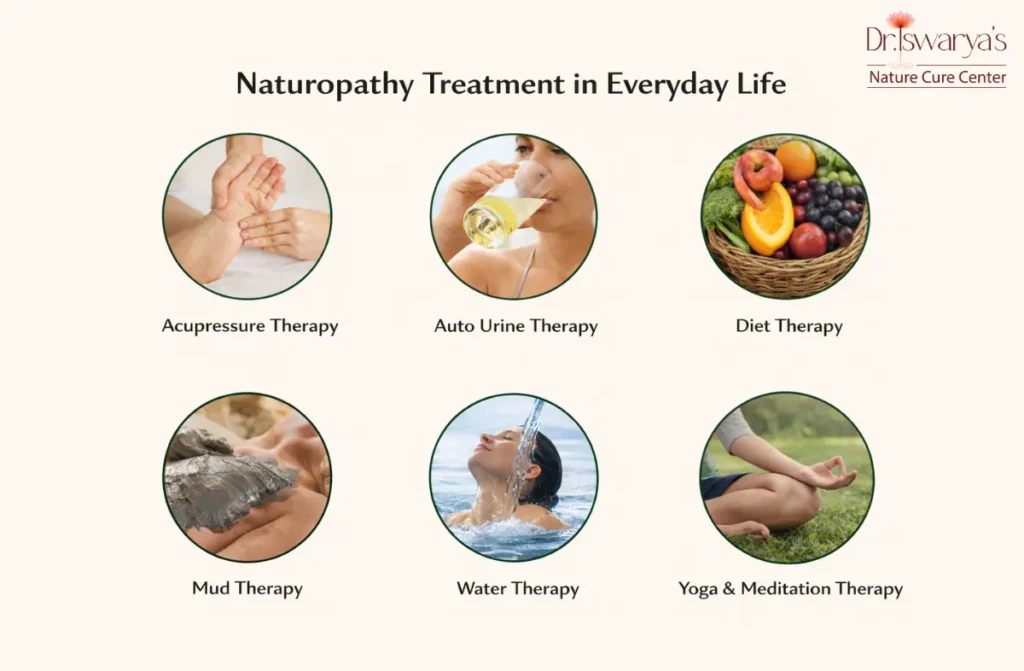
Naturopathy Treatment in Everyday Life
The History of naturopathy demonstrates that daily habits have a greater influence on health than occasional treatments.
Everyday Naturopathic Practices
• Eating seasonal and natural foods
• Practicing daily yoga and breathing exercises
• Maintaining proper sleep routines
• Using fasting or detox days mindfully
• Managing stress through meditation
• Staying physically active
These simple habits illustrate the practical advantages of naturopathy in everyday life.
Emotional Factors and Their Impact on Organs
Naturopathic philosophy recognizes that emotional health strongly influences physical well-being. Long-term emotional imbalance can disturb organ function and gradually lead to disease.
- Stress & Anxiety → Affects the heart, nervous system, and adrenal glands
- Anger & Irritability → Impacts the liver and digestive system
- Fear & Insecurity → Influences kidney function and energy levels
- Sadness & Grief → Weakens lung health and immunity
- Worry & Overthinking → Disturbs stomach and digestive balance
- Suppressed Emotions → May lead to chronic muscular tension or digestive issues
- Lack of Expression → Can influence throat and thyroid function
- Mental Fatigue → Impacts the brain and nervous system
- Emotional Trauma → Affects hormonal balance and heart health
Managing emotional health through mindfulness, meditation, and lifestyle correction is essential for maintaining long-term wellness.
Better and Healthier Lifestyle
A healthier lifestyle naturally emerges when individuals understand the History of naturopathy and apply its principles consistently.
Lifestyle Improvements Through Naturopathy
• Balanced nutrition improves energy levels
• Natural sleep cycles support recovery
• Stress management improves emotional stability
• Detoxification supports immunity
• Mind-body practices improve focus and clarity
These long-term naturopathy treatment benefits contribute to sustainable health rather than temporary improvements.
Conclusion
The history of naturopathy teaches us that true healing comes from aligning the body with nature’s laws. In today’s fast-paced world, naturopathy offers a gentle yet powerful path toward lasting health. Dr. Iswarya, a specialist in naturopathy, brings deep knowledge and compassionate care to every patient. Her holistic approach focuses on root-cause healing, lifestyle correction, and natural therapies. Under her guidance, patients experience not just symptom relief, but real transformation. Choosing naturopathy with the right expert can help you regain balance, vitality, and long-term wellness naturally.
Read More: Restoring Health Through Nature Wisdom.