

Written and Reviewed by
Dr. Iswarya
BNYS (Bachelor of Naturopathy & Yogic Sciences), MD (Doctor in Medicine). Founder & Chief Naturopathy Consultant at Dr. Iswarya’s Nature Cure Centre, Chennai.
Medical registration ID – 0308/A
View credentials →Is rice bad for weight loss? It’s one of the most common questions people ask when they start a diet — and rice is often the very first food to get cut. The belief is simple: rice equals carbs, carbs equal fat gain, so no rice means faster results. It’s a tidy theory, and it isn’t quite true.
Body weight responds to the total picture: how many calories you eat versus how many you burn, how active you are, how well you sleep, and how consistent your habits are over weeks and months. A single food rarely makes or breaks that equation. This guide breaks down what the evidence actually says, which rice varieties work best if you’re watching your weight, and how to build meals around rice without derailing your goals.
At Dr. Iswarya’s Nature Cure Center, we work with clients on sustainable eating patterns rather than restrictive diets — because diets people can’t stick to don’t produce lasting results.
Why Rice Gets Blamed for Weight Gain
Rice is a carbohydrate, and carbohydrates carry a bad reputation in a lot of popular diet advice. Some people search for why rice is bad for weight loss expecting a simple, one-line answer — but the honest answer is more nuanced: it depends on portion size, what it’s paired with, and overall calorie balance, not the food itself.
Weight gain happens when you consistently eat more calories than your body uses — and that can happen with rice, roti, bread, or any other food eaten in excess. Low-carb diets have amplified the anti-rice narrative. Cutting carbs sharply often produces a quick drop on the scale in the first week, but that’s mostly water loss, not fat loss — your body stores carbohydrate with water, and depleting those stores shows up fast. For most people, especially in households where rice is a daily staple, cutting it out completely isn’t necessary, and it isn’t always sustainable either.
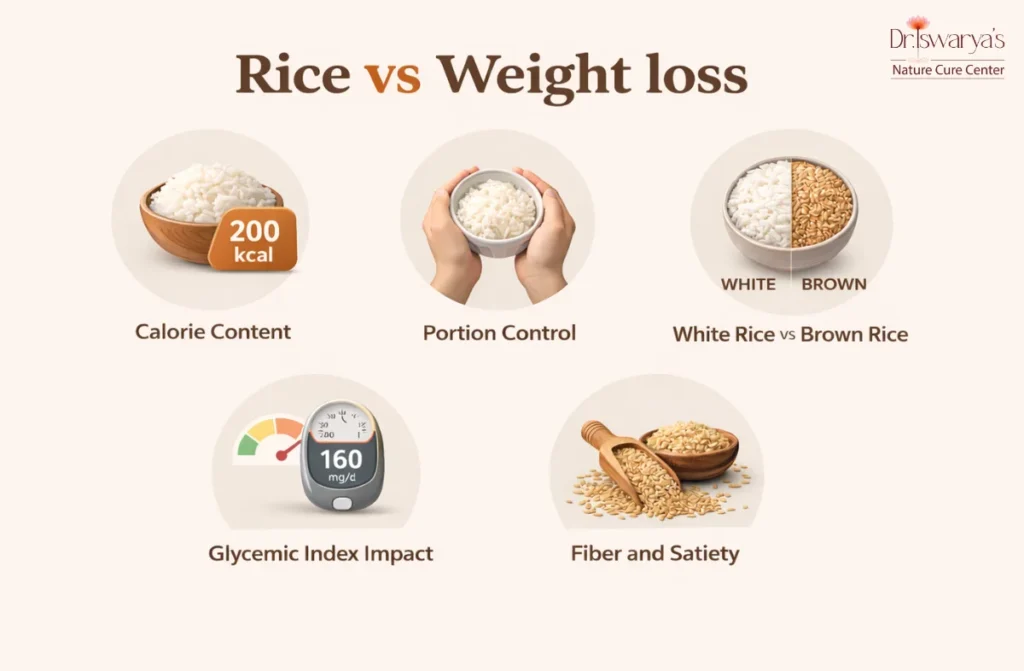
What’s Actually in Rice
Rice is primarily a carbohydrate source, with small amounts of protein and micronutrients depending on the variety and how it’s milled.
| Rice type | Approx. calories (100g, cooked) | Fiber | Glycemic index (approx.) |
| White rice (polished) | ~130 kcal | Low | High (~70–72) |
| Brown rice | ~112 kcal | Higher — bran layer intact | Moderate (~50–55) |
| Red rice | ~110–120 kcal | Moderate-high | Moderate |
| Black rice | ~110–120 kcal | Moderate-high, rich in antioxidants | Moderate |
| Hand-pounded/unpolished rice | Varies | Higher than polished white rice | Moderate |
The main practical difference between these varieties is fiber. More fiber slows digestion, which tends to keep you fuller for longer and can help you naturally eat less at your next meal. That’s the real reason brown, red, and black rice are often recommended over heavily polished white rice for weight management — not because white rice is somehow “fattening” on its own.
So, Is Rice Bad for Weight Loss?
No — not inherently. The answer to is rice bad for weight loss comes down to three things: how much you eat, what you eat it with, and how active you are otherwise.
A plate built around a moderate portion of rice, a good source of protein, and a generous helping of vegetables can fit comfortably into a calorie-controlled diet. People around the world lose weight and maintain healthy body weights while eating rice regularly — it’s a staple food in many of the planet’s longest-living populations. The goal isn’t to fear rice; it’s to build the rest of your plate around it thoughtfully.
Can You Lose Weight While Still Eating Rice?
Yes. Weight loss ultimately depends on maintaining a calorie deficit — burning more than you consume — and rice can absolutely be part of that math.
A few practical ways to make it work:
- Pair rice with protein. Dal, paneer, fish, chicken, eggs, or legumes alongside rice slow digestion and improve satiety, so you’re less likely to overeat later.
- Load up on vegetables. Fiber-rich vegetables add volume and nutrients without many extra calories, helping you feel satisfied on a smaller overall plate.
- Practice rice portion control. This is the single biggest lever most people have — measuring or eyeballing a sensible serving does more for your results than eliminating rice ever will.
- Stay active. Regular movement improves how your body uses the calories you eat, which gives you more flexibility in your meal choices.
5 Simple Ways to Eat Rice Without Gaining Weight
- Practice rice portion control at every meal. A cupped-hand portion (roughly ¾–1 cup cooked) is a reasonable starting point for most adults — measure it a few times until it becomes second nature to eyeball.
- Choose a higher-fiber variety when you can. Swapping polished white rice for brown, red, or hand-pounded rice a few times a week adds fiber without changing your meal much.
- Always pair rice with protein and vegetables. A rice-only plate digests fast and leaves you hungry sooner; adding protein and fiber slows that down.
- Cook it simply. Steamed or lightly seasoned rice has far fewer added calories than ghee-heavy pulao or deep-fried rice preparations.
- Eat slowly and stop at comfortably full. It takes roughly 20 minutes for your brain to register fullness — rushing a meal makes overeating easy, rice or otherwise.
Does White Rice Cause Weight Gain?
Not by itself. Weight gain comes from a sustained calorie surplus — eating more than your body needs over time — not from any single ingredient. Where white rice becomes a problem is when it’s eaten in large quantities alongside deep-fried sides, sugary drinks, or heavy, ghee-laden gravies. That combination, not the rice, is what drives excess calorie intake.
On the flip side, some people ask is rice good for weight gain when they’re trying to build muscle mass rather than lose it. In that context, yes — generous rice portions paired with calorie-dense, protein-rich foods and a training program can support healthy weight gain. It’s the same food; the outcome depends entirely on the context you eat it in.
Rice at Night and Rice Every Day — Do the Rules Change?
A common late-night question is: can I eat rice during weight loss at night? The answer depends on your total calorie intake for the day and how active you’ve been, not the clock. Someone with a physically active lifestyle can generally handle carbohydrates at dinner without issue; someone more sedentary may prefer a smaller portion in the evening.
Another frequent search is eating rice every day bad for weight loss. Generally, no. Many populations eat rice at every meal and maintain healthy weights — consistency in total habits matters far more than avoiding rice after a certain hour or eating it only on alternate days.
Common Habits That Cause More Weight Gain Than Rice Does
A lot of people default to skipping rice to lose weight as their first move, when these habits usually matter more:
- Oversized portions across all foods, not just rice
- High-calorie side dishes (fried items, rich curries, sugary chutneys)
- Low physical activity
- Not enough protein in meals
- Sugary drinks and packaged snacks
- Extreme, unsustainable dieting that leads to rebound eating
Many people who cut rice completely end up craving it and overcompensating with less healthy foods later. A moderate, sustainable approach — built around rice portion control rather than elimination — is usually easier to stick with, and sticking with it is what actually produces results.
Is Rice Safe for Everyone?
Generally, yes — but individual needs vary. People managing diabetes, insulin resistance, or obesity may benefit from more specific guidance around portion size and rice type, since these conditions affect how the body handles carbohydrates. Children, older adults, and highly active individuals also have different carbohydrate needs.
Rather than following blanket “cut all rice” advice, it’s worth speaking with a healthcare provider or getting a personalized nutrition plan suited to your specific health picture.
Simple, Balanced Rice-Based Meals
- Brown rice with mixed vegetables and grilled paneer or tofu
- Rice, dal, and a side salad
- Red rice with grilled chicken or fish and sautéed greens
- Portion-controlled curd rice with cucumber and pomegranate
- Vegetable rice cooked with minimal oil
- Rice with sprouts and lightly steamed vegetables
Lifestyle Habits That Matter as Much as Diet
Sustainable weight management is rarely about food alone. These habits support results:
- Regular physical activity, even brisk daily walking
- Adequate hydration
- Consistent, good-quality sleep
- Active stress management
- Minimizing processed foods and sugary drinks
- Supporting healthy digestion through fiber and mindful eating
How Dr. Iswarya’s Nature Cure Center Can Help
If you’d rather not navigate this alone, Dr. Iswarya’s Nature Cure Center takes a holistic approach to weight management — combining natural therapies, personalized nutrition guidance, and realistic lifestyle coaching instead of one-size-fits-all restriction.
What that typically includes:
- Personalized wellness and diet planning
- Natural, therapy-based support (not just meal plans)
- Digestive health guidance
- Sustainable, long-term lifestyle coaching
The aim is steady, livable progress — not a diet you’ll abandon in three weeks.
The Bottom Line
So, is rice bad for weight loss? Not inherently. Portion size, meal composition, and consistent activity matter far more than whether rice is on your plate. Choose fiber-rich varieties like brown, red, or black rice when you can, practice basic rice portion control, pair rice with protein and vegetables, and stay active — and there’s no reason rice can’t be part of a diet that gets you where you want to go.
Read next: Natural Treatment for PCOD in Chennai | Tips to Help You Lose Weight Naturally