
Written and Reviewed by
Dr. Iswarya
BNYS (Bachelor of Naturopathy & Yogic Sciences), MD (Doctor in Medicine). Founder & Chief Naturopathy Consultant at Dr. Iswarya’s Nature Cure Centre, Chennai.
Medical registration ID – 0308/A
View credentials →Diabetes has become one of the most widespread lifestyle-related health conditions in the world today. Sedentary routines, processed diets, chronic stress, obesity, and poor sleep are pushing more people toward high blood sugar every year. According to the International Diabetes Federation, over 530 million adults globally were living with diabetes as of recent estimates, and that number continues to climb.
Naturally, many people want to know: can diabetes actually be reversed, or only managed? The honest answer depends on the type of diabetes, how early it’s caught, and how consistently lifestyle changes are followed. This guide walks through what the science actually says about how to reverse diabetes, the natural strategies that genuinely help, and where medical supervision remains non-negotiable.
Can Diabetes Be Reversed? What the Science Says
For type 2 diabetes, the answer is often yes, in the sense of remission.Can diabetes be reversed completely and forever? Not in the sense of a cure. The disease can go quiet, but the tendency toward high blood sugar remains, so results have to be maintained.
Doctors use three terms that people often mix up:
| Term | What it means | Applies to |
| Remission (often called “reversal”) | Blood sugar returns to a non-diabetic range without glucose-lowering medication | Type 2 diabetes, prediabetes |
| Cure | The condition is permanently gone | Not established for any type of diabetes |
| Management | Blood sugar is kept in a safe range, usually with ongoing medication | All types |
The American Diabetes Association’s consensus report defines remission as an HbA1c below 6.5% for at least three months without glucose-lowering medication. So, is diabetes reversal possible? For many people with type 2 diabetes, yes, as long as “reversal” means remission and not a one-time fix.
Types of Diabetes and Whether They Can Be Reversed
Is diabetes reversible in every form? No. Is it possible to reverse diabetes of any type? Only some. The table shows where the evidence stands.
| Type | What happens in the body | Can it go into remission? |
| Type 1 | The immune system destroys insulin-producing cells | No. Lifelong insulin is required |
| Type 2 | The body resists insulin and, over time, produces less of it | Yes, for many people, especially when caught early |
| Gestational | High blood sugar first detected in pregnancy | Usually settles after delivery, but raises later type 2 risk. Needs specialist care |
| Prediabetes (a stage, not a type) | Blood sugar above normal but below the diabetes range | Yes. This is the most responsive stage |
Is Diabetes Reversible in Early Stages?
Is diabetes reversible in early stages like prediabetes? This is where the odds are best. At this point the pancreas is still making insulin, and the body’s resistance to it can often be reduced with modest weight loss and regular activity.
| Stage | Typical HbA1c | Fasting glucose | Outlook with lifestyle change |
| Normal | Below 5.7% | Below 100 mg/dL | Maintain healthy habits |
| Prediabetes | 5.7–6.4% | 100–125 mg/dL | Most responsive. Progression can often be prevented |
| Type 2 diabetes | 6.5% or higher | 126 mg/dL or higher | Remission possible, especially soon after diagnosis |
The earlier you act, the more likely it is that your current habits, not permanent damage, are the main cause. Confirm any result with your doctor.
What Causes Type 2 Diabetes?
| Cause | Why it matters |
| Refined, sugary, processed food | Repeated glucose spikes drive insulin resistance |
| Excess abdominal fat | Visceral fat interferes directly with how insulin works |
| Physical inactivity | Underused muscles absorb less glucose |
| Chronic stress | Raised cortisol pushes blood sugar up |
| Poor sleep | Disrupts hunger hormones and worsens insulin resistance |
| Genetics and related conditions | Family history, PCOS, fatty liver, and metabolic syndrome raise risk |
Warning Signs and When to Get Tested
Type 2 diabetes can be silent for years, so testing matters more than waiting for symptoms. Watch for:
- Frequent urination and excessive thirst
- Constant hunger despite eating
- Tiredness and low energy
- Blurred vision
- Slow-healing cuts or wounds
- Tingling or numbness in the hands or feet
- Unexplained weight change
Ask your doctor about testing if you have any of these, a family history of diabetes, excess weight, PCOS, or fatty liver.
How to Reverse Diabetes Through Daily Habits
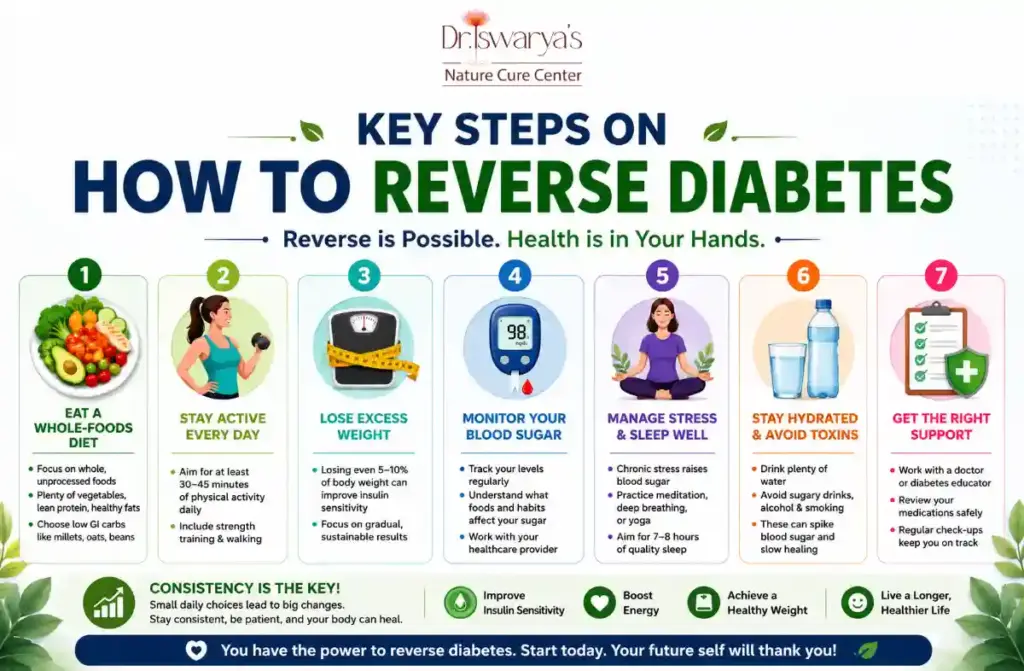
Five habits do most of the work. None is dramatic, but they add up.
1. Eat for Insulin Sensitivity
Build meals around whole, minimally processed foods, and watch portions rather than cutting out entire food groups. Plant-forward eating is linked with better insulin sensitivity and lower inflammation.
| Foods to favor | Foods to limit |
| Leafy greens, bitter gourd, broccoli, cucumber | Soft drinks, packaged juices, sweets |
| Berries, guava, apples, citrus (moderate portions) | White rice and white bread in large portions |
| Millets, oats, lentils, sprouts | Fried and packaged snacks |
| Nuts, seeds, flaxseed | Alcohol and tobacco |
| Olive oil, avocado | Fast food and deep-fried meals |
Illustrative day of eating (adjust with your doctor or dietitian):
| Meal | Example |
| Breakfast | Vegetable oats or millet dosa with sprouts |
| Mid-morning | A guava or a handful of nuts |
| Lunch | Half a plate of vegetables, a quarter dal, a quarter millet or brown rice, with curd |
| Evening | Roasted chana or a vegetable soup |
| Dinner | Vegetable and paneer or egg dish with one chapati or millet roti |
2. Move Regularly
Working muscles take up glucose without needing insulin. Aim for at least 150 minutes of moderate activity a week, plus two short strength sessions. A 10–15 minute walk after meals helps blunt post-meal spikes.
| Activity | Suggested frequency |
| Brisk walking | 30 minutes, most days |
| Strength training (bodyweight or light weights) | 2 days a week |
| Yoga and stretching | 3–4 days a week |
| Post-meal walk | 10–15 minutes after main meals |
3. Lose Weight Gradually
Reducing abdominal fat improves how the body uses insulin. A pace of roughly 0.5–1 kg a week is easier to sustain than crash dieting.
4. Manage Stress
Meditation, pranayama, and deep breathing lower cortisol. Emotional eating often eases as stress does.
5. Protect Your Sleep
Keep a regular schedule, limit screens at night, and aim for seven to eight hours. Poor sleep alone can raise insulin resistance.
A Four-Week Starter Plan: How to Reverse Diabetes One Step at a Time
Trying everything at once rarely lasts. This gradual plan is a starting point, not a prescription. Check with your doctor before starting, especially if you take diabetes medication.
| Week | Focus | Small goal |
| 1 | Food awareness | Replace sugary drinks with water. Add one vegetable to lunch and dinner |
| 2 | Movement | Walk 20–30 minutes daily and after at least one meal |
| 3 | Sleep and stress | Fix a bedtime. Add 10 minutes of pranayama or meditation |
| 4 | Consistency and tracking | Add two strength sessions. Book an HbA1c test and review with your doctor |
Complementary Therapies and Diabetes Reversal Therapy
A sound diabetes reversal therapy plan puts diet, activity, sleep, and medical monitoring first and uses complementary approaches only as support.
| Approach | Purpose | Evidence for diabetes outcomes |
| Yoga and pranayama | Stress reduction, flexibility, metabolic support | Some evidence of modest benefit alongside standard care |
| Personalized lifestyle counseling | Nutrition planning and habit-building | Strong. This is the core of remission programs |
| Hydrotherapy and mud therapy | Relaxation and circulation support | Limited. Used for comfort, not as a treatment for diabetes |
| Therapeutic massage | Relaxation and stress relief | Limited |
Dr. Iswarya’s Nature Cure Center combines these into individual care plans through our naturopathy treatment program in Chennai and our yoga & meditation therapies.
Who Should Be Extra Cautious
Lifestyle-first approaches aren’t equally safe for everyone. Get close medical supervision if you:
- Take insulin or sulfonylureas, where rapid diet or activity changes can cause dangerous low blood sugar
- Are pregnant with gestational diabetes
- Have kidney, heart, or nerve complications
- Are an older adult with several health conditions
- Have a history of disordered eating
Why Medical Monitoring Still Matters
Some people are able to reduce medication as their health improves, but that decision belongs to your physician. Stopping abruptly can cause dangerous swings.
| Check | Typical frequency (your doctor will advise) |
| HbA1c | About every 3 months |
| Fasting and post-meal glucose | As advised, or more often when changing medication |
| Kidney function and urine albumin | Yearly |
| Eye examination | Yearly |
| Foot examination | At least yearly |
| Lipid profile and blood pressure | Yearly, or as advised |
Can Diabetes Be Reversed Permanently?
Can diabetes be reversed permanently? Not automatically. Blood sugar tends to rise again if weight returns, activity drops, or sleep and stress slip. Anyone asking how to reverse diabetes permanently should treat remission as an ongoing state to maintain. The habits that get you there are the same ones that keep you there, so they need to be realistic enough to last for years, not weeks.
What Happens If Diabetes Goes Unmanaged
| Timeframe | Possible effects |
| Short term | Fatigue, frequent infections, dehydration |
| Long term | Heart disease, kidney damage, nerve damage, vision loss, and foot problems that can lead to amputation |
Acting early, even at the prediabetes stage, lowers these risks meaningfully.
How Dr. Iswarya’s Nature Cure Center Approaches Diabetes Care
Our approach to how to reverse diabetes begins with understanding the person, not just the number on the report. Two people with the same HbA1c can have very different routines, stress levels, and health histories, so a plan that works for one may not suit the other. Every program at Dr. Iswarya’s Nature Cure Center is built around the individual and is designed to work alongside, not instead of, their medical care.
| Stage | What happens | Why it matters |
| 1. Initial assessment | We review your diabetes history, current medications, recent reports (HbA1c, fasting and post-meal glucose, lipid profile, kidney function), family history, and daily routine. We also ask about sleep, stress, work hours, and eating patterns. | Your numbers show where you are. Your routine explains how you got there. |
| 2. Personalized plan | We design a diet plan around foods you already eat and can afford, a movement routine suited to your fitness and any joint or heart limitations, and a stress and sleep plan. | Plans that fit real life are far more likely to last than generic meal charts. |
| 3. Guided therapies | Yoga, pranayama, and relaxation practices are taught and adjusted for you. Other naturopathy therapies are offered for comfort and stress relief, not as a replacement for treatment. | These support the core habits of diet, activity, and sleep. |
| 4. Coordination with your doctor | We ask you to keep your physician or diabetologist informed, and we encourage sharing your progress reports with them. Any medication change is decided by your physician, never by us alone. | Changing diet and activity can lower blood sugar quickly, and medicine doses may need adjusting. |
| 5. Follow-up and tracking | We review your progress at regular follow-ups, adjust the plan, and recommend repeat HbA1c testing about every three months. | Remission is a maintained state, so tracking matters as much as starting. |
When to See a Doctor
See a doctor promptly if you have persistent symptoms, fasting glucose above 126 mg/dL, very high or very low readings, or signs of complications such as vision changes or foot wounds that won’t heal.
Conclusion
Working toward remission means treating food, movement, sleep, and stress together and keeping at it. That is realistic for many people with type 2 diabetes or prediabetes. It is not guaranteed, and type 1 diabetes remains lifelong. Anyone still wondering how to reverse diabetes should start with a test, a conversation with their physician, and one small change this week. To build a structured plan, book a consultation at Dr. Iswarya’s Nature Cure Center and bring your latest HbA1c report.
Related reading: Knee Pain Management Without Surgery | Natural Treatment for PCOS in Chennai