

Written and Reviewed by
Dr. Iswarya
BNYS (Bachelor of Naturopathy & Yogic Sciences), MD (Doctor in Medicine). Founder & Chief Naturopathy Consultant at Dr. Iswarya’s Nature Cure Centre, Chennai.
Medical registration ID – 0308/A
View credentials →Losing weight doesn’t have to mean crash diets or extreme workouts. It can begin with small, realistic changes to your daily habits. When we talk about tips to help you lose weight naturally, we’re focusing on sustainable methods that support your body’s rhythm rather than fight against it — the kind you can actually keep up with while juggling work, social life, and stress. Natural weight loss, when guided by proper nutritional and gastroenterology care, doesn’t just trim your waistline; it supports better digestion, improved immune energy, and long-term gut health.
What is the Easiest Way to Lose Weight Naturally?
The easiest way to lose weight naturally is to build small, consistent habits into your daily routine — ones you can stick with long-term, not just for a few weeks. Start by choosing whole, unprocessed foods like fruits, vegetables, lean proteins, and whole grains. Swapping sugary drinks for water or herbal tea, eating mindfully without screens, and not skipping meals are all simple yet effective tips to help you lose weight naturally. A 30-minute walk after meals or taking the stairs instead of the elevator can make a noticeable difference over time. It isn’t about overhauling everything at once — it’s about finding a rhythm that feels realistic for your lifestyle.
12 Tips to Help You Lose Weight Naturally
These tips to help you lose weight naturally are grouped into short, practical explanations so you can pick the ones that fit your routine first and build from there.
1. Add Protein to Your Diet
Protein keeps you fuller for longer and helps preserve lean muscle while you lose fat, which is why it curbs unnecessary snacking better than most other changes. Eggs, chicken, paneer, tofu, lentils, and Greek yogurt are all easy ways to work more of it into your meals.
2. Limit Processed Foods
Packaged snacks, chips, and frozen meals are often loaded with hidden sugar, unhealthy fats, and preservatives that quietly add up over a week. Swapping even a couple of these for homemade options — fruit bowls, sprouts, roasted chickpeas — gives you far more control over what’s actually going into your body.
3. Cut Back on Added Sugar
Excess sugar drives fat storage, particularly around the belly, which makes this one of the most effective tips to help you lose weight naturally on this list. Watch out for sugary drinks, flavored yogurts, and packaged snacks, and check labels for aliases like “corn syrup” or “fructose.” When you need something sweet, honey, dates, or jaggery in small amounts are gentler alternatives.
4. Drink Water
Thirst is often mistaken for hunger, so staying hydrated genuinely helps regulate appetite and digestion. Aim for 2.5–3 litres a day, and try a glass before meals — it’s a simple habit that reduces overeating almost immediately. A slice of lemon or cucumber makes it easier to keep up.
5. Cut Back on Liquid Calories
Sodas, packaged juices, and creamy coffees add calories without actually satisfying hunger, which is what makes them so easy to overdo. Replacing them with water, black coffee, or herbal tea removes a surprising amount of daily intake. Alcohol is worth watching too — it slows fat burning and tends to increase appetite.
6. Eat More Fruits and Vegetables
Because they’re low in calories and high in fibre, fruits and vegetables help you feel full without the calorie cost — a cornerstone of natural weight loss. Try filling half your plate with colourful vegetables at each meal, choosing whole fruit over juice, and folding extra veggies into smoothies, wraps, or omelettes.
7. Practice Mindful Eating
Eating without distractions — no phone, no TV — makes it much easier to notice your body’s actual fullness cues instead of eating past them. Chewing slowly and stopping around 80% full, rather than waiting until you’re stuffed, is a habit that pays off at nearly every meal.
8. Add Cardio to Your Week
Cardio doesn’t require a gym membership to be effective. Brisk walking, dancing, cycling, or jogging for around 30 minutes on most days is enough to boost metabolism and support steady fat burning. Choosing something you actually enjoy — music, a walking group, small weekly goals — makes it far more likely to stick.
9. Eat More Fibre
Fibre slows digestion, which keeps you fuller for longer and helps prevent blood sugar spikes between meals. Oats, flaxseeds, chia seeds, apples, and legumes are easy additions, and pairing fibre with protein — say, oats with Greek yogurt — makes the effect even stronger.
10. Add Eggs to Your Diet
Eggs are an affordable, versatile source of protein, healthy fats, and essential vitamins. Eating them at breakfast in particular tends to reduce mid-morning snacking, and boiled or poached versions keep the calorie count lower than fried.
11. Track Calories Occasionally
You don’t need to count calories every day, but doing it for a few days every so often builds real awareness of portion sizes. A food diary or a free app is usually enough to reveal patterns — like mindless snacking or oversized portions — that are easy to miss otherwise.
12. Cut Back on Refined Carbs
White bread, pastries, and sugary cereals cause quick blood sugar spikes followed by hunger soon after. Swapping them for brown rice, quinoa, oats, or whole wheat — and pairing carbs with protein or healthy fat — slows digestion and keeps you satisfied for longer.
How to Lose Weight Fast Naturally and Permanently
Fast weight loss and permanent weight loss aren’t actually in conflict — the trick is choosing methods that are aggressive enough to show early results but gentle enough to keep doing indefinitely. The World Health Organization recommends at least 150 minutes of moderate physical activity a week for adults, which pairs well with a calorie-aware but not calorie-obsessive diet. Combine a protein-and-fibre-forward diet (Tips 1 and 9 above) with daily movement, 7–8 hours of sleep, and consistent hydration, and most people see visible change within 2–3 weeks — without the rebound weight gain that comes with crash dieting. The permanence comes from the habit, not the speed.
Tips to Help You Lose Weight Naturally at Home
You don’t need a gym, equipment, or a strict schedule for most of these tips to help you lose weight naturally at home:
- Bodyweight training — squats, lunges, and planks build muscle tone and raise your metabolic rate with zero equipment.
- Stair climbing and household movement — gardening, cleaning, or simply pacing during calls all add up over a day.
- Kitchen prep over takeout — cooking at home even three or four nights a week cuts hidden oils, sugar, and portion creep.
- A consistent sleep and wake time — irregular sleep disrupts hunger hormones (ghrelin and leptin) more than most people realize.
- Morning sunlight and a short walk — even 10–15 minutes supports your circadian rhythm and appetite regulation.
7-Day Diet Plan for Weight Loss
This sample 7-day diet plan for weight loss is a starting template, not a rigid prescription — adjust portions and ingredients to your calorie needs, allergies, and any medical conditions.
| Day | Breakfast | Lunch | Dinner |
| 1 | Vegetable oats + boiled egg | Brown rice, dal, mixed vegetable sabzi | Grilled paneer/tofu with sautéed greens |
| 2 | Moong dal chilla + mint chutney | Quinoa salad with chickpeas | Vegetable soup + whole wheat roti |
| 3 | Greek yogurt with fruit and flaxseed | Millet (ragi/jowar) with sambar | Baked fish or tofu with steamed vegetables |
| 4 | Vegetable poha with peanuts | Brown rice, rasam, and a protein side | Lentil soup + salad |
| 5 | Boiled eggs + sautéed spinach | Whole wheat roti, paneer bhurji | Vegetable stir-fry with tofu |
| 6 | Smoothie (spinach, banana, chia) | Quinoa or brown rice bowl with legumes | Grilled chicken/paneer with roasted vegetables |
| 7 | Sprouts salad with lemon | Millet khichdi with curd | Light vegetable soup + salad |
Pair each day with 2.5–3 litres of water and at least 30 minutes of movement for the best results.
Simple Tips for Easy Weight Loss
If you only remember a handful of things, make it these simple tips for easy weight loss:
- Drink a glass of water before every meal.
- Fill half your plate with vegetables first.
- Walk for 20–30 minutes after your largest meal.
- Swap one processed snack a day for a whole-food option.
- Get to bed at a consistent time — sleep debt drives cravings.
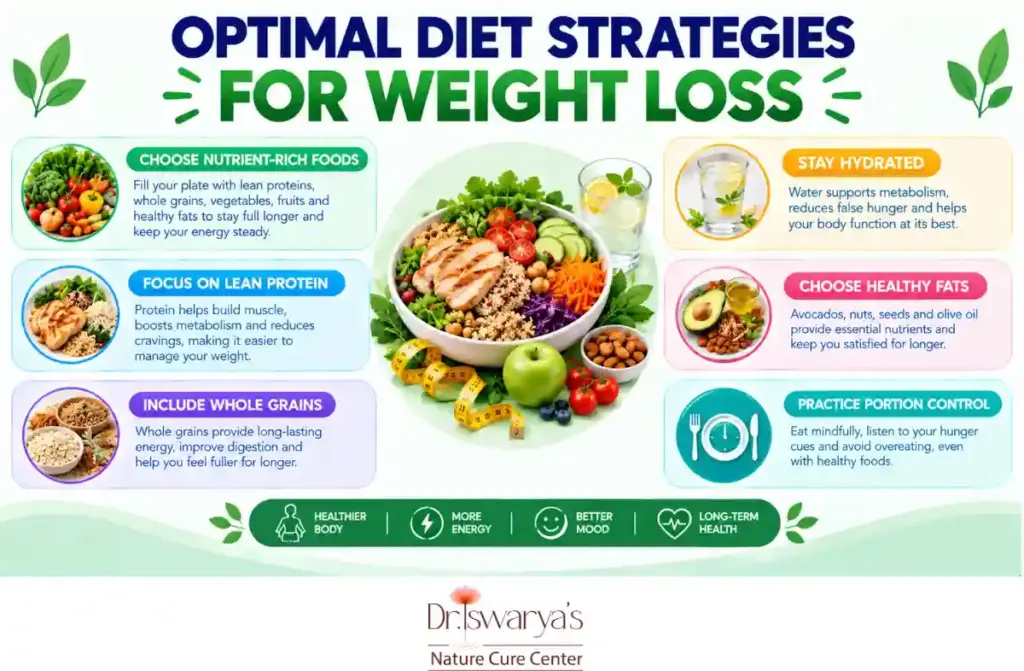
Optimal Diet Strategies for Weight Loss
- Focus on Whole, Unprocessed Foods — Vegetables, legumes, fruits, and lean proteins are naturally rich in fibre and nutrients, which keeps you fuller and curbs cravings without any calorie-counting required.
- Control Portions Without Skipping Meals — Smaller, regular portions keep blood sugar steady and prevent the overeating that follows a skipped meal.
- Cut Back on Refined Sugar and Carbs — Whole grains sustain energy far better than white bread or pastries, which cause a spike-and-crash cycle that drives hunger.
- Include Lean Proteins and Healthy Fats — Eggs, fish, and legumes build lean muscle, while avocados, olive oil, and nuts support satiety and hormonal balance.
- Cook at Home More Often — this single habit does more for portion and ingredient control than almost any other change.
Things You Can Do to Lose Weight (Dos and Don’ts)
Losing weight naturally isn’t only about what you eat — it’s about consistent habits and avoiding a few hidden traps. Below are the dos and don’ts that align most closely with the tips to help you lose weight naturally covered above.
Dos
- Prioritize Sleep and Stress Management — Poor sleep and chronic stress raise cortisol, a hormone linked to fat storage. Aim for 7–8 hours and build in a wind-down routine — walking, breathing exercises, or journaling all help.
- Stay Hydrated Throughout the Day — Water before meals curbs appetite and keeps energy steady through a long workday.
- Plan Meals Ahead — A little planning prevents the last-minute takeout decisions that usually undo a day’s good habits.
Don’ts
- Don’t Skip Meals or Starve Yourself — Skipping meals slows metabolism and often leads to overeating or binge eating later in the day.
- Avoid Quick-Fix Diets and Fat Burners — Fad diets and pills may show fast results, but they rarely provide adequate nutrition and often lead to regained weight once you stop.
- Limit Mindless or Distracted Snacking — Eating in front of a screen makes it easy to miss your body’s fullness signals.
Physical Activity and Exercise
Physical activity plays a central role in weight loss through naturopathy in Chennai, where movement is paired with diet and lifestyle therapy rather than treated as a separate box to tick.
- Morning Walks and Nature-Based Cardio — Brisk walking outdoors supports cardiovascular health and digestion with minimal joint strain.
- Yoga and Breathing Exercises — Practices like Surya Namaskar, Kapalabhati, and deep breathing regulate stress hormones and improve core strength and stamina. Explore our yoga and meditation programs for guided sessions.
- Bodyweight and Functional Movements — Squats, lunges, and planks are easy to scale to your fitness level and require no equipment.
- Stretching and Flexibility Training — Gentle stretching improves blood flow and joint mobility, especially useful alongside detox therapies.
- Everyday Movement — Gardening, cycling, and taking the stairs all add up and fit naturally into a busy schedule.
For a structured, supervised approach, our customized health packages combine diet, movement, and naturopathic therapy under one plan.
Conclusion
When you build daily habits around mindful eating, movement, hydration, and rest, your body responds in healthier, more sustainable ways. The tips to help you lose weight naturally in this guide — from small home routines to a 7-day sample diet plan — work precisely because they don’t require extreme diets or complicated schedules. The goal isn’t perfection; it’s progress you can keep up.
Read more: Is Rice Bad for Weight Loss?
If you’d like a personalised plan, our wellness and preventive healthcare team can help you build one around your specific goals and health history.