
Written and Reviewed by
Dr. Iswarya
BNYS (Bachelor of Naturopathy & Yogic Sciences), MD (Doctor in Medicine). Founder & Chief Naturopathy Consultant at Dr. Iswarya’s Nature Cure Centre, Chennai.
Medical registration ID – 0308/A
View credentials →Irregular periods treatment in Chennai begins with finding out why your cycle has changed, because irregular periods are a sign and not a diagnosis. A period that arrives late, skips months, comes twice in a month or turns unusually heavy can be caused by something as simple as stress or as significant as a thyroid problem, PCOS or a uterine condition.
Irregular cycles are very common, and many women are told to wait and see. That advice is fine for an occasional change, but repeated irregularity is worth understanding. Once the cause is identified, many women see real improvement with the right combination of medical care and lifestyle support.
This guide explains what counts as irregular, the common causes, when to see a doctor first, how the problem is diagnosed, and which medical and natural options can help. You will also find a sample Indian diet, a simple way to track your cycle, common myths and answers to frequently asked questions. At Dr. Iswarya’s Nature Cure Centre in Mandaveli, Chennai, care is personalised and doctor-led.
What Counts as an Irregular Period?
What a typical cycle looks like
Your cycle is counted from the first day of one period to the first day of the next. In adult women a cycle usually lasts between 21 and 35 days, and bleeding typically lasts around 2 to 7 days. In the first few years after the first period, cycles are often longer and less predictable. A cycle that varies by a few days from month to month is normal.
Types of irregular periods
- Infrequent periods: Cycles longer than 35 days, or fewer than about 8 to 9 periods a year.
- Frequent periods: Cycles shorter than 21 days.
- Missed periods: No period for three months or more, when you are not pregnant. Doctors call this amenorrhea.
- Heavy periods: Bleeding that soaks a pad or tampon every hour or two for several hours, or passes large clots.
- Prolonged periods: Bleeding that lasts longer than 7 days.
- Spotting or bleeding between periods: Or bleeding after intercourse.
- Unpredictable cycles: The gap between periods changes a great deal from one month to the next.
Common Symptoms That Come With Irregular Periods
The pattern of other symptoms often points towards the cause:
- Weight gain or loss that you cannot explain
- Acne, oily skin, unwanted hair or hair fall, which can point to higher androgen levels
- Tiredness, feeling cold, constipation or palpitations, which can point to a thyroid problem
- Hot flashes, night sweats and sleep trouble, which can point to perimenopause
- Milky discharge from the breasts, which can point to high prolactin
- Pelvic pain, painful periods or large clots, which can point to a uterine or ovarian problem
- Mood changes, anxiety and low energy
- Difficulty conceiving
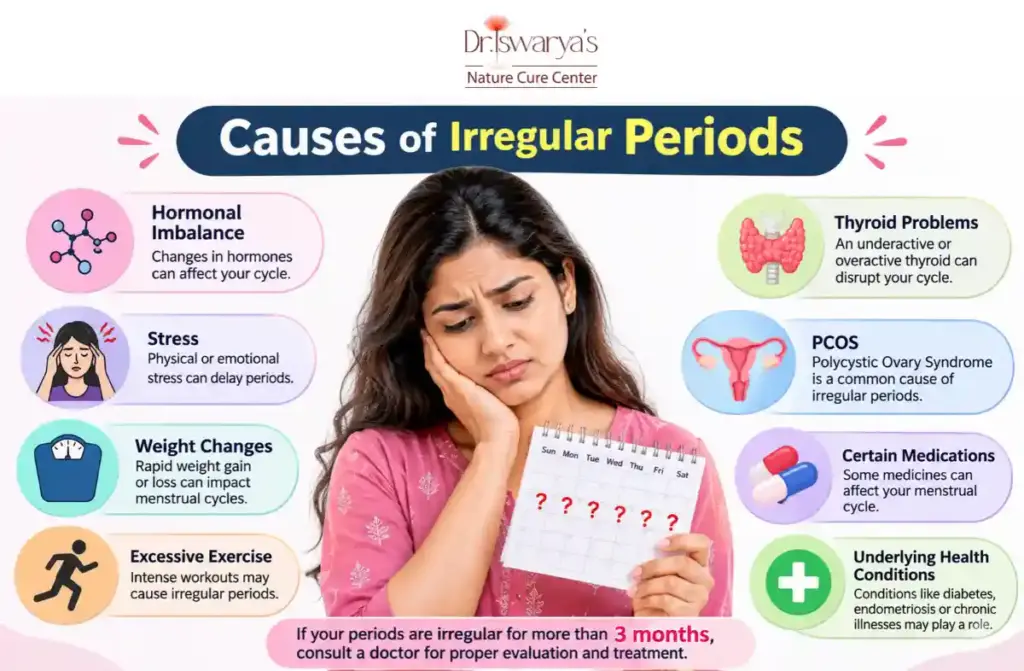
Common Causes of Irregular Periods
PCOS and PCOD
Irregular ovulation is the hallmark of PCOS, often with acne, unwanted hair and weight gain. It is one of the most common causes in young women. Read more in our guides on natural treatment for PCOS in Chennai and natural treatment for PCOD in Chennai.
Thyroid disorders
Both an underactive and an overactive thyroid can make periods heavy, light, infrequent or absent. A simple blood test can check this.
High prolactin
Raised prolactin, from a pituitary problem or certain medicines, can stop ovulation and cause missed periods.
Stress, weight change, over-exercise and crash dieting
The brain signals the ovaries to release hormones. Severe stress, rapid weight loss or gain, very intense exercise and very low calorie intake can interrupt this signal and delay or stop periods.
Perimenopause
In the years before menopause, commonly from the early to mid 40s in Indian women, cycles become shorter, longer or unpredictable as hormone levels fluctuate.
Contraception and medicines
Hormonal pills, injections and intrauterine devices change bleeding patterns. Periods can also take a few months to settle after stopping hormonal contraception. Some medicines, including certain antidepressants and antipsychotics, affect cycles too.
Pregnancy, breastfeeding and the months after childbirth
A missed period can mean pregnancy, so this should always be ruled out first. Breastfeeding can also delay the return of periods.
Fibroids, polyps and other uterine problems
Growths in the uterus can cause heavy, prolonged or irregular bleeding, and sometimes pain. These need medical evaluation and treatment.
Insulin resistance, vitamin D and B12 deficiency
Poor blood sugar control and low vitamin levels are common and can contribute to disturbed cycles, fatigue and mood changes.
When Should You See a Doctor First?
Natural and lifestyle care can support irregular periods treatment in Chennai, but some situations need a medical evaluation before anything else. Please see a doctor promptly if you have:
- No period for three months or more, especially if pregnancy has not been ruled out
- Very heavy bleeding, such as soaking a pad every hour or two, or passing large clots
- Any bleeding after menopause, or bleeding after intercourse
- Severe pain, fever with bleeding, dizziness, fainting or breathlessness
- Cycles repeatedly shorter than 21 days or longer than 35 days
- Milky breast discharge, severe headaches or changes in vision
- Difficulty conceiving after 12 months of trying, or 6 months if you are over 35
A good doctor will explain the findings clearly, avoid unnecessary tests and welcome supportive lifestyle care alongside medical treatment.
How Irregular Periods Are Diagnosed
Diagnosis starts with a conversation about your cycle, flow, pain, weight changes, stress, medicines and family history, followed by an examination. Your doctor may advise:
- Pregnancy test
- Hemoglobin and iron levels: Heavy bleeding can cause anemia.
- Thyroid profile and prolactin
- FSH, LH, estradiol and testosterone, timed to your cycle where required
- Fasting blood sugar, HbA1c and insulin
- Vitamin D and vitamin B12
- Pelvic ultrasound to look at the ovaries, uterus and uterine lining
A simple period diary kept for two to three months is very useful, and you will find a guide to it later in this article. Results are read together with your symptoms, as no single test tells the whole story.
Medical Treatment Options for Irregular Periods
Treatment depends on the cause, and it is decided and prescribed by your treating doctor. Depending on your diagnosis, options may include:
- Cycle-regulating medicines, including hormonal medicines, for conditions such as PCOS
- Thyroid medicines for an underactive or overactive thyroid
- Treatment for high prolactin
- Insulin-sensitising medicines for insulin resistance or prediabetes
- Medicines to reduce heavy bleeding, and iron supplements for anemia
- Treatment for fibroids, polyps or other uterine problems, which may include medicines or procedures
- Hormone therapy in selected women with troublesome menopausal symptoms
Hormonal pills can regularise bleeding while they are taken, but they do not by themselves correct an underlying cause. Please do not start, stop or change any medicine on your own.
Natural and Lifestyle-Based Support for Regular Cycles
Daily habits form the foundation of irregular periods treatment in Chennai and everywhere else, because food, movement, sleep and stress all influence the hormones that run your cycle. Lifestyle care works alongside, not instead of, any medicine your doctor prescribes.
1. Diet for regular cycles
- Eat regular, balanced meals: Skipping meals and crash diets can stop ovulation.
- Choose low-glycemic carbohydrates: Ragi, kambu, samai, whole wheat, oats and brown rice in measured portions.
- Include protein in every meal: Dals, sprouts, chickpeas, curd, paneer, eggs and fish if you eat them.
- Eat iron-rich foods: Keerai, drumstick leaves, beetroot, dates, jaggery in small amounts, sesame seeds and pulses, with a source of vitamin C such as lemon, guava or amla to improve absorption. This matters especially if your periods are heavy.
- Add healthy fats: Nuts, flax and pumpkin seeds, and moderate cold-pressed oils.
- Limit: Sugary drinks, sweets, bakery items, maida, deep-fried snacks, packaged food and excess caffeine.
Please be cautious about internet remedies such as raw papaya, large amounts of herbs or home concoctions said to bring on periods. Some are unsafe, especially in pregnancy, and they do not treat the cause.
2. Exercise and healthy weight
Aim for about 150 minutes of moderate activity a week, such as brisk walking, cycling, swimming or dance, with strength training twice a week. Both being overweight and being underweight with very intense training can disturb cycles, so the goal is steady, balanced movement.
3. Yoga and pranayama
Yoga does not replace medical treatment, but studies suggest it can help with stress, sleep and menstrual symptoms as part of a wider plan. Practices often used include Surya namaskar, Baddha konasana, Bhujangasana, Setu bandhasana, Nadi shodhana and Bhramari. Learn them under a trained therapist, and avoid strenuous inversions during heavy bleeding. The centre offers yoga and meditation in person and online.
4. Sleep and stress management
Aim for 7 to 8 hours of sleep at a regular time. Keep screens away an hour before bed, get morning sunlight and spend 10 minutes daily on breathing or meditation. Long-term stress is one of the most common and most modifiable causes of disturbed cycles.
5. Acupuncture, hydrotherapy and massage
These therapies are supportive. They may help with relaxation, sleep, pelvic discomfort and general wellbeing. Research on their effect on menstrual regularity is limited and mixed, so they are best seen as complementary options and not a replacement for diagnosis or medicines. See more on acupuncture and traditional healing.
6. Counseling and emotional support
Worry about your periods, fertility or body can be stressful in itself. Counseling provides a safe space to talk and practical tools to cope.
Irregular Periods Treatment in Chennai at Dr. Iswarya’s Nature Cure Centre
Dr. Iswarya’s Nature Cure Centre is a doctor-led naturopathy and wellness clinic in Mandaveli, Chennai. Care is built around your cycle pattern, symptoms, reports and routine, and typically includes:
- A detailed assessment: Cycle history, symptoms, diet, activity, sleep, stress, medicines and your latest reports.
- A personalised diet and daily routine: Practical guidance using food you already eat.
- Yoga and breathing therapy: Taught by a therapeutic yoga specialist.
- Supportive therapies: Such as acupuncture, hydrotherapy and massage, when suitable.
- Counseling: For stress, mood and sleep.
- Coordination with your gynecologist: If tests or medicines are needed, you are guided on the next step, and natural care is planned to fit with your medical treatment.
- Follow-ups and online consultation: To review progress and adjust your plan, including through teleconsultation.
The centre is led by Dr. Iswarya Subramaniam (BNYS, MD; Registration No. 0308/A) and supported by naturopaths, a therapeutic yoga specialist and a chiropractor. Because hormonal conditions often overlap, your plan is reviewed as a whole.
A Sample Period-Friendly Indian Diet for One Day
This is a general example, not a prescription. Portions and choices should be adjusted to your weight, hemoglobin, blood sugar, activity and preferences.
| Meal | Example |
| Early morning | Warm water with lemon or jeera water; a handful of soaked almonds |
| Breakfast | Ragi dosa or vegetable oats upma with sambar, or moong dal cheela with mint chutney |
| Mid-morning | A guava or orange, or a glass of buttermilk |
| Lunch | 1 cup millet or brown rice, dal, keerai or another leafy vegetable, salad and a small bowl of curd |
| Evening snack | Sprouts salad, roasted chana or dates with a small handful of nuts, with herbal tea |
| Dinner (early and light) | Vegetable soup with 1 to 2 whole wheat rotis and a vegetable or paneer curry |
| Bedtime | Warm turmeric milk or herbal tea if it suits you |
If you have diabetes, a thyroid condition, anemia or any other illness, ask your doctor or dietitian to adapt this plan.
Irregular Periods at Different Life Stages
- Teenagers: Irregular cycles are common in the first two years after the first period. If cycles stay very irregular, bleeding is heavy, or acne, hair growth or weight gain are marked, a medical check is sensible.
- Young adults: PCOS, thyroid problems, stress, weight change and lifestyle are the usual causes.
- Women planning pregnancy: Thyroid, blood sugar, hemoglobin and vitamin levels are worth checking before conception.
- After childbirth and during breastfeeding: Periods may be absent or irregular for some months, but any heavy bleeding needs prompt medical attention.
- Perimenopause: Shorter, longer or skipped cycles are common from the early to mid 40s. Any bleeding after menopause needs prompt evaluation.
How to Track Your Cycle
A simple record helps your doctor far more than memory does. For two to three months, note:
- The first day of each period and the day it ends
- How heavy the flow is, such as how many pads you use a day and whether you pass clots
- Spotting or bleeding between periods
- Pain, mood changes, headaches and sleep
- Changes in weight, medicines, illness, travel or major stress
A notebook or a cycle-tracking app works equally well. Bring the record to your consultation.
Myths vs Facts About Irregular Periods
| Myth | Fact |
| Skipping a period is always normal. | An occasional change can be normal, but repeated or prolonged missed periods need a check, and pregnancy should be ruled out. |
| Birth control pills cure irregular periods. | Pills can regularise bleeding while taken, but they do not correct the underlying cause. |
| Only overweight women have irregular periods. | Women of any weight can be affected. Being underweight or training very hard can disturb cycles too. |
| Home remedies can safely bring on a period. | Many have no proof, and some are unsafe. A doctor should find the cause first. |
| Irregular periods mean you cannot conceive. | Many women with irregular cycles conceive, often with simple treatment of the cause. |
| Heavy periods are just something women put up with. | Heavy bleeding can cause anemia and may signal a treatable problem. It deserves attention. |
How Much Does Irregular Periods Treatment in Chennai Cost?
The cost depends on the consultation, the tests required, any medicines your doctor prescribes, the number and type of therapy sessions, and how long your plan runs. Because the cause differs from person to person, charges are explained after assessment. The easiest way to know the exact amount is to book a consultation, where the doctor can recommend a plan and set out the fees clearly.
Conclusion
Irregular periods can be worrying and inconvenient, but they are also a useful signal that something in your body or routine needs attention. A sound approach to irregular periods treatment in Chennai starts with a proper diagnosis, adds medical care where it is needed, and builds supportive daily habits: balanced food, regular movement, restful sleep, calm breathing and emotional care. Results differ from person to person, but steady effort over a few months often makes a noticeable difference.
If you would like a plan built around your own cycle, reports and routine, Dr. Iswarya’s Nature Cure Centre offers doctor-led naturopathy, yoga, acupuncture, hydrotherapy and counseling in Mandaveli, Chennai, and online. Seeking help early is often beneficial, and you do not have to work through this alone.
Book a Consultation
Dr. Iswarya’s Nature Cure Centre
Level 1 & 2, 44/1, Venkatakrishna Road, Jeth Nagar, Mandaveli, Chennai, Tamil Nadu 600028
Phone: 044-46187679 | Email: cmo@driswaryasnaturecure.com
Book a consultation or message us on WhatsApp to begin your personalised care plan.