
Do you feel tired even after sleeping for eight hours? Do your eyes feel heavy by afternoon? Do you find it hard to focus on simple tasks? You are not alone.
Many people in India feel this way every day. They think it is just stress or lack of sleep. But often, the real reason is much simpler. Your body might be asking for more iron.
At Dr. Iswarya’s Nature Cure center, we see this every day. People come to us feeling drained and low. They have tried everything. But they forgot to look at what nature has already given them.
The good news is that nature has given us many foods high in iron. These foods are simple. They are affordable. And they are available right in your kitchen or local market.
Let us fix your energy naturally. No complicated medicines. No scary procedures. Just pure, healing food from nature.
What Are Foods High in Iron?
Definition of Iron-Rich Foods
Foods high in iron are simply foods that give your blood the power to carry oxygen. Think of iron as tiny delivery vehicles inside your body. These vehicles pick up oxygen from your lungs. Then they travel to every single cell in your body. Your muscles need this oxygen to move. Your brain needs it to think. Your heart needs it to beat.
When you eat foods and fruits high in iron, you are fueling these delivery vehicles. Without enough iron, your body cannot make enough healthy red blood cells. That is when the tiredness begins.
Why Iron Is Important for the Body
Iron does three main jobs in your body.
- First, it creates energy. Every time you walk, talk, or even breathe, your body uses energy. Iron helps make that energy.
- Second, it supports brain function. Have you ever felt foggy or forgetful? Low iron could be the reason. Your brain needs oxygen to work well. Iron brings that oxygen.
- Third, it strengthens immunity. Your body fights germs every day. Iron helps your immune cells work faster and stronger.
Healthy foods high in iron also keep your heart happy. Your heart is a muscle. It needs oxygen to pump blood. When you have enough iron, your heart does not have to work too hard.
Why Iron Deficiency Is a Silent Health Problem
Global Prevalence
Iron deficiency is the most common nutritional problem in the world. The World Health Organization says billions of people have low iron levels. It affects rich countries and poor countries alike. It affects children, adults, and old people.
But here is the strange thing. Most people do not know they have it. They keep living with low energy. They think it is normal to feel tired all the time. It is not normal.
Common in India
India has a special situation. Our traditional diet is mostly vegetarian. Vegetarian foods contain iron, but it is harder for the body to absorb. Also, we love our tea and coffee. We drink chai with every meal. Tea leaves contain tannins. Tannins block iron absorption.
This does not mean tea is bad. It just means we need to be smart about when we drink it.
Why People Ignore It
People ignore iron deficiency because the symptoms start slowly. You do not wake up one day feeling terrible. You just feel a little less energetic each week. Then you forget what feeling good feels like.
Types of Iron in Foods
Heme Iron (Animal-Based Sources)
Heme iron comes from animal foods. Your body absorbs this type very easily. Almost 25 to 30 percent of heme iron gets into your blood.
Sources of heme iron include:
- Chicken liver
- Red meat (mutton, beef)
- Fish and seafood
- Egg yolks
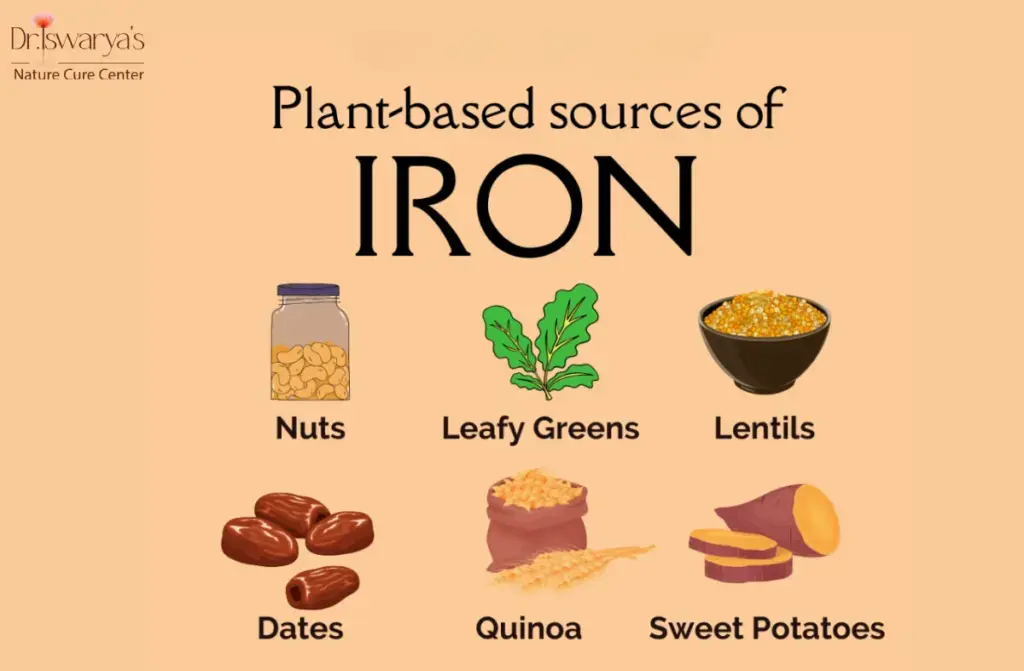
Non-Heme Iron (Plant-Based Sources)
Non-heme iron comes from plants. Your body absorbs this type less easily. Only about 5 to 12 percent gets absorbed. But do not worry. You can eat more of these foods or combine them with vitamin C.
Sources of non-heme iron include:
- Spinach and leafy greens
- Lentils and beans
- Ragi (finger millet)
- Jaggery
- Nuts and seeds
This is very important for Indians because most of us eat plant-based meals.
Difference Between Heme and Non-Heme
The simple difference is absorption. Heme iron enters your blood easily. Non-heme iron needs some help. That help comes from vitamin C.
But here is good news. Most foods high in vitamin iron (meaning iron-rich plant foods) also contain other nutrients. They have fiber, antioxidants, and minerals. So even if you absorb less iron, you gain many other benefits.
Interesting Facts About Iron-Rich Foods
Vitamin C Improves Iron Absorption
This is the most useful fact you will read today. Vitamin C can double or triple iron absorption from plant foods.
How to use this knowledge:
- Squeeze lemon juice on your spinach curry
- Eat an orange after your dal-rice
- Add amla (Indian gooseberry) to your meals
- Cook tomatoes with your leafy vegetables
Simple actions. Big results.
Tea and Coffee Reduce Iron Absorption
The tannins in tea and coffee stick to iron. They do not let your body take the iron in. This effect is strong. Drinking chai with your meal can reduce iron absorption by 60 percent.
The solution is easy. Wait one hour after eating before drinking tea or coffee. Or drink it one hour before your meal.
Women Need More Iron Than Men
Women lose blood every month during menstruation. Blood contains iron. So women need to replace that iron every single month.
Teenage girls and young women have the highest risk of low iron. Pregnant women need even more because they are growing another human inside them.
Blood Donation Can Lower Iron Levels
Donating blood is a noble act. But each donation removes about 200 to 250 milligrams of iron from your body. That is a lot.
If you are a regular blood donor, you need to eat extra foods high in iron for a few weeks after donation. Eat ragi. Eat dates. Eat leafy greens.
Top Foods High in Iron
Non-Vegetarian Foods High in Iron
If you eat non-vegetarian food, these are excellent choices:
- Chicken Liver – The highest source. One small piece gives you days of iron.
- Mutton or Lamb – Red meat is very rich in heme iron.
- Eggs – Especially the yolk. Two eggs give you good iron.
- Fish – Sardines, mackerel, and tuna are great.
Vegetarian Foods High in Iron
This section is for most Indians. These foods and fruits high in iron are easy to find:
- Ragi (Finger Millet) – The king of iron-rich grains. One bowl of ragi porridge gives you more iron than spinach.
- Spinach (Palak) – Popeye was right. One cup of cooked spinach has lots of iron.
- Amaranth Leaves (Chaulai) – Better than spinach. Very common in Indian markets.
- Pumpkin Seeds – A handful gives you good iron.
- Sesame Seeds (Til) – Make til laddoos or sprinkle on food.
- Jaggery (Gur) – Sweet and healthy. One small piece daily.
Fruits High in Iron
Fruits are delicious and healthy. These fruits give you iron plus vitamins:
- Watermelon – One large slice has good iron. Plus it hydrates you.
- Dates (Khajur) – Eat 3 to 4 dates every morning. Sweet and filling.
- Pomegranate (Anar) – The red seeds are iron-rich. Eat fresh or drink juice.
- Dried Figs (Anjeer) – Very concentrated source. Two figs daily.
- Mulberries (Shahtoot) – If you find them, eat them.
Iron-Fortified Foods
Many companies now add iron to breakfast cereals and oats. Check the label. If it says “fortified with iron,” it can help. But remember, natural healthy foods high in iron are always better than processed ones.
What Are the Best Foods High in Iron?
If you only remember five foods, remember these:
- Ragi – Best vegetarian source
- Chicken Liver – Best non-vegetarian source
- Spinach – Most available everywhere
- Dates – Best fruit source
- Jaggery – Best sweet source
Eat these regularly. Combine with vitamin C. Avoid tea near mealtimes. You will feel the difference in two weeks.
Why Iron Deficiency Is a Silent Health Problem (Expanded)
Global Prevalence
Iron deficiency affects more people than any other nutritional problem. It does not matter if you are rich or poor. It does not matter if you live in a city or village. The numbers are shocking. But we do not say this to scare you. We say this so you know you are not alone. Millions of people have fixed this problem with simple food changes.
Why Iron Deficiency Is Common in India
India has unique challenges. Our heat makes us sweat, and we lose minerals. Our vegetarian diet has non-heme iron only. Our chai habit blocks absorption. Our wheat and rice have less iron than millets.
But here is the good news. India also has amazing iron-rich foods. Ragi, amla, drumstick leaves, and jaggery are all Indian superfoods. Our ancestors knew this. We just need to remember.
Why People Often Ignore It
People ignore low iron because doctors are expensive. Because they think feeling tired is part of life. Because no one told them what normal energy feels like.At Dr. Iswarya’s Nature Cure, we do not blame you for ignoring the signs. We gently show you a better way.
Best Indian Foods High in Iron
Ragi and Millets: The Super Grain
Ragi has more iron than rice or wheat. It also has calcium. It is gluten-free. It keeps you full for hours.
How to eat ragi:
- Ragi mudde (balls) with sambar
- Ragi porridge for breakfast
- Ragi roti or dosa
- Ragi malt as a drink
Other millets like jowar and bajra are also good, but ragi is the best.
Jaggery (Naatu Sakkarai): The Sweet Cure
- Jaggery is unrefined sugar. It still has all its minerals. Iron is one of them.
- One small piece of jaggery after meals gives you iron and cleans your blood. It also helps digestion.
- Jaggery is a perfect example of foods high in vitamin iron because it contains iron along with other vitamins and minerals.
- Make jaggery laddoos with sesame seeds. Double the iron. Double the taste.
Green Leafy Vegetables
India has amazing leafy greens. Most people ignore them.
- Drumstick leaves (Moringa) – The highest iron in any leafy vegetable. Dry them and make powder. Add to soups and curries.
- Spinach (Palak) – Cook it. Raw spinach has less available iron. Cooking releases the iron.
- Amaranth leaves (Chaulai) – Very common in South Indian cooking. Make stir-fry or dal with it.
- Mustard leaves (Sarson) – North Indian favorite. Make saag.
Pulses and Legumes
Every Indian home cooks dal every day. That is good. But some dals are better for iron.
- Toor dal – Good source. Add tamarind or tomatoes for vitamin C.
- Chana dal – Better than toor dal for iron.
- Rajma (Kidney beans) – Very good. Eat with lemon rice.
- Masoor dal (Red lentils) – Cooks fast. Good iron.
- Soybeans – Very high iron. But remember the blocking effect we will discuss later.
How Much Iron Do You Need Daily?
Iron Needs for Men
Adult men need about 8 to 11 milligrams of iron per day. This is easy to get from food. One bowl of ragi porridge plus one serving of spinach gives you this.
Iron Needs for Women
Women need 15 to 18 milligrams per day. Almost double what men need. This is because of monthly blood loss.
Most Indian women do not eat enough iron-rich food. That is why so many feel tired all the time.
Iron Needs During Pregnancy
Pregnant women need 27 milligrams per day. That is a lot. The growing baby takes iron from the mother. If the mother does not eat enough, her own levels drop.
Pregnant women should eat iron-rich foods every single meal. Ragi in breakfast. Spinach in lunch. Dates as snack. Jaggery after dinner.
Iron Needs for Children
Children need small amounts based on age:
- 1 to 3 years: 7 mg
- 4 to 8 years: 10 mg
- 9 to 13 years: 8 mg
- Teenage boys: 11 mg
- Teenage girls: 15 mg
Children who drink too much milk often have low iron. Milk has calcium, which blocks iron.
Foods That Block Iron Absorption
Foods That Block Iron Absorption
Tea and Coffee
We already talked about this. Tannins are the problem. They bind to iron and carry it out of your body.
The rule is simple: Do not drink tea or coffee with your meal. Wait one hour after eating. Or drink it one hour before eating.
Calcium-Rich Foods
Calcium and iron compete for absorption. If you eat them together, your body absorbs less of both. Do not drink milk with your iron-rich meal. Do not eat curd with spinach curry. Keep a gap of two hours.
Soy-Based Foods
Soy contains phytates. Phytates reduce iron absorption. If you eat tofu or soy chunks, eat them at a different time than your iron-rich foods. Do not worry. You can still eat soy. Just do not eat it with ragi or spinach.

Symptoms of Iron Deficiency
Early Symptoms
These are easy to miss:
- Feeling tired even after sleeping well
- Cold hands and feet
- Pale inside of your lower eyelid
- Weakness in your muscles
Moderate Symptoms
When iron gets lower:
- Headaches that keep coming back
- Pale skin and pale lips
- Dizziness when you stand up fast
- Difficulty focusing on reading or work
Severe Symptoms
When iron is very low:
- Brittle nails that break easily
- Shortness of breath while climbing stairs
- Strange cravings for ice, dirt, or clay
- Heart beating fast even when resting
If you have severe symptoms, please visit us at Dr. Iswarya’s Nature Cure. We can help you naturally.
Who Is at Risk of Iron Deficiency?
- Women and Teenagers: Girls start needing more iron when periods begin. Many teenage girls do not know this. They eat the same food as their brothers. But their bodies need more.
- Pregnant Women: Pregnancy is the highest risk time. The baby takes what it needs. The mother is left with less.
- Vegetarians and Vegans: This is very important for our Indian audience. Vegetarians only eat non-heme iron. Non-heme iron absorbs less. So vegetarians need to eat more total iron and combine it with vitamin C.
- Blood Donors: Every time you donate blood, you lose iron. Frequent donors should eat extra iron-rich foods for one month after donation.
Can You Have Too Much Iron?
Risks of Excess Iron
Yes, you can have too much iron. This condition is called hemochromatosis. The body stores extra iron in the liver, heart, and pancreas. Over many years, this can cause problems.
But here is the truth. Too much iron from food is very rare. Your body is smart. It stops absorbing iron when it has enough. Too much iron usually comes from taking too many supplements.
When to Avoid Supplements
Do not take iron pills unless Dr. Iswarya suggests them. Iron pills have side effects like stomach pain and constipation. Also, too many iron pills can be harmful.
Nature cure prefers food first. Food gives you iron in the right amount. Food gives you other nutrients that help your body use iron well. Food has no overdose risk.
Tips to Maintain Healthy Iron Levels
Daily Diet Tips
- Cook in iron pots. Old iron kadhai and tawa add iron to your food. This is a traditional Indian wisdom that science now proves.
- Add amla to everything. Amla is the richest source of vitamin C. It helps absorb iron. Eat fresh amla, drink amla juice, or use amla powder.
- Soak and sprout. Sprouted grains and pulses have less phytates. Phytates block iron. Sprouting reduces phytates.
- Eat fermented foods. Idli, dosa, and dhokla have better iron availability because fermentation breaks down blockers.
- Use tamarind and lemon. Both are sour and full of vitamin C. Add them to dals and curries.
Lifestyle Changes
Sleep well. Your body repairs and makes blood cells while you sleep. Poor sleep makes iron deficiency worse.
Reduce stress. Stress affects digestion. When digestion is poor, you absorb less iron from food.
Exercise moderately. Walking and yoga improve blood circulation. Better circulation means your body uses iron more efficiently.A lesser-known source among foods and fruits high in iron, dark chocolate (with at least 70% cocoa) contains both iron and antioxidants. Consuming it in moderation can contribute to iron intake while satisfying sweet cravings.
- Dark chocolate is a surprising yet effective option among foods high in iron.
- It contains non-heme iron along with powerful antioxidants like flavonoids.
- A 70% cocoa bar offers a sweet way to boost iron levels.
- Helps support blood flow and reduce inflammation.
- Ideal as a small treat for those needing iron-rich snacks.
Recommended Daily Amount of Iron in Milligrams (mg)
| Age / Group | Recommended Daily Iron (mg) | Notes |
|---|---|---|
| Infants 0–6 months | 0.27 mg | Iron is usually sufficient from breast milk. |
| Infants 7–12 months | 11 mg | Iron-fortified cereals and pureed meats are recommended. |
| Children 1–3 years | 7 mg | Include iron-rich foods like lentils, beans, and fortified cereals. |
| Children 4–8 years | 10 mg | Balance animal and plant sources of iron for proper growth. |
| Children 9–13 years | 8 mg | Encourage foods high in vitamin iron such as spinach, pumpkin seeds, and poultry. |
| Teen Boys 14–18 years | 11 mg | Growth spurts increase iron needs; red meat and legumes are beneficial. |
| Teen Girls 14–18 years | 15 mg | Menstruation increases iron requirements; pair plant-based iron with vitamin C-rich foods. |
| Adult Men 19–50 years | 8 mg | Include lean meats, fish, and fortified cereals. |
| Adult Men 51 years and older | 8 mg | Maintain iron intake to prevent deficiency; monitor diet. |
| Adult Women 19–50 years (not pregnant or breastfeeding) | 18 mg | Menstrual blood loss increases needs; focus on foods high in vitamin iron. |
| Adult Women 19–50 years (pregnant) | 27 mg | High iron intake supports fetal development; include heme and non-heme sources. |
| Adult Women 19–50 years (breastfeeding) | 9 mg | Iron needs slightly lower than pregnancy but still important. |
| Adult Women 51 years and older | 8 mg | Iron requirements decrease after menopause. |
Conclusion
Including a wide variety of foods high in iron in your daily meals is essential for maintaining energy, supporting brain function, and preventing iron deficiency anemia. Both heme iron from animal sources and non-heme iron from plant-based foods can contribute to healthy blood cell production when consumed mindfully. Pairing iron-rich foods with vitamin C enhances absorption, while minimizing intake of inhibitors like caffeine during meals can make a noticeable difference. Whether you choose leafy greens, legumes, lean meats, or dried fruits, every choice plays a role in your iron balance. Make iron-rich eating a consistent part of your nutrition routine for lasting health benefits.
Read Also: Tips to Help You Lose Weight Naturally