
Knee pain can turn simple everyday things, such as climbing stairs, getting up from the floor or walking to the market, into a struggle. It is one of the most common reasons adults see a doctor, and it affects older people, women after menopause, desk workers and active young people alike. The reassuring part is that many causes of knee pain treatment in Chennai improve with the right mix of medical advice, strengthening exercise, weight care and supportive therapies.
This guide explains the common causes and symptoms of knee pain, when you need an orthopaedic doctor first, how the problem is diagnosed, and how physiotherapy, exercise, diet and natural therapies can support your recovery. It also covers everyday habits that protect your knees, simple exercises to learn under supervision, and common myths.
At Dr. Iswarya’s Nature Cure Center in Mandaveli, physiotherapy and lifestyle support are provided alongside, and in coordination with, your medical care.
Common Causes of Knee Pain
The knee is a large, weight-bearing joint made of bone, cartilage, ligaments, tendons and cushioning menisci, so pain can come from several structures. Common causes include:
- Osteoarthritis: Gradual wear of the joint cartilage, the most common cause of long-standing knee pain after the age of 40 to 45.
- Ligament and meniscus injuries: Often from twisting, sports or a fall, with swelling, a popping sensation or a knee that gives way.
- Tendon problems and bursitis: Overuse of the tendons around the kneecap, or inflammation of the small fluid sacs near the joint.
- Patellofemoral pain: Pain around or behind the kneecap, common in young women, runners and people with weak hip and thigh muscles.
- Gout and other inflammatory arthritis: Sudden, severe pain, redness and swelling, or long-standing morning stiffness in rheumatoid arthritis.
- Infection: A hot, red, swollen joint with fever needs urgent medical attention.
- Referred pain: Problems in the hip or lower back can be felt in the knee.
- Weak muscles, excess weight and low vitamin D: These do not always cause pain alone, but they make many knee problems worse.
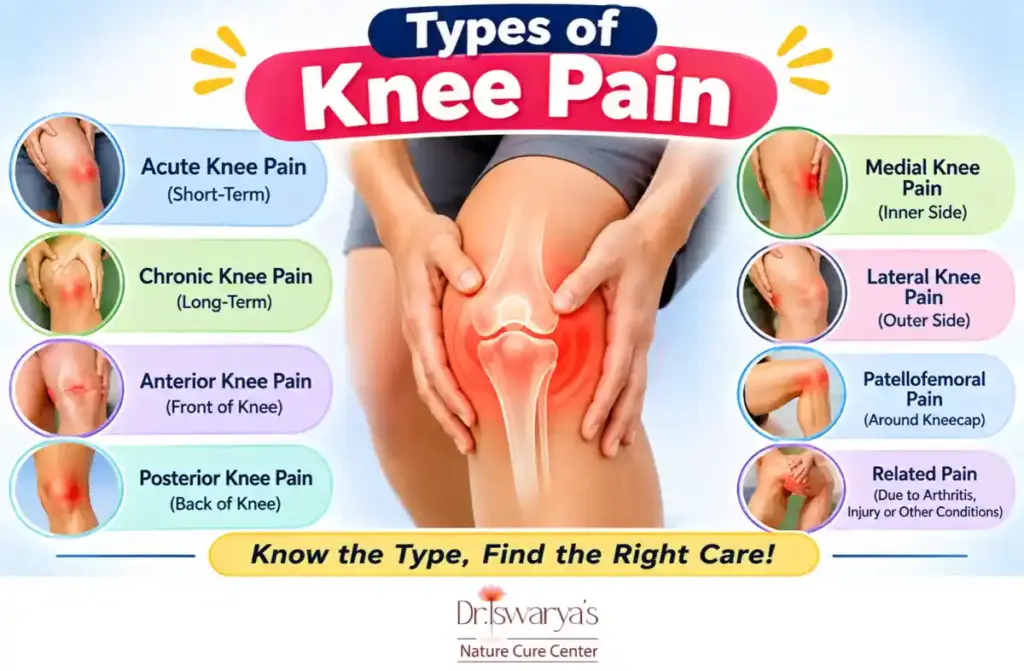
Symptoms and Types of Knee Pain
Where and when it hurts often points to the cause:
- Pain at the front of the knee or around the kneecap, worse on stairs, squatting or after sitting for long
- Pain on the inner or outer side, which can suggest cartilage wear or a meniscus problem
- Pain at the back of the knee, sometimes with a feeling of fullness
- Stiffness, especially in the morning or after sitting, usually easing in minutes in osteoarthritis
- Swelling and warmth after activity or an injury
- Clicking, grinding or cracking. Painless noises are common and often harmless.
- Giving way or locking: The knee suddenly buckles or gets stuck, and this needs medical review
- Difficulty getting up from the floor, a low chair or a squatting toilet
- Night pain that disturbs sleep
Why Knee Pain Is So Common in India
Several factors make knee problems especially frequent here:
- Daily squatting and floor sitting: Deep knee bending, common in Indian homes, puts high load on the joint, particularly once cartilage wears.
- Weight gain: Walking places roughly four times your body weight through the knees, so every extra kilogram adds up.
- Low vitamin D and weak muscles: Both are very common despite plentiful sunshine, because of indoor lifestyles and limited protein.
- Menopause: Joint aches and knee osteoarthritis become more common in women after menopause.
- Sedentary jobs: Long hours at a desk weaken the thigh and hip muscles that protect the knee.
- Delayed care: Many people live with pain for years before getting it checked.
When to See an Orthopaedic Doctor First
Before starting knee pain treatment in Chennai with any therapy center, some situations need a medical evaluation first. Please see an orthopaedic doctor or physician promptly if you have:
- A knee injury with immediate swelling, a popping sound or inability to put weight on the leg
- A knee that locks, gives way repeatedly or looks deformed
- Fever with a hot, red, swollen knee
- Calf pain, swelling or redness, especially after long travel or surgery, or sudden breathlessness (call emergency services for breathlessness)
- Severe pain that does not ease with rest, or pain at night that wakes you
- Pain lasting more than a few weeks despite rest and simple measures
- Pain with numbness, weakness or a history of cancer, steroid use or a bleeding disorder
How Knee Pain Is Diagnosed
Diagnosis begins with your history, including how the pain started, what makes it better or worse, previous injuries, work and activity, and your medicines. The doctor then examines your knee, hip and back, checks movement and stability, and watches you walk. Tests may include:
- X-ray: Shows joint space narrowing, bone changes and alignment, and is the usual first test for osteoarthritis.
- MRI: Useful for ligament, meniscus and cartilage injuries, but not needed for every knee pain.
- Ultrasound: Helps look at fluid, tendons and bursae.
- Blood tests: Uric acid, ESR and CRP, rheumatoid factor, vitamin D and B12, depending on your symptoms.
Imaging findings are read together with symptoms. Many people have changes on an X-ray or MRI without pain, so the scan alone does not decide treatment.
Medical Treatment Options
Anyone seeking knee pain treatment in Chennai should have the cause confirmed by a doctor who can decide which medical options suit them. Depending on the diagnosis, these may include:
- Pain relievers and anti-inflammatory medicines, including creams and gels, used as advised. Long-term self-medication with painkillers can harm the stomach and kidneys.
- Treatment of the underlying condition, such as gout, rheumatoid arthritis or vitamin D deficiency.
- Injections, such as steroid or other joint injections, in selected cases. Benefits vary and some are short-lived, so discuss the evidence with your doctor.
- Braces, supports and walking aids for stability and load sharing.
- Surgery, such as arthroscopy for certain meniscus or ligament injuries, or joint replacement for advanced osteoarthritis when other measures have not given enough relief.
Please do not start, stop or change any medicine on your own, and do not delay a medical review for an injury.
Physiotherapy and Exercise Therapy
Exercise is a core part of care for most knee problems, and guidelines for knee osteoarthritis place exercise and weight management first. Strong thigh, hip and calf muscles share the load and protect the joint.
Many people ask about knee pain treatment without surgery in Chennai. For a large number of causes, especially early to moderate osteoarthritis, patellofemoral pain and overuse problems, non-surgical care with physiotherapy, strengthening, weight care and activity changes helps reduce pain and improve movement. It does not suit every knee, and some conditions, such as a locked meniscal tear, a complete ligament injury or advanced joint damage, may still need surgery. Your orthopaedic doctor can tell you which applies to you.
A physiotherapist typically works on:
- Strengthening: Thigh (quadriceps and hamstring), hip and calf muscles
- Flexibility and range of movement
- Balance and walking pattern
- Pain relief techniques, such as heat, cold and gentle mobilisation
- A home programme you can continue after sessions
The center offers physiotherapy and pain management with gentle, graded exercise. Progress is gradual, and a few weeks of regular work are usually needed before change is noticed.
Supportive and Natural Therapies
Supportive therapies can form part of knee pain treatment in Chennai, but they work alongside medical care and exercise, not in place of them. Evidence for several of these is limited or mixed, so they are offered as comfort and support measures.
Hot and cold applications
Warmth for 10 to 15 minutes can ease stiffness, while a cold pack wrapped in cloth can help with swelling after activity or a flare. Always protect the skin, and take extra care if you have diabetes or reduced sensation.
Hydrotherapy and massage
Water-based therapy and gentle massage may relieve muscle tension, improve circulation and help you relax. Warm water also makes movement easier. Oil massage can feel soothing, but it does not rebuild cartilage.
Acupuncture
Some studies suggest acupuncture may give modest short-term relief of knee osteoarthritis pain, while others find little benefit over placebo. It is best viewed as a supportive option. Read about acupuncture and traditional healing.
Yoga for knee-friendly mobility
Gentle yoga can improve flexibility, balance, strength and stress. Chair-based practices, Tadasana, supported bridge pose and slow breathing are generally better tolerated than deep squats, Padmasana or Vajrasana, which can strain a painful knee. Learn under a trained therapist. The center offers yoga and meditation in person and online.
Counseling and sleep support
Long-lasting pain disturbs sleep and mood, and low mood in turn makes pain feel worse. Counseling and good sleep habits can make pain easier to cope with.
Diet and Weight for Knee Health
Extra body weight is one of the most modifiable factors in knee pain. Losing even a few kilograms reduces the load on the knees with every step, and many people notice less pain as weight comes down.
- Calcium-rich foods: Ragi, curd, milk, buttermilk, sesame seeds, drumstick leaves and green leafy vegetables.
- Vitamin D: Safe morning sunlight, and supplements only if your doctor advises them after a blood test.
- Protein at every meal: Dals, sprouts, chickpeas, paneer, eggs and fish if you eat them, to support muscle.
- Anti-inflammatory foods in general: Vegetables, fruit, nuts, seeds and omega-3 sources such as fish or flaxseed.
- Limit: Sugary drinks, sweets, refined flour, deep-fried snacks and packaged food.
- If you have gout: Limit alcohol, organ meats and large portions of red meat, keep well hydrated, and follow your doctor’s advice.
Supplements such as glucosamine and chondroitin have mixed evidence, so discuss them with your doctor before buying.
Knee Pain Treatment in Chennai at Dr. Iswarya’s Nature Cure Center
If you are looking for joint pain treatment Chennai offers that combines exercise, lifestyle guidance and supportive therapies, Dr. Iswarya’s Nature Cure Center in Mandaveli is a doctor-led naturopathy and wellness clinic that provides this kind of support. It does not replace your orthopaedic doctor, and it does not perform procedures or prescribe injections. Care is planned around your diagnosis, reports and daily routine, and typically includes:
- A detailed assessment: Your history, current medicines, reports and scans, walking pattern, work, activity and weight.
- Physiotherapy and graded exercise: Strengthening, flexibility and balance work, with a home programme.
- Supportive therapies: Such as hot and cold applications, hydrotherapy, massage and acupuncture, when suitable.
- Diet and weight guidance: Practical advice using food you already eat.
- Yoga and breathing practices: Adapted so that they are knee-friendly.
- Counseling: For stress, sleep and coping with long-lasting pain.
- Coordination with your doctor: If your pain needs imaging, injections or surgery, you are guided back to your orthopaedic doctor, and your plan is arranged to fit with their advice.
- Follow-ups and online consultation: Through teleconsultation, you can review exercises and progress from home.
The center is led by Dr. Iswarya Subramaniam (BNYS, MD; Registration No. 0308/A) and supported by naturopaths, a therapeutic yoga specialist and a chiropractor. Please bring your X-ray or MRI reports and a list of your medicines to your first visit.
Simple Knee-Friendly Exercises to Learn With Your Therapist
These are commonly used examples. Please learn them under the supervision of a physiotherapist first, so that the technique and the amount suit your knee. Stop and seek advice if you feel sharp pain, new swelling or a sense of the knee giving way.
| Exercise | How it is done | Usual starting amount |
| Quadriceps set | Sit or lie with the leg straight. Tighten the thigh muscle, pressing the back of the knee down, and hold. | Hold 5 seconds, 10 repetitions |
| Straight leg raise | Lie on your back, tighten the thigh and lift the straight leg about 30 cm. | 10 repetitions, 1 to 2 sets |
| Heel slide | Lie down and slowly slide the heel towards the buttock, bending the knee, then straighten. | 10 repetitions |
| Sit-to-stand | Sit on a firm chair and stand up slowly using the thighs, then sit back down with control. | 8 to 10 repetitions |
| Glute bridge | Lie with the knees bent, lift the hips, hold briefly and lower. | 10 repetitions |
| Calf raise | Hold a support and rise slowly on to the toes. | 10 repetitions |
A mild muscle ache is normal at the start, but pain that lasts more than a day or two means the amount is too much. Build up slowly over weeks.
Everyday Habits That Protect Your Knees
Good habits are an important part of knee pain treatment in Chennai and at home, because daily loading matters as much as a weekly session.
- Stairs: Use the handrail, take one step at a time and avoid carrying heavy loads on stairs.
- Sitting on the floor: Use a low stool or chair instead of cross-legged or squatting positions for long periods. Avoid sitting on the floor if getting up is painful.
- Toilets: If squatting hurts, use a commode seat or raised toilet seat.
- Footwear: Wear supportive, cushioned footwear, and avoid high heels and worn-out slippers.
- Walking: Walk on flat, even surfaces, and increase distance gradually. Avoid long downhill stretches while your knees are sore.
- Desk work: Stand up and move every 30 to 60 minutes. Keep your feet flat with the knees at about a right angle.
- Weight: Aim for gradual, steady weight loss if you are overweight.
- Warm up: A few minutes of gentle movement before walking or exercise helps stiff joints.
Knee Pain in Different Groups
- Women after menopause: Joint aches and osteoarthritis become more common after menopause. Strength training, vitamin D, bone health and weight care are particularly useful.
- Older adults: The aim is to keep moving safely, prevent falls and keep muscles strong. Balance and leg strength exercises are especially valuable.
- Active young people: Injuries to the ligaments and meniscus, and kneecap pain, are common. Early medical assessment and a proper rehabilitation plan help prevent repeat injury.
- Desk workers: Weak thigh and hip muscles and long sitting hours often lead to kneecap pain. Regular movement breaks and strengthening help.
- People with diabetes or reduced sensation: Take extra care with heat and cold applications, and check the skin afterwards.
Myths vs Facts About Knee Pain
| Myth | Fact |
| Complete rest is the best way to treat knee pain. | A short rest after an injury or flare can help, but long rest weakens the muscles. Graded movement is usually better. |
| Cracking or clicking knees always mean arthritis. | Painless clicking is common and often harmless. Pain, swelling or locking with clicking needs review. |
| Oil massage or a supplement can rebuild worn cartilage. | They may feel soothing, but there is no reliable proof that they regrow cartilage. |
| Surgery is the only answer to knee arthritis. | Many people improve with exercise, weight care and other non-surgical measures, though some need surgery. |
| Exercise damages arthritic knees. | The right exercise, in the right amount, usually reduces pain and protects the joint. |
| Pain after 50 is normal and cannot be helped. | Age raises the risk, but pain can often be reduced, and a new or severe pain deserves a check. |
What Does Knee Pain Treatment in Chennai Cost?
The cost depends on the consultations you need, any scans or blood tests, medicines or injections prescribed by your orthopaedic doctor, the number of physiotherapy and therapy sessions, and the length of your plan. Because every person’s diagnosis and needs differ, the center explains charges clearly at the time of consultation, before any plan begins. Please contact the center for current fees. Health insurance may cover some tests and treatment, so check your policy.
Conclusion
Knee pain is common, but it is not something you simply have to live with. A sound approach to knee pain treatment in Chennai starts with finding the cause, adds medical care where needed, and builds on the foundations that help most knees: stronger muscles, a healthier weight, safer daily movement and good rest. Results differ from person to person, and improvement is usually gradual, so steady effort over weeks matters more than quick fixes.
If you would like physiotherapy and lifestyle support planned around your own reports and routine, and coordinated with your doctor, Dr. Iswarya’s Nature Cure Center offers doctor-led naturopathy, physiotherapy, yoga and counseling in Mandaveli, Chennai, and online.
Book a Consultation
Dr. Iswarya’s Nature Cure Center
Level 1 & 2, 44/1, Venkatakrishna Road, Jeth Nagar, Mandaveli, Chennai, Tamil Nadu 600028
Phone: 044-46187679 | Email: cmo@driswaryasnaturecure.com
Book a consultation or message us on WhatsApp to begin your personalised plan.