
Written and Reviewed by
Dr. Iswarya
BNYS (Bachelor of Naturopathy & Yogic Sciences), MD (Doctor in Medicine). Founder & Chief Naturopathy Consultant at Dr. Iswarya’s Nature Cure Centre, Chennai.
Medical registration ID – 0308/A
View credentials →Diabetes is one of the most common long-term health conditions in India, and living with it means making decisions every single day. What you eat at breakfast, whether you walk after dinner, how well you slept, and how much stress you are carrying all show up in your blood sugar readings sooner or later. That is why many families in Chennai are looking into naturopathy for diabetes as a supportive layer of care beside their regular treatment.
At Dr. Iswaryas Nature Cure Center, we see naturopathy as a partner to your doctor, never a replacement. This guide explains how naturopathy treatment for diabetes works, who it may suit, which daily habits make the biggest difference, what the research actually says, and which safety rules you should never skip.
Key Takeaways
- Naturopathic care supports diabetes control through diet, movement, stress management, and sleep. It does not cure diabetes.
- Lifestyle change is strongly supported by major diabetes guidelines, so a supervised lifestyle-first plan is sensible.
- Never stop or reduce insulin or tablets on your own.
- Fasting, herbs, and sudden diet changes can cause low blood sugar, so talk to your doctor first.
- Regular testing (HbA1c, kidney, eye, and foot checks) matters more than any single therapy.
What is Naturopathy Treatment for Diabetes?
Naturopathy is a drug-free system of care built on healthy eating, physical activity, water-based therapies, rest, and stress control. Its central idea is that the body functions better when daily habits support it. In diabetes, the goal is to improve those habits so the body handles glucose more effectively and the risk of long-term complications falls.
A natural treatment for diabetes of this kind is not a quick fix. Diabetes is a long-term condition, and no diet, yoga session, or therapy can promise to remove it. What naturopathy can offer is structure: a personalised plan, regular guidance, and a team that helps you stay consistent when motivation drops.
Core Principles Behind Naturopathic Care
- Whole-person approach: Looking at food, sleep, stress, activity, family history, and emotional health together, not just a sugar reading.
- Prevention first: Building habits that lower the chance of complications in the eyes, kidneys, nerves, and heart.
- Patient participation: Teaching you to make informed daily choices instead of depending only on prescriptions.
- Gentle, non-invasive methods: Diet, yoga, hydrotherapy, and relaxation techniques, used with medical supervision.
Understanding Diabetes: Types, Symptoms, and Risks
Before choosing any supportive care, it helps to understand what is happening inside the body.
Types of Diabetes
| Type | What happens | Usual medical care |
| Type 1 | The immune system damages insulin-producing cells | Lifelong insulin |
| Type 2 | Cells respond poorly to insulin, so sugar stays high | Lifestyle changes, tablets, sometimes insulin |
| Gestational | High sugar develops during pregnancy | Diet, monitoring, sometimes insulin |
| Prediabetes | Sugar is above normal but below the diabetes range | Lifestyle changes, regular testing |
Common Symptoms to Watch For
- Increased thirst and frequent urination, especially at night
- Unexplained tiredness or weakness
- Blurred vision
- Slow-healing cuts or wounds
- Frequent infections, including skin or urinary infections
- Tingling, burning, or numbness in the hands and feet
- Unplanned weight loss or constant hunger
Many people with type 2 diabetes have no obvious symptoms for years, so routine testing after age 30, or earlier with risk factors, is important.
Risk Factors
- Family history of diabetes
- Excess weight, particularly around the waist (South Asians can develop diabetes at lower body weights than many other populations)
- Sedentary lifestyle
- High blood pressure or abnormal cholesterol
- History of gestational diabetes or PCOS
- Diets high in refined carbohydrates, sweets, and processed foods
- Chronic stress and poor sleep
Why Steady Blood Sugar Control Matters
Blood sugar that stays high for years can gradually damage small and large blood vessels. This can lead to eye problems (retinopathy), kidney disease, nerve damage (neuropathy), foot ulcers, and a higher risk of heart attack and stroke. The encouraging part is that steady control lowers these risks, and daily habits play a big role.
Naturopathy vs Conventional Diabetes Care
| Aspect | Conventional care | Naturopathic support |
| Main tools | Medicines, insulin, lab monitoring | Diet, yoga, hydrotherapy, stress management |
| Focus | Controlling blood sugar levels directly | Daily habits and lifestyle factors behind them |
| Best used | As the foundation of treatment | Alongside medical care, with your doctor’s knowledge |
| Can it replace medicines? | Not applicable | No |
| Who guides it | Diabetologist or physician | Qualified naturopathy doctor in coordination with your physician |
The two are not rivals. The most sensible approach is integrated: your diabetologist manages your medicines and tests, while lifestyle-based care helps you follow through on the daily habits that make those medicines work better.
Who Can Consider Naturopathy Treatment for Diabetes?
Supportive lifestyle care may suit:
- People with prediabetes who want to slow or prevent progression
- People with type 2 diabetes who want structured diet and exercise guidance
- Those already on medication who want help building sustainable routines
- People with obesity, high blood pressure, or high cholesterol alongside diabetes
- Family members of people with diabetes who want to lower their own risk
Extra caution is needed for people with type 1 diabetes, pregnant women, older adults on multiple medicines, and anyone with advanced kidney, eye, heart, or nerve complications. In these groups, naturopathic care should only be a complement, with close medical supervision.
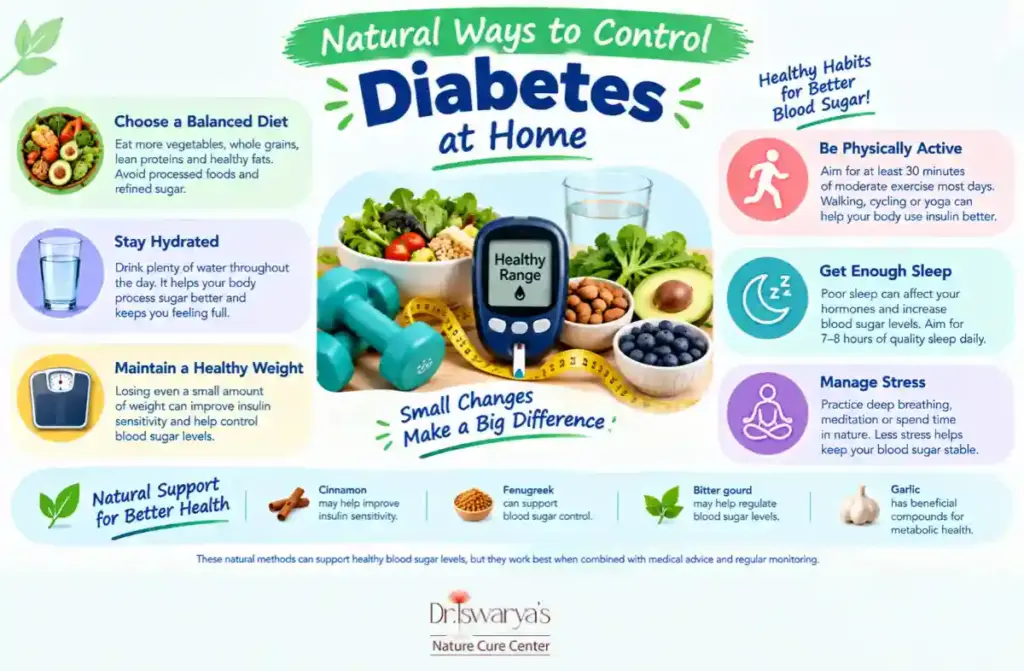
Natural Ways to Control Diabetes at Home
The most reliable natural ways to control diabetes are also the simplest. They work through consistency, not extreme measures.
1. Diet Planning
Food is the single biggest lever you can pull every day. A good diabetes-friendly diet is not about starving or cutting out entire food groups. It is about choosing foods that release sugar slowly, keeping portions sensible, and eating at regular times.
Principles of a balanced plate:
- Fill about half your plate with non-starchy vegetables
- Keep about a quarter for whole grains or millets
- Keep about a quarter for protein such as dal, sprouts, eggs, fish, paneer, or lean meat
- Add a small portion of healthy fats like nuts, seeds, or a little cold-pressed oil
- Eat at consistent times and avoid long gaps followed by heavy meals
Glycaemic index of common Indian foods (approximate guide):
| Lower glycaemic impact | Moderate | Higher glycaemic impact |
| Ragi, foxtail millet, kambu | Brown rice, whole wheat chapati | White rice, maida |
| Oats, barley | Basmati rice (small portion) | White bread, bakery items |
| Most dals and legumes | Ripe banana, mango (small portion) | Sweets, sugary drinks |
| Green leafy vegetables | Potato, sweet potato (small portion) | Fruit juices |
| Guava, apple, papaya | Idli, dosa (with sambar and chutney) | Sugary breakfast cereals |
These are general guides. Cooking method, portion size, and what you eat alongside a food all change its effect on your sugar.
Foods to include and limit:
| Include more | Limit or avoid |
| Millets, oats, whole grains | Sugar, jaggery in large amounts, sweets |
| Leafy greens, beans, brinjal, drumstick, ladies finger | Maida, white bread, biscuits, bakery items |
| Dal, sprouts, legumes, curd | Deep-fried snacks and packaged foods |
| Nuts and seeds in small portions | Sweetened drinks and fruit juices |
| Water, buttermilk, unsweetened tea | Skipping meals, then overeating |
| Cinnamon or fenugreek in food (small amounts, after doctor’s approval) | Excess salt and highly processed foods |
Sample one-day meal pattern (to be personalised by your doctor or dietitian):
| Meal | Example |
| Early morning | Warm water, or soaked fenugreek water only if your doctor approves |
| Breakfast | Ragi dosa or vegetable oats with sambar and a small bowl of sprouts |
| Mid-morning | A small guava or apple, or a handful of nuts |
| Lunch | Millet or brown rice (small portion), dal, two vegetable dishes, salad, curd |
| Evening | Unsweetened tea or buttermilk with roasted chana |
| Dinner | Two whole wheat chapatis or millet roti, vegetable curry, dal or paneer |
| Bedtime | Warm water; a small snack only if advised for low-sugar prevention |
Practical eating tips:
- Eat vegetables and protein first, then carbohydrates. This can help reduce post-meal sugar rises.
- Chew slowly and stop when about 80% full.
- Read food labels for hidden sugars.
- Choose fruits over juices, and pair them with nuts or protein.
- Avoid eating late at night.
2. Yoga for Blood Sugar Support
Some studies suggest yoga can modestly improve blood sugar and reduce stress. It also builds flexibility, strength, and calm, all of which support long-term habits.
| Practice | Possible benefit | Caution |
| Vajrasana | Supports digestion; can be done after meals | Avoid with severe knee problems |
| Tadasana | Improves posture and balance | Generally safe |
| Trikonasana | Stretches the side body; supports circulation | Go slowly if you have dizziness |
| Ardha Matsyendrasana | Gentle spinal twist; supports abdominal organs | Avoid with recent abdominal surgery |
| Bhujangasana | Strengthens the back | Avoid with severe back pain or hernia |
| Paschimottanasana | Calms the mind | Avoid forceful bending with retinopathy or back problems |
| Shavasana | Deep relaxation | Generally safe |
Always practice under a trained instructor at first. People with retinopathy, neuropathy, high blood pressure, or heart problems should ask their doctor which postures are safe.
3. Pranayama and Meditation
Breathing practices such as Anulom Vilom (alternate nostril breathing) and Bhramari (humming breath) promote relaxation and may help lower stress hormones that affect blood sugar. Even 10 to 15 minutes of quiet meditation daily can improve sleep and emotional balance. Forceful techniques should be avoided if you have high blood pressure, heart disease, or are pregnant, unless your doctor approves.
4. Walking and Regular Movement
Major guidelines recommend about 150 minutes of moderate activity per week, or roughly 30 minutes on most days, unless your doctor advises otherwise. A 10 to 15-minute walk after meals can help ease post-meal sugar rises. Strength exercises two or three times a week, such as body-weight squats or resistance bands, help muscles use glucose more effectively. If you use insulin, carry a quick sugar source when exercising.
5. Sleep and Stress Control
Poor sleep and constant stress raise cortisol and other hormones that push blood sugar up. Helpful habits include:
- A fixed sleep and wake time, even on weekends
- No screens for an hour before bed
- A light dinner at least two to three hours before sleep
- Daily meditation, prayer, or quiet time
- Talking to family, friends, or a counsellor when things feel heavy
6. Weight Management
For many people with type 2 diabetes, losing even a modest amount of excess weight can improve insulin sensitivity. Aim for gradual, sustainable change rather than crash diets, which can be risky if you take diabetes medicines.
7. Hydration
Water supports kidney function and helps flush excess sugar through urine. Aim for regular sips through the day. Choose water, buttermilk, or unsweetened herbal tea over sweetened drinks.
Therapies Commonly Used in Naturopathic Care
| Therapy | Purpose | Evidence level |
| Diet consultation | Personalised, balanced meal plans | Strong (lifestyle change is central to diabetes guidelines) |
| Yoga and pranayama | Stress reduction, modest sugar benefits | Moderate |
| Meditation | Stress and sleep support | Moderate |
| Hydrotherapy | Relaxation, circulation support | Limited |
| Mud therapy | Relaxation and comfort | Limited |
| Massage | Stress relief, comfort | Limited |
| Acupressure | Symptom and stress support | Limited |
Where evidence is limited, these therapies are best viewed as supportive comfort measures, not as ways to lower blood sugar directly.
Herbs and Home Remedies: What You Should Know
Herbs are popular in diabetes care, but they are not harmless just because they are natural. Some can lower blood sugar further when combined with medicines.
| Herb or remedy | Commonly discussed for | Caution |
| Fenugreek (methi) | Possible modest effect on blood sugar | Can cause low sugar or stomach upset; check with doctor |
| Bitter gourd (karela) | Traditional use in diabetes diets | May cause low sugar; avoid concentrated juice without advice |
| Cinnamon | Studied for blood sugar effects; results are mixed | Some types contain coumarin; avoid large amounts |
| Gurmar (gymnema) | Traditional use | May interact with diabetes medicines |
| Amla, jamun | Nutritious, commonly included in diets | Watch portions and interactions |
| Curry leaves, drumstick leaves | Nutrient-rich additions | Generally safe as food |
Use herbs as part of food, not as replacements for medicine, and always inform your doctor about any supplement you take.
Our Approach to Naturopathy Treatment for Diabetes at Dr. Iswaryas Nature Cure Center
At Dr. Iswaryas Nature Cure Center, diabetes treatment through naturopathy begins with understanding you as a whole person, not just a lab value. Your history, medicines, daily schedule, food habits, and goals all shape the plan.
| Step | What happens |
| 1. Consultation | Review of history, symptoms, current medicines, and lifestyle |
| 2. Report review | Fasting sugar, post-meal sugar, HbA1c, lipid profile, kidney function |
| 3. Personal plan | Custom diet chart, yoga routine, and therapy schedule |
| 4. Guided therapies | Supervised sessions at the centre |
| 5. Home support | Simple daily routines you can follow without disruption to work or family life |
| 6. Follow-up | Regular reviews and adjustments based on your readings |
We also offer home-based guidance for people who cannot visit the centre daily. Your plan is coordinated with your diabetologist wherever possible, and we encourage you to share your progress with them.
A Sample Daily Routine
| Time | Activity |
| 6:00 AM | Wake up, warm water, 10 minutes of gentle stretching |
| 6:30 AM | Yoga and pranayama (30 to 40 minutes) |
| 8:00 AM | Balanced breakfast |
| 10:30 AM | Healthy mid-morning snack |
| 1:00 PM | Lunch; 10-minute walk afterwards |
| 4:30 PM | Light snack, hydration |
| 6:00 PM | Evening walk or light exercise |
| 8:00 PM | Light dinner |
| 9:30 PM | Meditation, screen-free wind-down |
| 10:00 PM | Sleep |
Adjust this to your work hours and medication timings.
Diabetes Management with Naturopathy: Tracking Your Progress
Good diabetes management with naturopathy depends on teamwork and measurement. Feelings are useful, but numbers show what is really happening.
| Test | Suggested frequency |
| Fasting and post-meal sugar | As advised by your doctor |
| HbA1c | Every 3 months |
| Lipid profile | Every 6 to 12 months |
| Kidney function and urine albumin | Yearly, or as advised |
| Eye examination | Yearly |
| Foot examination | At every visit |
| Blood pressure | At every visit, and at home if advised |
Keep a simple diary of your sugar readings, meals, walks, and mood. Bring it to your appointments so your doctors can see patterns and fine-tune your plan.
Foot Care and Preventing Complications
High sugar can reduce sensation in the feet and slow healing, so small problems can become serious.
- Check your feet daily for cuts, blisters, redness, or swelling
- Wash and dry them well, especially between the toes
- Wear well-fitting footwear; avoid walking barefoot
- Moisturise dry skin, but not between the toes
- Cut nails straight across
- See a doctor promptly for any wound that does not heal
Also keep blood pressure and cholesterol under control, avoid smoking, and limit alcohol, since all of these add to the risks of diabetes.
What Does the Research Say?
Research on naturopathy treatment for diabetes is still limited. Small studies have reported better self-care behaviour and improved risk markers in people with type 2 diabetes who received naturopathic care. However, larger randomized trials are needed to show which parts of that care are responsible for the benefits. Lifestyle change itself, meaning better diet, regular exercise, weight control, and stress reduction, is strongly supported by major diabetes guidelines. That is why we present naturopathic care as supportive, not as a standalone answer.
Safety Rules You Should Never Skip
Before starting any naturopathy treatment for diabetes, keep these points in mind:
- Never stop or reduce insulin or tablets on your own. Only your treating doctor should change your dose.
- Be careful with fasting and sudden diet changes. These can cause low blood sugar, especially if you take insulin or sulfonylureas.
- Check your sugar regularly and keep a written log.
- Tell every doctor about the therapies, herbs, and supplements you use.
- Carry a quick sugar source such as glucose tablets if you are on insulin or medicines that can cause low sugar.
- Avoid unverified products that promise to cure diabetes or replace medicines.
When to Seek Urgent Medical Help
| Symptom | Possible concern |
| Shaking, sweating, sudden confusion | Low blood sugar |
| Extreme thirst, frequent urination, vomiting | Very high blood sugar |
| Fruity breath, rapid breathing, drowsiness | Diabetic ketoacidosis |
| Non-healing foot wound, spreading redness | Infection or nerve damage |
| Chest pain, sudden vision loss, weakness on one side | Emergency; call for help immediately |
Common Myths vs Facts
| Myth | Fact |
| Diabetes can be cured completely with natural methods | Diabetes can be managed, and some people with type 2 achieve remission through major lifestyle change under medical guidance, but it needs ongoing monitoring |
| Natural means completely safe | Herbs and fasting can cause low sugar or interact with medicines |
| Eating sugar directly causes diabetes | Excess calories, weight gain, inactivity, and genetics all play roles |
| Only sweets raise blood sugar | Refined carbohydrates like white rice and maida also do |
| Stopping medicine is fine if sugar looks normal | Normal readings often mean the medicine is working |
| Fruit is forbidden | Most fruits can be eaten in sensible portions |
Why Choose Dr. Iswaryas Nature Cure Center?
- Personalised plans instead of one-size-fits-all programs
- Qualified doctors and trained therapists
- Focus on evidence-aware, safety-first care
- Both in-centre and home-based support
- Coordination with your diabetologist wherever possible
- Ongoing follow-up, not one-time advice
Take the First Step Toward Steadier Blood Sugar
Living well with diabetes does not require perfection. It requires small, steady habits, guided by a qualified team and backed by your diabetologist. If you would like a personalised plan, contact Dr. Iswaryas Nature Cure Center in Chennai by phone or WhatsApp at 044-46187679 to book a consultation.
Conclusion
Diabetes cannot be cured with any single diet, herb, or therapy, but it can be managed well with the right habits and the right support. A balanced plate, regular movement, yoga and breathing practices, good sleep, and steady stress control all help your body handle blood sugar more effectively. When these habits are guided by qualified professionals and combined with your diabetologist’s treatment, they can make daily life with diabetes feel far more manageable.
The key points to remember:
- Lifestyle-based care is a supportive partner to medical treatment, not a substitute for it.
- Consistency matters more than perfection. Small daily choices add up over months and years.
- Never stop or change your medicines without your doctor’s advice, and be cautious with fasting, herbs, and sudden diet changes.
- Regular tests, including HbA1c, kidney, eye, and foot checks, show what is really happening and help catch problems early.
- Evidence for some naturopathic therapies is still limited, so choose a centre that is honest about what it can and cannot do.
If you are looking for a safe, personalised, and evidence-aware way to support your blood sugar goals, Dr. Iswaryas Nature Cure Center in Chennai is ready to guide you. Book a consultation today and take the first step toward a healthier routine, with your medical team beside you.
Read also How to Reverse Diabetes.