
Stress and anxiety often creep in quietly, turning peaceful nights into restless hours of tossing and turning. Many people search for how to sleep when stressed and anxious because their minds refuse to slow down, even when the body feels exhausted. Sleepless nights may begin with small worries—work pressure, family concerns, or health fears—but they quickly grow into a habit of poor sleep. When stress overstimulates the nervous system, falling asleep becomes a daily struggle. Understanding this connection is the first step toward restoring natural, healing sleep.
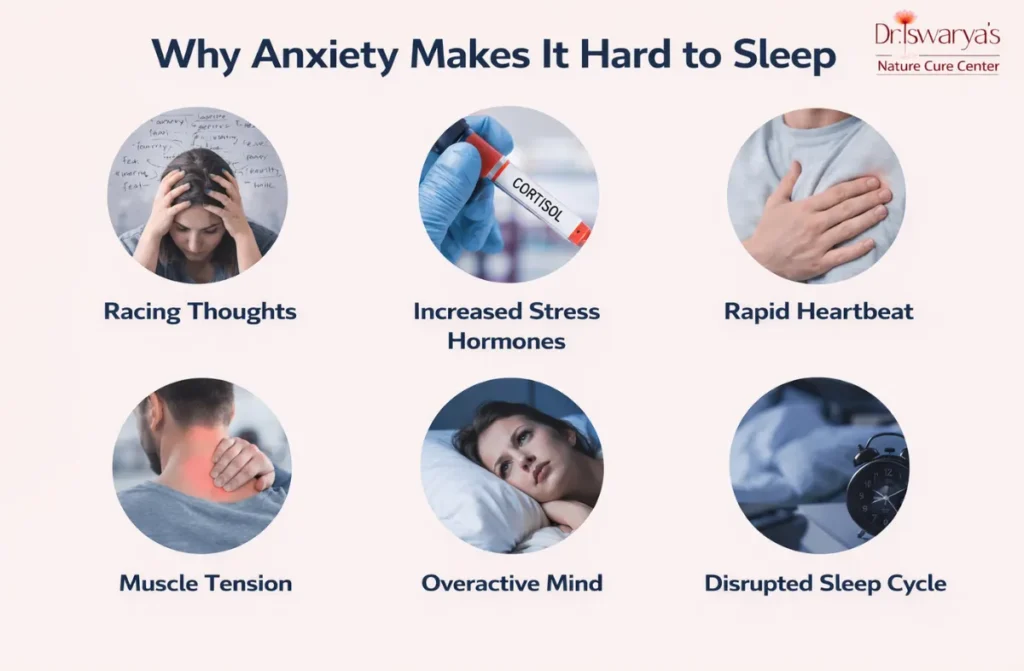
Why Anxiety Makes It Hard to Sleep
Anxiety doesn’t stop when the lights go off. For many people trying to understand how to sleep when stressed and anxious, bedtime becomes the moment when unresolved thoughts grow louder. The body stays alert as if danger is near, preventing deep rest and relaxation.
- The Mind Stays on High Alert: When anxiety takes over, the brain remains in “problem-solving mode.” You might replay conversations, imagine worst-case scenarios, or worry about tomorrow’s responsibilities. This mental activity keeps the nervous system active, making it difficult to drift into sleep naturally.
- Stress Hormones Disrupt Natural Sleep: Anxious thoughts trigger stress hormones like cortisol, which signal the body to stay awake. Over time, this imbalance can disturb sleep cycles and lead people to wonder, does stress cause sleep apnea or other serious sleep-related concerns, especially when shallow breathing or sudden awakenings occur at night.
What Happens When You Don’t Get Enough Sleep
If you’re constantly searching for how to sleep when stressed and anxious, chances are your body is already feeling the effects of sleep deprivation. Missing proper rest doesn’t just cause fatigue—it impacts physical, emotional, and mental health.
- Effects on Body and Mind: Lack of sleep can lead to headaches, low immunity, mood swings, and poor concentration. Small tasks feel overwhelming, and emotional reactions become stronger than usual, feeding the cycle of anxiety even more.
- Sleep Loss and Stress-Related Breathing Issues: Chronic sleep deprivation can worsen nighttime breathing patterns. People often ask, can stress cause sleep apnea, especially when stress-induced tension leads to shallow breathing or frequent waking, preventing restorative sleep.
How to Know if It’s Anxiety or a Sleep Problem
Understanding whether anxiety is the root cause is essential when learning how to sleep when stressed and anxious. While sleep disorders exist, anxiety-driven sleep issues often follow recognizable patterns.
- Signs It’s Anxiety-Related: If sleep troubles appear mainly during stressful periods and improve when worries reduce, anxiety may be the trigger. Symptoms include racing thoughts, tight chest sensations, and difficulty calming the body before bed.
- How Sleep Supports Stress Relief and Growth: Quality sleep allows the body to repair and reset naturally. Many people ask if sleep reduces stress and growth—the answer lies in how deep sleep balances hormones, supports mental recovery, and helps the body grow stronger emotionally and physically over time.
5 Easy Ways to Sleep Better When You Have Anxiety
Learning how to sleep when stressed and anxious becomes easier when you follow gentle, consistent habits that calm both mind and body naturally.
- Speak With a Doctor or Health Expert: A qualified health professional can help identify whether anxiety or sleep patterns are causing your issues. This guidance is especially helpful if stress-related symptoms resemble breathing disturbances or nighttime discomfort.
- Avoid Caffeine and Alcohol Before Bed: Stimulants increase nervous system activity and worsen anxiety before bed. Reducing caffeine may help if you’re questioning does stress cause sleep apnea, as stimulants can further disrupt breathing and sleep quality.
- Follow Healthy Sleep Habits: Sleeping at the same time daily, dimming lights early, and avoiding screens helps signal the brain to relax. These habits are useful for those wondering can stress cause sleep apnea, since consistency supports steady breathing and deeper rest.
- Relax Your Body and Mind Before Bed: Gentle stretching, warm foot soaks, or slow breathing techniques help calm anxious energy. These practices reduce muscle tension and prepare the body for natural sleep.
- Set Aside Time to Think About Worries Earlier in the Day: Writing down concerns during the day prevents them from spilling into nighttime. This simple habit trains the mind to rest instead of overthinking at bedtime.
Conclusion
Healing sleep becomes achievable when you recognize the deep mind–body connection behind restless nights. Understanding how to sleep when stressed and anxious takes time, mindful self-care, and awareness of emotional triggers. Anxiety-related sleep concerns rarely resolve instantly, but gentle naturopathic methods can steadily restore inner balance. Dr. Iswarya Nature Cure helps prevent and manage sleep problems caused by stress through personalized naturopathy, focusing on calming the nervous system, improving daily habits, and supporting the body’s natural rhythm. As stress eases, sleep naturally deepens—allowing the body to heal and renew itself from within.