
Have you ever felt physically exhausted but mentally unable to switch off?
You finish work, complete your responsibilities, and finally lie down to rest, yet your mind continues racing. Thoughts about tomorrow’s tasks, unfinished conversations, financial concerns, family obligations, or future uncertainties keep circulating long after the day has ended.
For millions of people, this has become a daily reality. Modern life keeps the nervous system constantly engaged. Notifications arrive around the clock, workloads continue to increase, and many individuals find themselves operating in a state of chronic stress without even realizing it.
While occasional stress is a normal part of life, persistent stress and anxiety can gradually affect nearly every aspect of health. Sleep becomes less restorative. Concentration declines. Muscles remain tense. Digestion becomes unpredictable. Emotional resilience weakens.
This is where yoga for stress and anxiety offers something unique.
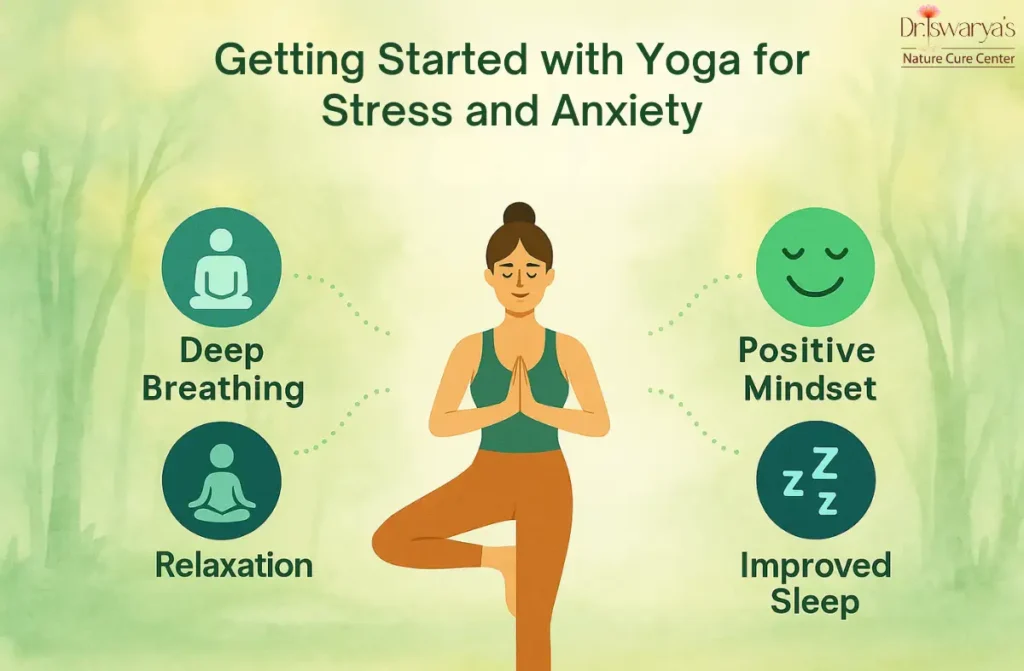
Unlike many stress-management techniques that focus only on the mind or only on the body, yoga for stress and anxiety addresses both simultaneously. Through intentional movement, conscious breathing, and mindfulness practices, yoga creates an opportunity to interrupt the stress cycle and restore balance.
The goal is not to eliminate challenges from life. Instead, yoga for stress and anxiety teaches the body and mind how to respond to those challenges with greater calm, awareness, and resilience.
Why Stress Feels So Overwhelming Today
Human beings are biologically designed to handle short bursts of stress.
Thousands of years ago, stress typically appeared in response to immediate physical threats. Once the danger passed, the nervous system returned to a relaxed state. Modern stress is different. Deadlines, financial pressures, social expectations, family responsibilities, and constant connectivity can keep the body’s stress response activated for extended periods.
The brain often struggles to distinguish between a genuine physical threat and an overflowing inbox. As a result, the body releases the same stress hormones whether you are escaping danger or worrying about tomorrow’s presentation.
Over time, this continuous activation can create a cascade of physical and emotional symptoms.
How Chronic Stress Affects the Entire Body
| Body System | Potential Effects of Chronic Stress |
| Nervous System | Anxiety, restlessness, racing thoughts |
| Muscular System | Neck pain, shoulder tension, headaches |
| Digestive System | Bloating, indigestion, appetite changes |
| Cardiovascular System | Increased heart rate and blood pressure |
| Immune System | Greater susceptibility to illness |
| Sleep System | Difficulty falling asleep or staying asleep |
| Emotional Health | Irritability, mood swings, emotional exhaustion |
What makes stress particularly challenging is that it rarely remains confined to one area of life. Mental strain eventually becomes physical strain, and physical discomfort often intensifies emotional stress.
This interconnected relationship is one of the reasons yoga can be so effective.
The Science Behind Yoga for Stress and Anxiety
Yoga works by influencing the autonomic nervous system, which controls many unconscious functions including heart rate, breathing patterns, digestion, and stress responses.
When people experience anxiety, the sympathetic nervous system—the body’s fight-or-flight mechanism—becomes dominant. Breathing becomes shallow, muscles tighten, and the brain shifts into survival mode.
Yoga encourages the opposite response.
Slow breathing patterns, mindful movement, and relaxation techniques stimulate the parasympathetic nervous system, often referred to as the rest-and-digest system. This shift sends a powerful signal to the brain that it is safe to relax.
Research has shown that consistent yoga practice may help reduce cortisol levels, improve heart rate variability, support emotional regulation, enhance sleep quality, and decrease symptoms associated with anxiety and chronic stress.
Many practitioners notice an important shift after several weeks of regular practice. Stressful situations may still occur, but their reactions become less intense and recovery becomes faster.
Rather than eliminating stress, yoga helps build resilience.
Why Yoga Works Better Than Simply “Trying to Relax”
One of the most common pieces of advice given to stressed individuals is to “just relax.”
Unfortunately, relaxation is not a switch that can simply be turned on.
When the nervous system is highly activated, the body requires specific signals that communicate safety. Yoga provides these signals through three interconnected elements.
| Element | Purpose |
| Movement | Releases physical tension and improves circulation |
| Breathwork | Calms the nervous system and reduces physiological arousal |
| Mindfulness | Interrupts overthinking and increases present-moment awareness |
Together, these components create a powerful feedback loop. A calmer body supports a calmer mind, and a calmer mind allows the body to relax more deeply.
This is why many people leave a yoga session feeling noticeably lighter even when their external circumstances have not changed.
The Gut-Brain Connection: An Overlooked Piece of the Puzzle
Stress does not only affect emotions.
Many individuals first notice stress through digestive symptoms rather than psychological ones. The gut and brain communicate continuously through an intricate network known as the gut-brain axis.
When stress levels rise, digestion often slows or becomes disrupted. This may contribute to bloating, stomach discomfort, appetite changes, nausea, or symptoms associated with irritable bowel syndrome.
Yoga’s ability to regulate the nervous system often has a positive influence on digestive health as well.
Many practitioners report not only feeling calmer mentally but also experiencing improvements in digestion, appetite regulation, and overall physical comfort.
This demonstrates an important principle: healing rarely occurs in isolation. When one system improves, other systems often benefit as well.
Choosing the Best Type of Yoga for Stress and Anxiety
One of the greatest advantages of yoga is its flexibility. Unlike many fitness programs that follow a single structure, yoga offers multiple styles that can be adapted to different personalities, energy levels, and emotional needs.
Someone experiencing burnout and exhaustion may benefit from a slow restorative practice, while another person struggling with mental restlessness may prefer gentle movement combined with breathing exercises.
Understanding the characteristics of different yoga styles can help you choose a practice that aligns with your goals.
| Yoga Style | Best For | Benefits for Stress and Anxiety |
| Gentle Yoga | Beginners and older adults | Encourages relaxation and body awareness |
| Hatha Yoga | Most practitioners | Balances movement, breathing, and mindfulness |
| Restorative Yoga | Chronic stress and burnout | Promotes deep nervous system recovery |
| Yin Yoga | Physical tension and mental overload | Encourages stillness and emotional release |
| Yoga Nidra | Sleep difficulties and anxiety | Supports profound relaxation and mental recovery |
For individuals new to yoga, beginning with Gentle Yoga or Hatha Yoga often creates a comfortable foundation without feeling physically demanding.
The Most Effective Yoga Poses for Stress and Anxiety
Certain yoga postures are particularly valuable because they encourage relaxation, regulate breathing, and activate the body’s calming mechanisms.
Child’s Pose (Balasana)
Child’s Pose is often considered one of the most comforting postures in yoga. The folded position naturally creates a sense of security and grounding while gently stretching the lower back, hips, and shoulders.
Why it works:
The posture encourages slow breathing while reducing stimulation from the outside world. Many people find that simply resting in Child’s Pose for several minutes creates an immediate sense of calm.
Best used when:
You feel emotionally overwhelmed, mentally exhausted, or physically tense after a demanding day.
Cat-Cow Stretch (Marjaryasana-Bitilasana)
Stress often accumulates in the spine, shoulders, and neck. Cat-Cow combines gentle movement with conscious breathing to release tension throughout these areas.
Why it works:
The rhythmic motion helps synchronize breath and movement, creating a meditative effect that draws attention away from anxious thoughts.
Best used when:
You have been sitting for long periods, working at a desk, or experiencing stiffness due to stress.
Seated Forward Fold (Paschimottanasana)
Forward bends are commonly associated with calming and introspective qualities in yoga.
Why it works:
The posture encourages the nervous system to shift toward relaxation while gently stretching the back body. Many practitioners describe a feeling of emotional release while holding forward folds.
Best used when:
The mind feels overstimulated or when you need a quiet moment to reconnect with yourself.
Legs-Up-the-Wall Pose (Viparita Karani)
This simple restorative posture involves lying on your back with your legs resting vertically against a wall.
Why it works:
The gentle inversion encourages circulation, reduces fatigue, and helps calm an overstimulated nervous system. It is particularly effective after long periods of standing, working, or traveling.
Best used when:
You feel physically drained, mentally scattered, or emotionally depleted.
Bridge Pose (Setu Bandhasana)
Stress frequently contributes to poor posture and shallow breathing. Bridge Pose gently opens the chest and encourages fuller breaths.
Why it works:
Opening the front of the body helps counteract the rounded posture often associated with stress, anxiety, and prolonged screen use.
Best used when:
You notice tension across the chest, shoulders, or upper back.
Reclining Butterfly Pose (Supta Baddha Konasana)
This deeply restorative posture combines relaxation with gentle hip opening.
Why it works:
The supported position allows the body to completely relax while encouraging slow diaphragmatic breathing.
Best used when:
Preparing for sleep or recovering from a particularly stressful day.
Corpse Pose (Savasana)
Although it appears simple, Savasana is often regarded as one of yoga’s most powerful practices.
Why it works:
The body enters a state of complete stillness while the mind learns to let go of unnecessary tension. This allows both physical and mental recovery to occur.
Best used when:
Ending a yoga practice or whenever you need complete relaxation.
Breathing Techniques That Calm the Mind Within Minutes
Breathing patterns often reflect emotional states. During periods of anxiety, breathing tends to become shallow and rapid. Unfortunately, this reinforces the body’s perception that danger is present.
Conscious breathing helps break this cycle.
Diaphragmatic Breathing
This technique focuses on expanding the abdomen during inhalation rather than lifting the chest.
By engaging the diaphragm, breathing becomes deeper and more efficient, encouraging activation of the parasympathetic nervous system.
Many people notice reduced tension within just a few minutes.
Alternate Nostril Breathing
This traditional yogic technique involves alternating airflow between the nostrils using the fingers.
Practitioners often report feeling more mentally balanced and emotionally centered after practicing for several minutes.
Because the exercise requires concentration, it naturally redirects attention away from anxious thoughts.
Box Breathing
Box Breathing follows a simple rhythm:
- Inhale for four counts.
- Hold for four counts.
- Exhale for four counts.
- Hold again for four counts.
This structured pattern is commonly used by athletes, military personnel, and high-performance professionals to manage stress under pressure.
Extended Exhalation Breathing
Research suggests that longer exhalations stimulate relaxation pathways within the nervous system.
For example:
- Inhale for four counts.
- Exhale for six or eight counts.
This subtle adjustment can create a surprisingly calming effect.
Bee Breath (Bhramari Pranayama)
Bee Breath involves producing a gentle humming sound during exhalation.
The vibration created by the humming can reduce mental chatter and promote feelings of calmness.
Many practitioners find it particularly useful before bedtime.
Morning or Evening Yoga: Which Is Better?
People often ask whether yoga should be practiced in the morning or evening. The truth is that both options offer unique benefits.
Morning yoga helps establish a positive tone for the day. It encourages mental clarity, increases energy levels, and builds resilience before encountering daily stressors.
Evening yoga serves a different purpose. Rather than preparing the body for activity, it prepares the body for recovery. Gentle stretches and breathing exercises can help release accumulated tension and support restful sleep.
| Morning Practice | Evening Practice |
| Enhances focus | Relieves tension |
| Increases energy | Encourages relaxation |
| Improves productivity | Supports better sleep |
| Builds resilience | Promotes emotional recovery |
The best choice is ultimately the one that fits consistently into your schedule.
Even five to ten minutes practiced regularly often provides greater benefits than an occasional hour-long session.
A Guided 15-Minute Stress Relief Routine
Many people assume that meaningful results require lengthy yoga sessions. In reality, consistency matters far more than duration.
Imagine arriving home after a stressful day. Your shoulders feel tight, your thoughts are racing, and your energy is depleted.
Begin by sitting comfortably and spending one minute observing your breath without attempting to change it.
Next, gently roll the shoulders and stretch the neck for two minutes. Allow tension to soften with each exhalation.
Move into Cat-Cow stretches for two minutes, synchronizing movement with slow breathing.
Transition into Child’s Pose and remain there for three minutes, focusing on releasing physical and emotional tension.
Follow with a Seated Forward Fold for two minutes, allowing the spine and mind to soften simultaneously.
Move into Legs-Up-the-Wall Pose for three minutes and simply rest.
Finish with Savasana for two minutes while observing the sensation of calm throughout the body.
By the end of fifteen minutes, many individuals notice a significant reduction in mental and physical stress.
A 7-Day Yoga Reset for Stress and Anxiety
Developing a new habit becomes easier when approached gradually.
During the first day, focus entirely on breathing awareness. Observe how stress influences your breathing patterns and practice slowing them down.
The second day introduces gentle stretching to release physical tension stored throughout the body.
On the third day, restorative poses become the primary focus. The goal is not movement but recovery.
Day four combines breath and movement, creating a stronger connection between mind and body.
Day five introduces mindfulness and meditation practices that help quiet mental chatter.
Day six brings everything together in a complete stress-relief sequence.
The final day focuses on reflection. Notice any changes in sleep quality, energy levels, mood, concentration, or emotional resilience.
This gradual progression helps establish a sustainable routine while demonstrating how small daily actions can create meaningful improvements over time.
Who Benefits Most From Yoga for Stress and Anxiety?
One of yoga’s most remarkable qualities is its accessibility. Unlike many wellness approaches that require specific fitness levels or extensive experience, yoga can be adapted to suit almost anyone. Whether practiced in a studio, at home, or even from a chair at work, yoga provides practical tools that support emotional well-being across different stages of life.
Working Professionals
Modern workplaces often demand constant attention, long hours, and the ability to manage multiple responsibilities simultaneously. Emails, meetings, deadlines, and performance expectations can leave many professionals feeling mentally drained before the day is over.
Yoga creates an opportunity to pause and reset. Regular practice helps release accumulated tension, improve concentration, and reduce the risk of burnout. Many professionals discover that yoga not only improves their ability to handle stress but also enhances productivity and decision-making.
Students and Young Adults
Academic pressure, examinations, social expectations, and career uncertainty can contribute to significant anxiety among students and young adults.
Yoga offers a healthy outlet for managing these challenges. The combination of movement, breathing, and mindfulness can improve focus, support emotional regulation, and provide a valuable break from the constant demands of studying and achievement.
Parents and Caregivers
Caring for children, aging parents, or loved ones often involves putting other people’s needs ahead of your own. While rewarding, these responsibilities can also be emotionally and physically demanding.
Yoga encourages self-care without requiring large amounts of time. Even a brief daily practice can help caregivers recharge, restore energy, and improve their ability to respond calmly to everyday challenges.
Individuals Experiencing Burnout
Burnout often develops gradually. What begins as temporary stress can eventually evolve into emotional exhaustion, reduced motivation, and feelings of detachment.
Gentle yoga practices provide a supportive environment for recovery. Rather than demanding more effort, yoga encourages slowing down, listening to the body, and rebuilding resilience through consistent self-care.
Older Adults
Yoga offers a low-impact approach to maintaining physical and mental wellness. Beyond improving flexibility and balance, yoga helps older adults navigate life transitions, health concerns, and age-related stressors with greater confidence and emotional stability.
Individuals Seeking Natural Stress Management
Many people prefer to complement healthy lifestyle habits with non-pharmaceutical approaches to stress reduction. Yoga provides a holistic framework that supports both mental and physical health while promoting long-term resilience.
Yoga and Sleep: Breaking the Stress-Insomnia Cycle
Stress and poor sleep often create a frustrating cycle.
A stressful day makes it difficult to fall asleep. Poor sleep then increases irritability, emotional sensitivity, and anxiety the following day. As this pattern continues, both stress and sleep quality tend to worsen.
Yoga helps interrupt this cycle by addressing several factors that contribute to sleep difficulties.
First, it reduces physical tension. Tight muscles, discomfort, and restlessness often make it difficult to relax before bedtime.
Second, yoga slows breathing patterns. Deep, controlled breathing signals the nervous system that it is safe to transition from activity to rest.
Third, mindfulness practices help quiet mental chatter. Instead of replaying the day’s events or worrying about tomorrow, practitioners learn to bring attention back to the present moment.
Many individuals report improvements in sleep quality after incorporating even a short evening yoga routine into their schedule.
A simple bedtime sequence might include:
| Practice | Duration |
| Deep Breathing | 3 minutes |
| Child’s Pose | 2 minutes |
| Reclining Butterfly Pose | 5 minutes |
| Legs-Up-the-Wall | 5 minutes |
| Savasana | 5 minutes |
This gentle sequence encourages the body and mind to transition naturally toward restful sleep.
The Power of Mindfulness in Yoga
While physical postures often receive the most attention, mindfulness is arguably one of yoga’s most transformative elements.
Mindfulness involves paying attention to the present moment without judgment. Instead of becoming trapped in worries about the future or regrets about the past, individuals learn to observe thoughts and emotions with greater awareness.
This skill can have profound effects on stress management.
Imagine experiencing a stressful situation at work. Without mindfulness, the mind may immediately react with worry, frustration, or self-criticism.
With mindfulness, there is often a small but important pause between the event and the reaction. This pause creates space for thoughtful responses rather than automatic emotional reactions.
Over time, regular yoga practice strengthens this ability.
Many practitioners begin to notice that they are not eliminating stress from life. Instead, they are changing their relationship with stress.
Challenges still arise, but they feel less overwhelming.
Common Myths About Yoga and Anxiety
Despite its growing popularity, several misconceptions continue to discourage people from trying yoga.
| Myth | Reality |
| Yoga is only for flexible people. | Flexibility develops gradually through practice. |
| Yoga is too slow to be effective. | Gentle practices can have powerful effects on the nervous system. |
| Beginners won’t benefit. | Many people notice relaxation during their first session. |
| Yoga replaces therapy. | Yoga complements professional care but does not replace it. |
| Stress must be severe before yoga helps. | Yoga can support stress management at every stage. |
These misconceptions often prevent people from exploring a practice that could significantly improve their well-being.
Mistakes That Can Limit Your Results
While yoga is highly accessible, certain habits may reduce its effectiveness.
One common mistake is approaching yoga as a performance rather than a practice. Comparing yourself to others can create unnecessary pressure and distract from the true purpose of yoga.
Another mistake involves ignoring the breath. Physical movement alone provides benefits, but combining movement with conscious breathing significantly enhances stress reduction.
Inconsistency can also limit progress. Practicing once every few weeks may feel enjoyable, but meaningful changes typically occur through regular repetition.
Perhaps the most important mistake to avoid is expecting immediate transformation. While some benefits can appear quickly, deeper improvements in emotional resilience and nervous system regulation develop gradually.
Yoga is not a quick fix. It is a long-term investment in physical and mental well-being.
The Long-Term Benefits of Consistent Yoga Practice
The most powerful effects of yoga often emerge over months and years rather than days and weeks.
Many practitioners initially begin yoga to reduce stress or improve flexibility. Over time, however, they often discover benefits that extend into nearly every area of life.
| Long-Term Benefit | Impact on Daily Life |
| Improved Emotional Regulation | Greater ability to remain calm during challenges |
| Enhanced Concentration | Better focus and productivity |
| Better Sleep Quality | Increased energy and recovery |
| Increased Self-Awareness | Earlier recognition of stress signals |
| Stronger Resilience | Faster recovery from setbacks |
| Improved Physical Comfort | Reduced tension and stiffness |
| Greater Mind-Body Connection | Improved overall well-being |
| Enhanced Quality of Life | More balance and satisfaction |
Perhaps the greatest long-term benefit is not the absence of stress but the ability to navigate stress with greater confidence, awareness, and stability.
Medical Disclaimer
This article is intended for educational purposes only and should not be considered medical advice, diagnosis, or treatment. Individuals experiencing severe anxiety, panic attacks, depression, or other mental health concerns should consult a qualified healthcare professional before beginning any new wellness program. Yoga should be used as a complementary practice and not as a substitute for professional medical or mental health care.
Conclusion
Life will always contain challenges. Deadlines will arise, unexpected situations will occur, and moments of uncertainty will inevitably appear. The goal of yoga is not to create a life free from stress. Rather, it is to cultivate the inner resources needed to respond to life’s challenges with greater calm, clarity, and resilience.
Every mindful breath, every gentle stretch, and every moment of present-moment awareness sends a powerful message to the body: you are safe, you are supported, and you can slow down.
Over time, these small moments accumulate. A few minutes of practice today becomes a healthier response to stress tomorrow. Weeks of consistency become improved sleep, greater emotional balance, and stronger resilience. Months of practice often lead to a profound shift in how the mind and body experience the world.
The beauty of yoga lies not in achieving perfect poses but in learning to create space between life’s pressures and your response to them. Within that space lies calm, clarity, balance, and the opportunity to experience life with greater ease and well-being.
Read Also: Natural Treatment for PCOS in Chennai