Ever stared at dull hair or brittle nails and wondered if your body is trying to tell you something? It likely is. From ancient herbal traditions to modern clinical naturopathy, experts have long known that nutrition is the foundation of beauty. This guide walks you through the 8 best vitamins for healthy hair, skin, and nails using a naturopathy-first approach — no complicated jargon, just real knowledge you can act on today.
Why Vitamins Matter for Hair, Skin & Nails
- Hair follicles, skin cells, and nail beds are among the fastest-renewing tissues in the human body. They demand a constant, reliable supply of micronutrients to keep the regeneration cycle running smoothly. When your body is deficient in even one critical vitamin, the first signs appear right at the surface — hair thinning, skin dullness, and peeling nails.
- Naturopathy views beauty as an inside-out process. Instead of applying temporary topical fixes, it addresses the root cause at the cellular level through food, lifestyle, and targeted supplementation. The best naturopathy hair vitamins work synergistically — they don’t act alone but amplify each other’s effects when taken consistently.
1. Biotin — The Beauty Backbone
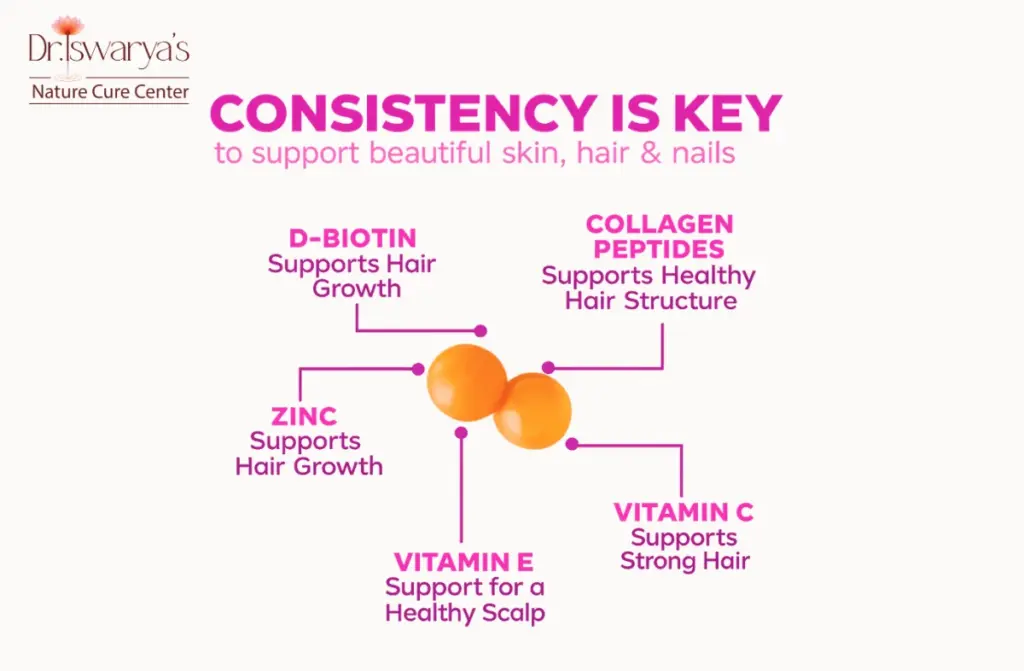
Biotin is perhaps the most discussed of all vitamins for healthy hair, skin, and nails (naturopathy). It is a water-soluble B vitamin that serves as a critical co-enzyme in the production of keratin — the primary structural protein found in hair shafts, nail plates, and the outermost skin layer. Low biotin levels have been clinically associated with brittle nails that split easily and diffuse hair shedding, particularly in women. Naturopathic practitioners often recommend food-first strategies, prioritizing eggs, lentils, and walnuts over isolated supplements unless bloodwork confirms deficiency. Biotin is also involved in fatty acid synthesis, which indirectly supports the skin’s moisture barrier.
Natural Sources: Eggs, almonds, sweet potato, walnuts, lentils
2. Vitamin C — The Collagen Commander
Collagen is the scaffolding of your skin, and Vitamin C is the foreman who builds it. Without adequate Vitamin C, the body cannot hydroxylate proline and lysine — two amino acids essential to collagen’s triple-helix structure. The result? Sagging skin, slow wound healing, and fragile nails. In naturopathy, amla (Indian gooseberry) is revered as one of the richest natural sources of Vitamin C and has been used for centuries in Ayurvedic practice to strengthen hair roots and enhance scalp circulation. As a powerful antioxidant, Vitamin C also neutralizes free radicals that cause premature aging and UV-induced pigmentation.
Natural Sources: Amla, guava, bell peppers, oranges, kiwi
3. Vitamin D — The Follicle Activator
Vitamin D receptors are present in hair follicle stem cells, which means this sunshine vitamin directly influences the anagen (growth) phase of the hair cycle. Multiple peer-reviewed studies link low serum Vitamin D levels to telogen effluvium — a common form of temporary but distressing hair loss. Beyond hair, Vitamin D supports skin barrier integrity and is involved in regulating the immune responses that protect against inflammatory skin conditions. In India, despite abundant sunlight, urban populations are frequently Vitamin D deficient due to indoor lifestyles and high melanin levels, making this one of the most important vitamins for healthy hair, skin, and nails to monitor via blood tests.
Natural Sources: Sunlight, mushrooms, fortified milk, egg yolk, fatty fish
4. Vitamin E — The Oxidative Shield
Vitamin E is a fat-soluble antioxidant that integrates directly into cell membranes, protecting them from lipid peroxidation — a process where free radicals attack and degrade the fats that keep skin supple and scalp cells healthy. Research published in dermatology journals has shown that oral Vitamin E supplementation can significantly improve hair count and coverage in individuals experiencing non-scarring hair loss. From a naturopathy standpoint, the tocotrienol-rich forms of Vitamin E found in palm oil and annatto seeds are considered superior to synthetic tocopherol supplements due to their greater bioavailability and broader antioxidant spectrum.
Natural Sources: Sunflower seeds, avocado, spinach, almonds, olive oil
5. Vitamin A — The Renewal Regulator
Vitamin A governs epithelial cell differentiation — essentially deciding what kind of cell a stem cell becomes. In skin, it speeds up the turnover of dead surface cells, keeping complexion bright and pores unclogged. It also regulates sebaceous gland activity, balancing the oil production that keeps scalp and skin neither too dry nor too greasy. However, naturopathy cautions strongly against Vitamin A over-supplementation: excessive retinol intake paradoxically causes hair loss and skin peeling. The preferred approach is beta-carotene from colorful vegetables like carrots, papaya, and pumpkin — the body converts only as much as it needs into active Vitamin A, preventing toxicity.
Natural Sources: Carrots, mango, pumpkin, papaya, liver
6. Vitamin B12 — The Oxygen Carrier
B12 deficiency is surprisingly widespread, particularly among vegetarians and vegans. This vitamin is essential for producing healthy red blood cells, which carry oxygen and nutrients to hair follicles, skin cells, and nail matrices. Without sufficient oxygen delivery, hair growth slows, nails become pale and ridged, and skin loses its natural glow. Naturopathy highlights that B12 absorption depends not just on dietary intake but on intrinsic factors — a protein secreted in the stomach — making gut health a central piece of this puzzle. Fermented foods and probiotic-rich diets are recommended alongside B12-rich sources to optimize absorption.
Natural Sources: Dairy, eggs, meat, fortified cereals, nutritional yeast
7. Niacin (B3) — The Circulation Booster
Niacin expands blood vessels through a mechanism called the niacin flush, dramatically increasing blood flow to the scalp. Enhanced scalp microcirculation means more nutrients and oxygen reaching each follicle — a direct benefit for hair density and growth rate. Niacinamide, the non-flush form of Vitamin B3, has become a celebrated skincare ingredient for its ability to reduce hyperpigmentation, minimize pore appearance, and strengthen the skin’s epidermal barrier. In naturopathy, both food-based niacin and niacinamide are recommended for those dealing with inflammatory skin conditions, dullness, and early-stage hair thinning. This makes it one of the most versatile natural remedies for hair and skin.
Natural Sources: Peanuts, mushrooms, chicken, tuna, brown rice
8. Folate (B9) — The Growth Accelerator
Folate supports rapid cellular division — and few tissues divide as quickly as hair follicles and skin cells. Low folate levels slow down DNA replication in these fast-turnover tissues, leading to sluggish hair growth, brittle structure, and even premature graying by disrupting melanin synthesis pathways. Naturopathy strongly favors food-based folate from lentils, dark leafy greens, and citrus fruits over synthetic folic acid, citing superior bioavailability. Folate also works in concert with B12 to regulate homocysteine — elevated homocysteine has been linked to hair follicle damage and accelerated skin aging, making these two B vitamins a powerful naturopathic pair.
Natural Sources: Lentils, spinach, citrus fruits, broccoli, chickpeas
The Naturopathy Approach — Food Before Supplements
- Naturopathy operates on a foundational principle: food is medicine. Before reaching for capsules, naturopathic practitioners recommend a whole-food diet rich in diverse colors, textures, and food groups to supply the vitamins for glowing skin and strong nails that your body genuinely needs. A diet built around leafy greens, seeds, legumes, colorful fruits, and fermented foods covers the majority of the micronutrients discussed above. Supplementation is reserved for confirmed deficiencies and is always personalized based on blood markers, health history, and lifestyle — not generic beauty supplement marketing claims.
- Additionally, naturopathy considers the 8 best vitamins for healthy hair, skin, and nails within a holistic context. Chronic stress depletes B vitamins rapidly. Poor sleep impairs Vitamin D metabolism. Gut dysbiosis compromises the absorption of virtually every fat-soluble vitamin. Addressing these upstream factors often produces more dramatic beauty improvements than supplements alone.

Synergistic Vitamin Combinations That Work Best
Certain vitamins amplify each other’s benefits significantly. Vitamin C enhances iron absorption, which supports oxygen delivery to follicles alongside B12. Vitamin D works synergistically with Vitamin A in regulating skin cell differentiation. Biotin pairs effectively with zinc — though zinc is a mineral, not a vitamin, it completes biotin’s keratin-building pathway. Understanding these synergies is why naturopathy always evaluates nutrition comprehensively rather than chasing single-nutrient fixes. These natural remedies for hair and skin are most powerful when the entire micronutrient ecosystem is balanced, not when one vitamin is consumed in isolation.
Conclusion
The 8 best vitamins for healthy hair, skin, and nails — Biotin, Vitamins C, D, E, A, B12, Niacin, and Folate — form a complete, naturopathy-validated toolkit for genuine, lasting beauty that starts from within. Rather than chasing expensive topical trends, investing in your micronutrient foundation through real food, mindful supplementation, and a naturopathy-aligned lifestyle will always deliver the most sustainable, visible, and deeply healthy results for your hair, skin, and nails.
Read More: Tips to Help You Lose Weight Naturally