

Written and Reviewed by
Dr. Iswarya
BNYS (Bachelor of Naturopathy & Yogic Sciences), MD (Doctor in Medicine). Founder & Chief Naturopathy Consultant at Dr. Iswarya’s Nature Cure Centre, Chennai.
Medical registration ID – 0308/A
View credentials →If you or someone close to you is going through cancer treatment, you may be wondering whether naturopathy support for cancer treatment can genuinely help. It’s a fair question. Most people in this situation aren’t looking for a miracle — they want to feel a bit stronger, sleep better, manage nausea, and stay emotionally steady through a hard stretch of life.
Naturopathy, used correctly alongside conventional cancer treatment, can offer real, practical support for exactly that. It does not replace surgery, chemotherapy, radiation, or immunotherapy. But as part of what’s known as integrative oncology, it can help the body cope with treatment and help the mind stay grounded through it.
At Dr. Iswarya’s Nature Cure Centre in Chennai, patients undergoing cancer treatment receive care that is medically responsible, clearly explained, and focused on their actual wellbeing — never on unproven cure claims.
What Patients Look For Beyond Conventional Cancer Treatment
Conventional oncology does the heavy clinical work, and rightly so. But many patients still feel exhausted, anxious, and unsure what they can personally do to support their own recovery. This is exactly where this kind of complementary care fills a genuine gap — not by replacing an oncologist, but by helping patients eat better, sleep more deeply, manage side effects, and rebuild energy in a way that’s safe and coordinated with their medical care.
Support, Not Cure: Setting Realistic Expectations
This is the single most important thing to understand about naturopathy support for cancer treatment: it is a supportive therapy, not a cancer cure. Any practitioner who claims otherwise is making a claim unsupported by evidence — and one that can be dangerous if it leads someone to delay effective treatment.
At Dr. Iswarya’s clinic, that honesty comes first. Support means helping a patient feel better during and after treatment: better sleep, better nutrition, calmer emotions, manageable symptoms. It does not mean stopping prescribed medical care.
What is naturopathy?
Naturopathy is a system of care that supports the body’s own healing capacity through nutrition, herbal medicine, physical therapies, breathing techniques, and lifestyle guidance — looking at the whole person rather than just the disease.
Where integrative oncology fits in
Integrative oncology combines conventional cancer treatment with evidence-informed complementary therapies, addressing physical symptoms, emotional health, nutrition, and quality of life alongside tumor-directed treatment. Joint guidelines from the Society for Integrative Oncology (SIO) and the American Society of Clinical Oncology (ASCO) now formally recommend specific integrative approaches — mindfulness-based programs, yoga, and acupuncture among them — for managing anxiety, depression, fatigue, and pain in people with cancer, when delivered by qualified practitioners in coordination with the oncology team.
Who Naturopathy Support Is Right For
Not every patient needs — or should have — the same complementary care plan. Naturopathy support for cancer treatment tends to be most appropriate for patients who:
- Are currently under active oncology care (or have completed treatment and are in survivorship)
- Want help managing fatigue, nausea, appetite loss, pain, or sleep disruption
- Are experiencing treatment-related anxiety or emotional strain
- Have their oncologist’s awareness and, ideally, agreement about adding complementary care
It is generally not appropriate as a stand-alone approach for someone hoping to avoid or delay conventional treatment, or for patients with certain conditions (such as very low platelet counts or open surgical wounds) without specific safety adjustments — which is why an initial clinical review always comes first.
What the Evidence Actually Says
This section looks at what current research says about naturopathy support for cancer treatment, therapy by therapy.
Nutrition
What a person eats during cancer treatment affects how they feel and how well they tolerate treatment. A well-designed cancer-support diet typically includes anti-inflammatory foods (leafy greens, turmeric, ginger, berries), adequate protein to prevent muscle loss, and easy-to-digest meals to ease gastrointestinal stress. Some foods and supplements are avoided altogether because they can interact with chemotherapy or radiation — this is reviewed case by case, never generically.
Mind-body practices
Mindfulness-based interventions, yoga, and relaxation techniques now have a formal, guideline-backed evidence base for reducing anxiety and depression symptoms in adults with cancer, both during and after treatment. Diaphragmatic and slow-paced breathing can help calm the nervous system and can be practiced almost anywhere.
Movement
Gentle, supervised movement — short walks, light stretching, breathing-based exercise — is widely recognized in oncology care as helpful for fatigue, mood, and muscle maintenance during treatment. Mindfulness-based programs and light movement are specifically noted in current guidelines for managing cancer-related fatigue.
Acupuncture and massage
Acupuncture and massage have an intermediate-to-moderate strength of evidence in current joint SIO–ASCO guidelines for managing cancer pain, meaning they can reasonably be recommended as part of a pain-management plan — with specific precautions for patients who have low platelet counts, lymphoedema risk, or recent surgical sites.
How Naturopathic Support Differs by Cancer Treatment Type
Naturopathic support for cancer treatment isn’t one-size-fits-all — what’s helpful and safe changes depending on what conventional treatment a patient is receiving:
- During chemotherapy: Focus is usually on nausea management, protecting appetite, easy-to-digest nutrition, and avoiding any herb or supplement that could interact with the specific chemotherapy drugs prescribed.
- During radiation: Support often centers on skin care around treatment sites, fatigue management, and hydration, with movement kept light on treatment days.
- Around surgery: Pre- and post-operative nutrition and gentle movement can support recovery, but massage and certain manual therapies are avoided near incision sites until cleared by the surgical team.
- During immunotherapy: Because immunotherapy works with the immune system, so-called “immune-boosting” herbs and high-dose supplements are approached with particular caution and are avoided unless specifically reviewed against the treatment protocol.
- In survivorship (after active treatment ends): The focus shifts toward rebuilding strength, sustainable nutrition, stress management, and long-term lifestyle habits.
Safety First: What Should Be Avoided
The most serious risk connected with naturopathy for cancer is a patient delaying or stopping conventional treatment in favor of natural therapies alone — this can be life-threatening, and it is never encouraged at Dr. Iswarya’s clinic.
Herb–drug interactions matter. Not every herb or supplement is safe during cancer treatment. St. John’s Wort, high-dose antioxidants, and certain immune-boosting herbs can interfere with how chemotherapy drugs work in the body. Self-prescribing supplements during treatment isn’t recommended — every recommendation should be checked against current medications first.
Watch for red flags. Be cautious of anyone who:
- Promises a guaranteed cure
- Asks you to stop chemotherapy or radiation
- Uses vague language like “purging toxins” without evidence
- Sells expensive supplement packages under pressure
A responsible practitioner will always work with your medical team, not around them.
Why Medical Integration Matters
The best outcomes happen when everyone involved in a patient’s care communicates. At Dr. Iswarya’s clinic, treatment plans can be shared with a patient’s oncologist on request, so the medical team has a full picture of any complementary care being provided. Naturopathic support for cancer treatment here is clinically supervised — with regular check-ins and plans adjusted as treatment progresses — rather than delivered in isolation as a one-time program.
How to Choose a Reliable Naturopathy Program
When comparing naturopathy support for cancer options, transparency matters as much as credentials.
- Check credentials. Look for formal naturopathy training plus experience specifically with oncology patients.
- Expect transparency. A trustworthy program clearly explains what’s included, expected timelines, and cost — no hidden fees or pressure tactics.
- Avoid generic detox programs. Cancer type, stage, and treatment protocol vary enormously between patients; a one-size-fits-all plan can be ineffective or unsafe.
- Look at outcomes, not just promises. Ask how patient progress is tracked over time.
What a First Consultation and Cost Look Like
A first consultation typically involves a detailed review of the patient’s diagnosis, current treatment stage, medications, symptoms, and goals, followed by a personalized plan — not a fixed package sold on the spot. Cost varies depending on the therapies involved (nutrition counselling, mind-body sessions, physical therapies) and how often follow-up is needed. Patients should always receive a clear breakdown of cost before starting, and insurance coverage should be confirmed directly with the individual insurer, as it varies by policy.
A Sample Daily Routine
- Diet: Warm water with ginger or lemon in the morning; small, frequent meals if nausea is present; protein at every meal (eggs, lentils, soft-cooked fish, yoghurt); avoid raw or heavy foods if digestion is sensitive; stay hydrated with warm fluids like chamomile or ginger tea.
- Movement: A 10–20 minute walk at a comfortable pace; 5–10 minutes of gentle stretching or adapted yoga; short breaks to move if sitting for long periods; rest fully on low-energy days.
- Stress management: A few minutes of slow breathing on waking; a short body scan or progressive muscle relaxation before bed; time outdoors or near natural light; journaling; regular conversation with a trusted friend, family member, or counsellor.
- Sleep: Consistent bed and wake times; a cool, dark, quiet room; no screens for 30 minutes before bed; a short relaxation practice before sleep.
Common Myths About Naturopathy and Cancer
One of the most persistent myths about naturopathy for cancer is that anything natural must be curative and automatically safe. It isn’t. Natural does not mean risk-free, and natural therapies do not have the clinical ability to destroy cancer cells the way oncology treatments do. Their real value lies in supporting the body through treatment.
“Detox and juicing protocols can starve a tumor.” Extreme fasting or “detox” claims aren’t supported by credible evidence and can cause real harm — malnutrition, electrolyte imbalance, dangerous weight loss — in people already under treatment stress.
Be skeptical of any claim of a fast, dramatic, or guaranteed result, high-pressure sales of supplement packages, advice to stop chemotherapy or radiation, or the absence of any mention of working with your medical team.
Measurable Benefits of Supportive Care
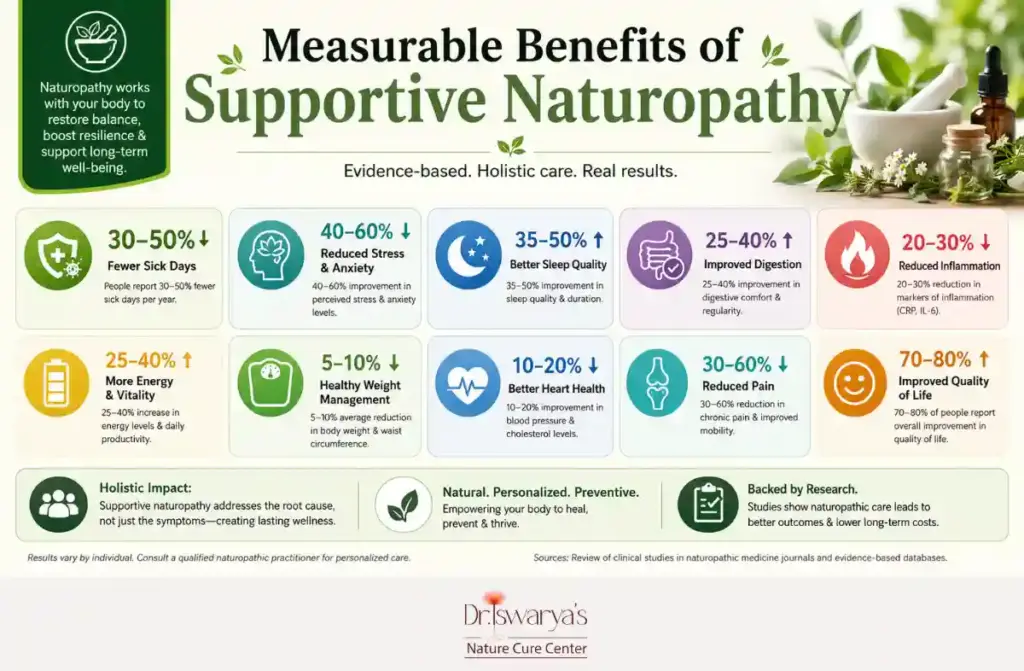
Across multiple guideline-reviewed studies, structured naturopathy support for cancer has been linked to better quality-of-life scores, improved symptom burden, and better treatment tolerance when delivered alongside — not instead of — conventional care. Patients who manage nutrition, stress, and gentle movement well often report fewer treatment interruptions and a greater sense of control during a difficult period.
Conclusion
Living through cancer treatment is one of the hardest things a person can face — it tests the body, the mind, and relationships all at once. The reassuring part is that patients don’t have to carry that alone.
When practiced responsibly by a qualified professional, this kind of complementary care offers a genuine way to stay nourished, stay calmer, and hold on to quality of life during a period that can otherwise feel completely out of a patient’s control. It never asks anyone to choose between natural care and their prescribed medical treatment — it’s built to work alongside it.
Dr. Iswarya’s approach rests on three things: safety (every recommendation is checked against the patient’s medical treatment), honesty (no promises beyond what the evidence supports), and care (treating the whole person, not just a diagnosis). If that’s the kind of support you’re looking for during cancer treatment, Dr. Iswarya’s Nature Cure Centre would be glad to speak with you.
Related reading: Naturopathy for Insomnia · Naturopathy for Addiction Recovery · Naturopathy Treatment in Chennai · Yoga & Meditation · Counseling · Testimonials
If you’re going through cancer treatment and want naturopathy support for cancer treatment that’s safe, coordinated with your medical team, and honest about what it can and can’t do, get in touch with Dr. Iswarya’s Nature Cure Centre.