

Written and Reviewed by
Dr. Iswarya
BNYS (Bachelor of Naturopathy & Yogic Sciences), MD (Doctor in Medicine). Founder & Chief Naturopathy Consultant at Dr. Iswarya’s Nature Cure Centre, Chennai.
Medical registration ID – 0308/A
View credentials →Hormonal imbalance treatment in Chennai begins with understanding the cause, because a hormonal imbalance is not a single condition. It is a pattern: irregular periods, weight changes, constant tiredness, poor sleep, mood swings, acne, hair fall, and more, all linked to hormones that are working out of step.
Hormones are chemical messengers that control your periods, metabolism, mood, sleep, skin, appetite and energy. When one or more of them rise or fall more than they should, the effects are felt across the whole body. The good news is that many hormonal problems can be identified with simple tests, and many women see real improvement once the underlying cause is found and addressed.
This guide explains the common symptoms and causes, when you need a doctor first, how the problem is diagnosed, and which medical and natural options can help. You will also find a sample Indian diet, common myths, and answers to frequently asked questions. At Dr. Iswarya’s Nature Cure Centre in Mandaveli, Chennai, care is personalised and doctor-led.
What is a Hormonal Imbalance?
A hormonal imbalance means that one or more hormones are present in amounts that are too high or too low for your body’s needs. Even small shifts can cause noticeable symptoms, because hormones work together like a team and one out-of-step member affects the others.
What your main hormones do
- Thyroid hormones: Set the speed of your metabolism, energy, body temperature and heart rate.
- Insulin: Moves sugar from the blood into cells and influences weight and hunger.
- Estrogen and progesterone: Control the menstrual cycle, fertility, bones and mood.
- Androgens (such as testosterone): Present in small amounts in women; in excess they cause acne, unwanted hair and irregular periods.
- Cortisol: The stress hormone, which affects sleep, blood sugar, blood pressure, and appetite.
- Prolactin: Supports breast milk production; high levels can disturb periods and fertility.
Why imbalance happens at different life stages
Hormones naturally shift during puberty, pregnancy, after childbirth, in the years before menopause and after menopause. Illness, medicines, crash diets, long-term stress, poor sleep, and weight changes can disturb them at any age. Knowing which stage and which trigger applies to you is the first step in choosing the right care.
Common Symptoms of Hormonal Imbalance
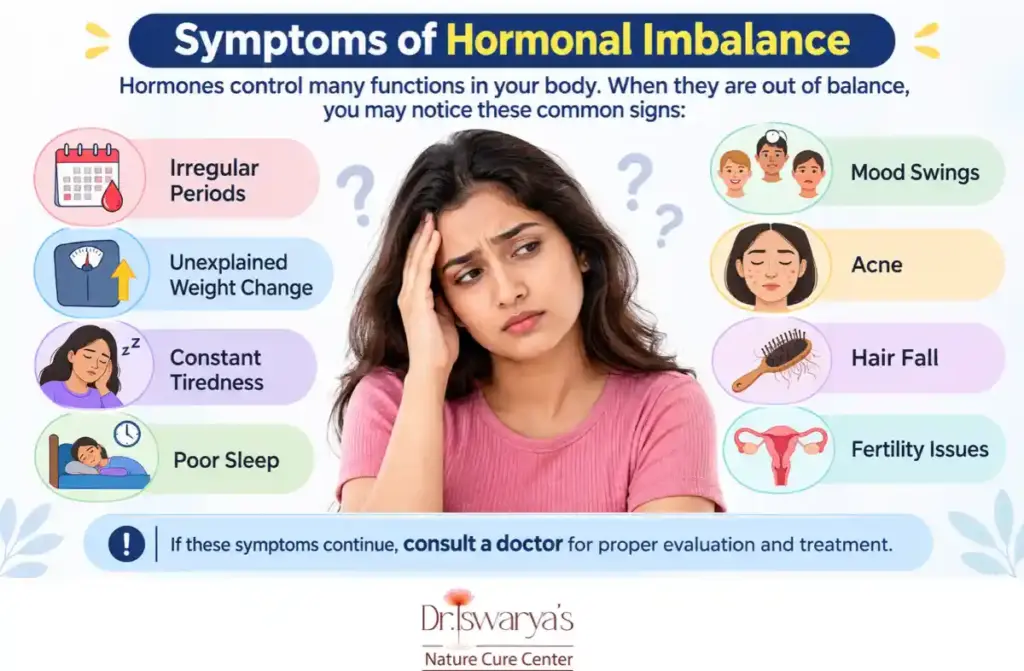
Symptoms depend on which hormones are involved, and they often overlap:
- Irregular, missed, heavy or painful periods
- Unexplained weight gain or difficulty losing weight, or unexpected weight loss
- Constant tiredness and poor sleep, including waking at night
- Mood swings, anxiety, irritability and low mood
- Acne, oily skin, hair fall and unwanted facial or body hair
- Hot flashes and night sweats
- Low sex drive and vaginal dryness
- Brain fog and poor concentration
- Digestive complaints, such as bloating and constipation
- Feeling too cold or too hot, or a racing heartbeat
- Difficulty conceiving
These symptoms can also have other causes, which is why testing matters more than guessing.
Common Causes and Conditions Behind Hormonal Imbalance
Thyroid disorders
An underactive thyroid can cause weight gain, tiredness, constipation, dry skin, hair fall, feeling cold and heavy, or irregular periods. An overactive thyroid can cause weight loss, palpitations, sweating, anxiety, and light periods. Thyroid problems are common in Indian women and are easily checked with a blood test.
PCOS and PCOD
Polycystic ovary syndrome and the related condition often called PCOD involve irregular ovulation, higher androgens and, often, insulin resistance. Read more in our guides on natural treatment for PCOS in Chennai and natural treatment for PCOD in Chennai.
Perimenopause and menopause
Falling estrogen and progesterone in the years around menopause, commonly in the mid to late 40s in Indian women, cause irregular periods, hot flashes, sleep trouble, mood changes and vaginal dryness.
Insulin resistance and prediabetes
When cells respond poorly to insulin, the body makes more of it. This promotes weight gain around the waist, cravings, dark skin patches and, in women, higher androgen levels.
Chronic stress and high cortisol
Long-term stress keeps cortisol elevated, which can disturb sleep, appetite, blood sugar and the menstrual cycle. Please note that the popular term adrenal fatigue is not a recognised medical diagnosis. Persistent tiredness needs a proper medical evaluation.
Vitamin D and B12 deficiency, poor sleep and diet
Low vitamin D and B12 are very common and can add to fatigue, low mood and body ache. Skipped meals, crash diets, heavy sugar and processed food intake, and irregular sleep also disturb hormones.
Prolactin and other pituitary problems
High prolactin can cause irregular or absent periods, milk discharge from the breasts and fertility problems. Less commonly, other pituitary or adrenal conditions are responsible, and these need specialist care.
When Should You See a Doctor First?
Lifestyle and natural care can support hormonal imbalance treatment in Chennai, but some situations need a medical evaluation before anything else. Please see a doctor promptly if you have:
- No period for three months or more
- Very heavy or prolonged bleeding, or any bleeding after menopause
- Sudden weight change, palpitations, tremors, or extreme thirst
- Milky discharge from the breasts, severe headaches or changes in vision
- Difficulty conceiving after 12 months of trying, or 6 months if you are over 35
- A lump in the neck, breast or elsewhere
- Persistent low mood, hopelessness or thoughts of self-harm
A good doctor will explain the findings clearly, avoid unnecessary tests and welcome supportive lifestyle care alongside medical treatment.
How Hormonal Imbalance Is Diagnosed
Diagnosis starts with your history: periods, weight, sleep, stress, diet, medicines and family history. Your doctor will then examine you and may advise tests such as:
- Thyroid profile: TSH, with T3 and T4 when needed
- Reproductive hormones: FSH, LH, estradiol and progesterone, timed to your cycle where required
- Prolactin and testosterone
- Fasting blood sugar, HbA1c and fasting insulin
- Lipid profile
- Vitamin D and vitamin B12
- Pelvic ultrasound
No single test tells the whole story. Results are read together with your symptoms and examination, and some tests need to be repeated or timed carefully.
Medical Treatment Options for Hormonal Imbalance
Medical treatment depends entirely on the cause, and it is decided and prescribed by your treating doctor. Depending on your diagnosis, options may include:
- Thyroid medicines for an underactive or overactive thyroid
- Cycle-regulating medicines for irregular periods
- Insulin-sensitising medicines for insulin resistance or prediabetes
- Treatment for high prolactin or other pituitary conditions
- Hormone therapy for selected women with significant menopausal symptoms
- Correction of vitamin deficiencies
Please do not start, stop or change any medicine, and do not take hormone supplements, on your own. Incorrect use can cause harm.
Natural and Lifestyle-Based Support for Hormonal Balance
Daily habits form the foundation of hormonal imbalance treatment in Chennai and everywhere else, because food, movement, sleep and stress shape how your hormones behave. Lifestyle care works alongside, not instead of, any medicine your doctor prescribes.
1. Diet for hormonal balance
- Eat regular meals: Skipping meals and crash diets raise stress hormones and disturb the cycle.
- Choose low-glycemic carbohydrates: Ragi, kambu, samai, whole wheat, oats and brown rice in measured portions.
- Include protein in every meal: Dals, sprouts, chickpeas, curd, paneer, eggs and fish if you eat them.
- Add fibre and vegetables: Keerai, beans, gourds, cabbage and seasonal fruit, which support gut health and steady blood sugar.
- Use healthy fats: Nuts, flax and sesame seeds, and moderate cold-pressed oils.
- Support thyroid health sensibly: Iodised salt in moderation, and a varied diet. Do not cut out entire food groups without medical advice.
- Limit: Sugary drinks, sweets, bakery items, maida, deep-fried snacks, packaged food, excess caffeine and alcohol.
2. Exercise and weight management
Aim for about 150 minutes of moderate activity a week, such as brisk walking, cycling, swimming or dance, with strength training twice a week. Regular movement improves insulin response, mood and sleep. Start gently and build up.
3. Yoga and pranayama
Yoga does not replace medical treatment, but studies suggest it can help with stress, sleep and mood. Practices often used include Surya namaskar, Bhujangasana, Setu bandhasana, Baddha konasana, Nadi shodhana and Bhramari. Learn them under a trained therapist, especially if you have high blood pressure, heart disease or joint problems. The centre offers yoga and meditation in person and online.
4. Sleep and stress management
Aim for 7 to 8 hours of sleep at a regular time. Keep screens away an hour before bed, get morning sunlight, and set aside 10 minutes daily for breathing or meditation. Long-term stress is one of the most common and most modifiable contributors to hormonal disturbance.
5. Acupuncture, hydrotherapy and massage
These therapies are supportive. They may help with relaxation, sleep, pain and general wellbeing. Research on their effect on hormone levels is limited and mixed, so they are best seen as complementary options and not a replacement for diagnosis or medicines. See more on acupuncture and traditional healing.
6. Counseling and emotional support
Hormonal changes and the worry that comes with them can affect confidence and relationships. Counseling provides a safe space to talk and practical tools to cope.
Hormonal Imbalance Treatment in Chennai at Dr. Iswarya’s Nature Cure Centre
Dr. Iswarya’s Nature Cure Centre is a doctor-led naturopathy and wellness clinic in Mandaveli, Chennai. Care is built around your symptoms, reports, and routine, and typically includes:
- A detailed assessment: Symptoms, cycle history, diet, activity, sleep, stress, medicines, and your latest reports.
- A personalised diet and daily routine: Practical guidance using food you already eat.
- Yoga and breathing therapy: Taught by a therapeutic yoga specialist.
- Supportive therapies: Such as acupuncture, hydrotherapy and massage, when suitable.
- Counseling: For stress, mood and sleep.
- Coordination with your treating doctor: If tests or medicines are needed, you are guided on the next step, and natural care is planned to fit with your medical treatment.
- Follow-ups and online consultation: To review progress and adjust your plan, including through teleconsultation.
The centre is led by Dr. Iswarya Subramaniam (BNYS, MD, Fellowship in Natural Lifestyle Medicine; Registration No. 0308/A) and supported by naturopaths, a therapeutic yoga specialist and a chiropractor.
A Sample Hormone-Friendly Indian Diet for One Day
This is a general example, not a prescription. Portions and choices should be adjusted to your weight, blood sugar, thyroid status, activity and preferences.
| Meal | Example |
| Early morning | Warm water with lemon or jeera water; a handful of soaked almonds |
| Breakfast | Ragi dosa or vegetable oats upma with sambar, or moong dal cheela with mint chutney |
| Mid-morning | A guava or apple, or a glass of buttermilk |
| Lunch | 1 cup millet or brown rice, dal, a large portion of vegetables, salad and a small bowl of curd |
| Evening snack | Sprouts salad, roasted chana or a small handful of nuts, with green tea or herbal tea |
| Dinner (early and light) | Vegetable soup with 1 to 2 whole wheat rotis and a vegetable or paneer curry |
| Bedtime | Warm turmeric milk or herbal tea if it suits you |
If you have diabetes, a thyroid condition or any other illness, ask your doctor or dietitian to adapt this plan.
Hormonal Imbalance at Different Life Stages
- Teenagers: Irregular periods are common in the first two years after the first period. If cycles stay very irregular, or acne, hair growth, or weight gain are marked, a medical check is sensible.
- Women in their 20s and 30s: PCOS, thyroid problems, stress, and lifestyle are the usual causes of cycle changes, weight gain, and trouble conceiving.
- Women planning pregnancy: Thyroid, blood sugar and vitamin levels are worth checking before conception.
- After childbirth: Thyroid changes and exhaustion are common, and persistent low mood needs medical attention.
- Perimenopause and menopause: Hot flashes, sleep trouble, and mood changes are common from the mid-40s. Any bleeding after menopause needs prompt evaluation.
Myths vs Facts About Hormonal Imbalance
| Myth | Fact |
| Hormonal problems affect only women. | Men and women both have hormonal conditions, such as thyroid disease and diabetes. |
| Supplements can fix any hormonal problem. | Taking hormone-related supplements without testing can be harmful. The cause needs to be identified first. |
| A detox cleanse resets your hormones. | There is no reliable evidence that detox cleanses balance hormones. Your liver and kidneys already do this work. |
| Hormone problems always need lifelong medicines. | Some do, such as an underactive thyroid, while many improve with lifestyle change and treatment of the cause. |
| Irregular periods are normal and need no attention. | Occasional variation is normal, but repeated irregular or missed periods deserve a check. |
| Weight gain is always the cause of hormonal imbalance. | Weight can be a result of hormonal problems as well as a contributor to them. |
How Much Does Hormonal Imbalance Treatment in Chennai Cost?
The cost depends on the consultation, the tests required, any medicines your doctor prescribes, the number and type of therapy sessions, and how long your plan runs. Because every person’s cause and needs differ, charges are explained after assessment. The easiest way to know the exact amount is to book a consultation, where the doctor can recommend a plan and set out the fees clearly.
Conclusion
A hormonal imbalance can leave you feeling tired, unsettled and unlike yourself, but it is something you can understand and address. A sound approach to hormonal imbalance treatment in Chennai starts with a proper diagnosis, adds medical care where it is needed, and builds supportive daily habits: balanced food, regular movement, restful sleep, calm breathing and emotional care. Results differ from person to person, but steady effort over a few months often makes a noticeable difference.
If you would like a plan built around your own symptoms, reports and routine, Dr. Iswarya’s Nature Cure Centre offers doctor-led naturopathy, yoga, acupuncture, hydrotherapy and counseling in Mandaveli, Chennai, and online. Seeking help early is often beneficial, and you do not have to work through this alone.
Book a Consultation
Dr. Iswarya’s Nature Cure Centre
Level 1 & 2, 44/1, Venkatakrishna Road, Jeth Nagar, Mandaveli, Chennai, Tamil Nadu 600028
Phone: 044-46187679 | Email: cmo@driswaryasnaturecure.com
Book a consultation or message us on WhatsApp to begin your personalised care plan.