
Irritable Bowel Syndrome (IBS) is a common digestive condition that affects how the large intestine functions, often leading to discomfort, irregular bowel habits, and bloating. While the condition does not damage the intestines, it can significantly affect daily life and digestive comfort. Many people today are exploring a naturopathic approach to IBS as a gentle and holistic way to manage symptoms and support long-term gut health through natural therapies, lifestyle changes, and dietary balance.
What Causes IBS Symptoms?
- Dietary Factors: Certain foods can irritate the digestive system and trigger IBS symptoms. Processed foods, spicy meals, or excessive caffeine may disrupt gut function and lead to bloating or irregular bowel movements. While exploring a naturopathic approach to IBS, practitioners often focus on identifying individual food sensitivities to help restore digestive balance.
- Emotional Stress: The gut and brain share a strong connection, often called the gut-brain axis. Stress, anxiety, or emotional strain can interfere with digestive signals, leading to cramps or bowel changes. Naturopathic Approaches to IBS frequently include relaxation techniques and stress management to support healthier digestion.
- Hormonal Changes: Hormonal fluctuations, especially in women, can influence digestive activity and worsen IBS symptoms. Many people notice changes around menstruation or during hormonal shifts. These variations can affect intestinal movement and sensitivity.
- Medical and Physical Factors: Gut infections, inflammation, or imbalances in intestinal bacteria may also contribute to IBS symptoms. Some individuals develop IBS after a severe digestive infection. A naturopathic approach often looks deeper into these physical triggers to support overall gut health.
Common IBS Triggers
- Stress: Stress can significantly affect digestive health by altering gut motility and increasing sensitivity in the intestines. Many individuals notice IBS symptoms worsening during periods of emotional pressure or anxiety. Naturopathic Approaches to IBS often focus on relaxation practices, mindfulness, and lifestyle adjustments to calm the nervous system and support healthy digestion.
- Hormonal Changes (Menstruation): Hormonal fluctuations during the menstrual cycle may influence bowel movements and abdominal comfort. Some individuals experience increased cramping or irregular digestion during this time. Understanding these patterns plays an important role in managing Irritable Bowel Syndrome(IBS) naturally, helping individuals adjust lifestyle and dietary habits accordingly.
- Dietary Factors: Dairy, Gluten, Caffeine, Alcohol, and Carbonated Drinks
Certain foods and beverages can irritate the digestive system or increase intestinal sensitivity. Dairy and gluten may cause discomfort for those with sensitivities, while caffeine, alcohol, and carbonated drinks may trigger bloating or bowel irregularities. Identifying and moderating these triggers can significantly reduce IBS flare-ups.
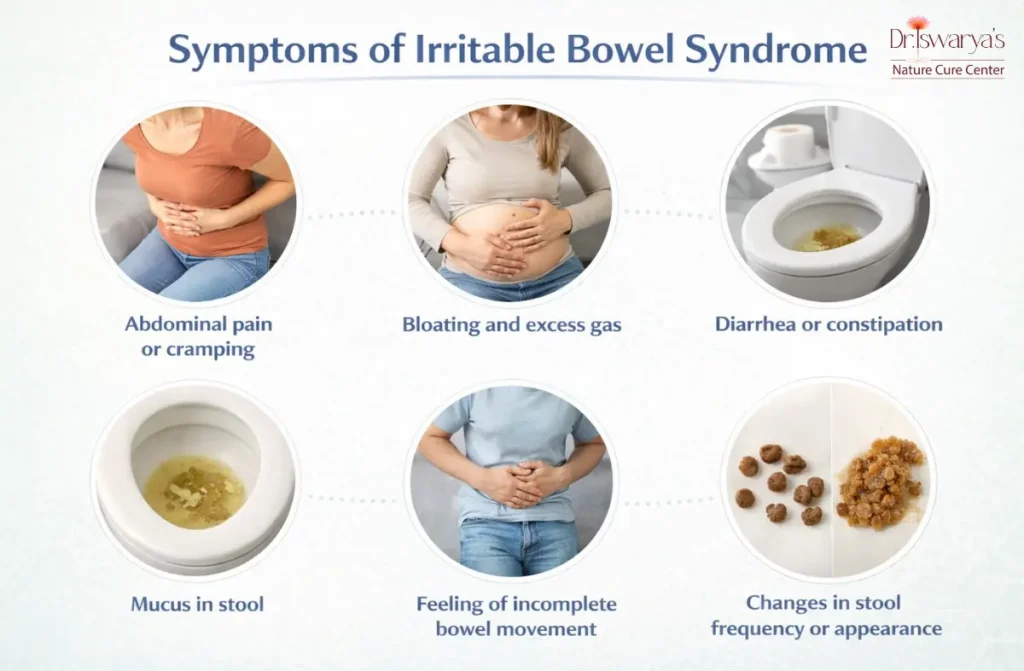
Symptoms of Irritable Bowel Syndrome (IBS)
- Recurring Abdominal Pain or Cramping: One of the most common IBS symptoms is recurring abdominal discomfort, often relieved after a bowel movement. The intensity may vary from mild irritation to significant pain. People exploring a naturopathic approach to IBS often focus on natural methods that support gut relaxation and digestive balance.
- Bloating and Gas: Excess gas and abdominal bloating are frequently reported by individuals with IBS. This can create a feeling of fullness or pressure in the stomach, particularly after meals. Many Naturopathic Approaches to IBS focus on improving gut microbiome balance and digestive efficiency to reduce these symptoms.
- Changes in Bowel Habits: IBS can cause irregular bowel patterns, including diarrhea, constipation, or alternating between both. These changes occur because the digestive system becomes more sensitive and reactive. Understanding these patterns helps practitioners develop targeted natural treatment strategies.
The Role of Naturopathy in IBS Management
- Key Aspects of Naturopathic IBS Management: Naturopathy focuses on treating the root causes of digestive imbalance rather than simply suppressing symptoms. When exploring a naturopathic approach to IBS, practitioners evaluate diet, lifestyle habits, stress levels, and gut health to design a personalized healing strategy.
- Dietary Interventions: Nutrition plays a vital role in supporting digestive health. Whole foods, fiber balance, and elimination diets may help identify food sensitivities that worsen IBS symptoms. Carefully planned naturopathic treatment plans for IBS often include dietary adjustments tailored to individual needs.
- Gut Health Support: Maintaining a balanced gut microbiome is essential for proper digestion. Natural probiotics, fermented foods, and digestive-supportive nutrients may help restore intestinal balance and reduce symptoms.
- Herbal Medicine: Certain herbal preparations are traditionally used to soothe digestive discomfort, reduce inflammation, and regulate bowel movements. Herbs may support intestinal relaxation and improve digestive efficiency when used under professional guidance.
- Lifestyle and Mind-Body Techniques: Stress reduction is an important part of IBS management. Practices such as meditation, breathing exercises, and mindful movement can calm the nervous system and improve digestive function.
- Root Cause Analysis: Naturopathic care looks beyond symptoms to identify underlying causes such as food intolerances, microbial imbalance, or chronic stress. Understanding these factors allows practitioners to develop targeted natural therapies.
- Effectiveness and Safety: When guided by qualified practitioners, naturopathic therapies are generally safe and gentle on the body. Treatments are selected carefully based on individual health needs and sensitivities.
- Positive Outcomes: Many individuals experience improvements in digestive comfort, reduced bloating, and more regular bowel habits through natural care strategies that support the body’s natural healing processes.
- Combined Approach Safety: Naturopathic therapies can often complement conventional medical treatments. Integrating both approaches may provide a balanced and comprehensive strategy for IBS management.
Customized Treatment Plans for IBS at Dr. Iswarya Nature Cure
Dr. Iswarya Nature Cure, led by Dr. Iswarya Subramaniam, provides personalized treatment programs for patients experiencing Irritable Bowel Syndrome. The clinic focuses on a holistic healing approach by combining naturopathic therapies with nutritional guidance and lifestyle modifications. These customized plans aim to address the underlying causes of chronic digestive issues, support healthy digestive function, and help reduce intestinal inflammation while promoting overall gut wellness.
Key Components of IBS Treatment Plans:
- Comprehensive Initial Assessment and Personalized Consultation: At Dr. Iswarya Nature Cure, treatment begins with a detailed evaluation of digestive health, lifestyle habits, stress patterns, and dietary routines. Many individuals visiting the clinic are already exploring a naturopathic approach to IBS, seeking natural ways to improve gut health.
- Naturopathic Therapeutic Approaches: A combination of natural therapies is designed to support digestion, reduce inflammation, and restore gut balance. Each treatment plan is tailored to the patient’s individual needs and symptoms.
- Acupuncture Therapy: Acupuncture may help regulate digestive function and relieve abdominal discomfort by stimulating specific points associated with gut health.
- Therapeutic Mud Therapy: Mud therapy is often used in naturopathy to support detoxification and reduce inflammation in the digestive region, promoting relaxation and improved circulation.
- Hydrotherapy Treatments: Hydrotherapy uses controlled water applications to stimulate digestive organs, improve circulation, and enhance natural detoxification processes.
- Abhyanga (Therapeutic Oil Massage): This traditional therapeutic massage promotes relaxation, improves circulation, and may help reduce stress-related digestive symptoms.
- Detoxifying Steam Therapy: Steam therapy encourages sweating and detoxification, helping the body eliminate waste products and support overall metabolic balance.
- Yoga and Pranayama Practices: Gentle yoga postures and breathing techniques support digestive motility, reduce stress, and strengthen the gut-brain connection.
- Personalized Dietary Guidance: Individualized dietary plans help identify trigger foods and encourage gut-friendly nutrition that supports long-term digestive wellness.
- Holistic Approach to IBS Management – Managing Irritable Bowel Syndrome(IBS) Naturally
A holistic strategy integrates natural therapies, lifestyle adjustments, and nutritional support to restore digestive harmony and improve quality of life.
- Agnidipana: This traditional naturopathic concept focuses on improving digestive strength and metabolism to help the body process food more efficiently.
- Vatanulomana: Balancing digestive energy helps regulate bowel movements and reduce symptoms such as bloating or irregular digestion.
- Detoxification: Natural detoxification practices help remove accumulated toxins that may contribute to digestive imbalance and IBS symptoms.
Functional Diagnostic Testing
- Understanding the Root Cause of Digestive Imbalance: Functional diagnostic testing helps identify hidden digestive issues such as gut microbiome imbalance, food sensitivities, or inflammation. These tests provide deeper insights into digestive function and guide more targeted natural treatments.
- Personalized Testing for Better Treatment Planning: Through advanced evaluation methods, practitioners can create naturopathic treatment plans for IBS tailored to each individual’s unique digestive profile. This allows therapies to address the underlying causes rather than simply managing symptoms.
- Supporting Long-Term Digestive Health: Functional tests may include assessments of gut bacteria, digestive enzyme levels, and nutrient absorption. These results help practitioners design personalized strategies that improve gut health and prevent recurring IBS flare-ups.
Naturopathic Treatment Approaches for IBS
- Holistic Gut Healing Strategies: When exploring a naturopathic approach to IBS, treatment often combines natural therapies that support digestive balance, reduce inflammation, and restore the gut microbiome. These approaches focus on strengthening the body’s natural ability to heal.
- Natural Therapies for Digestive Balance: Naturopathic treatments may include herbal remedies, probiotic support, dietary adjustments, and stress-management practices. These therapies aim to calm intestinal sensitivity and improve digestive function.
- Lifestyle Strategies for Managing Irritable Bowel Syndrome(IBS) Naturally: Healthy routines such as mindful eating, regular physical activity, and adequate sleep can significantly improve digestive health. Lifestyle modifications often play a key role in long-term IBS management.
Conclusion
IBS can be a challenging condition, but with the right guidance and holistic care, many individuals find lasting relief from digestive discomfort. Exploring a naturopathic approach to IBS allows patients to address the root causes of digestive imbalance through natural therapies, dietary guidance, and lifestyle changes. At Dr. Iswarya Nature Cure, personalized treatment plans and naturopathic therapies are designed to support gut health and provide effective, natural care for individuals seeking relief from IBS symptoms.